
Last updated November 20, 2026
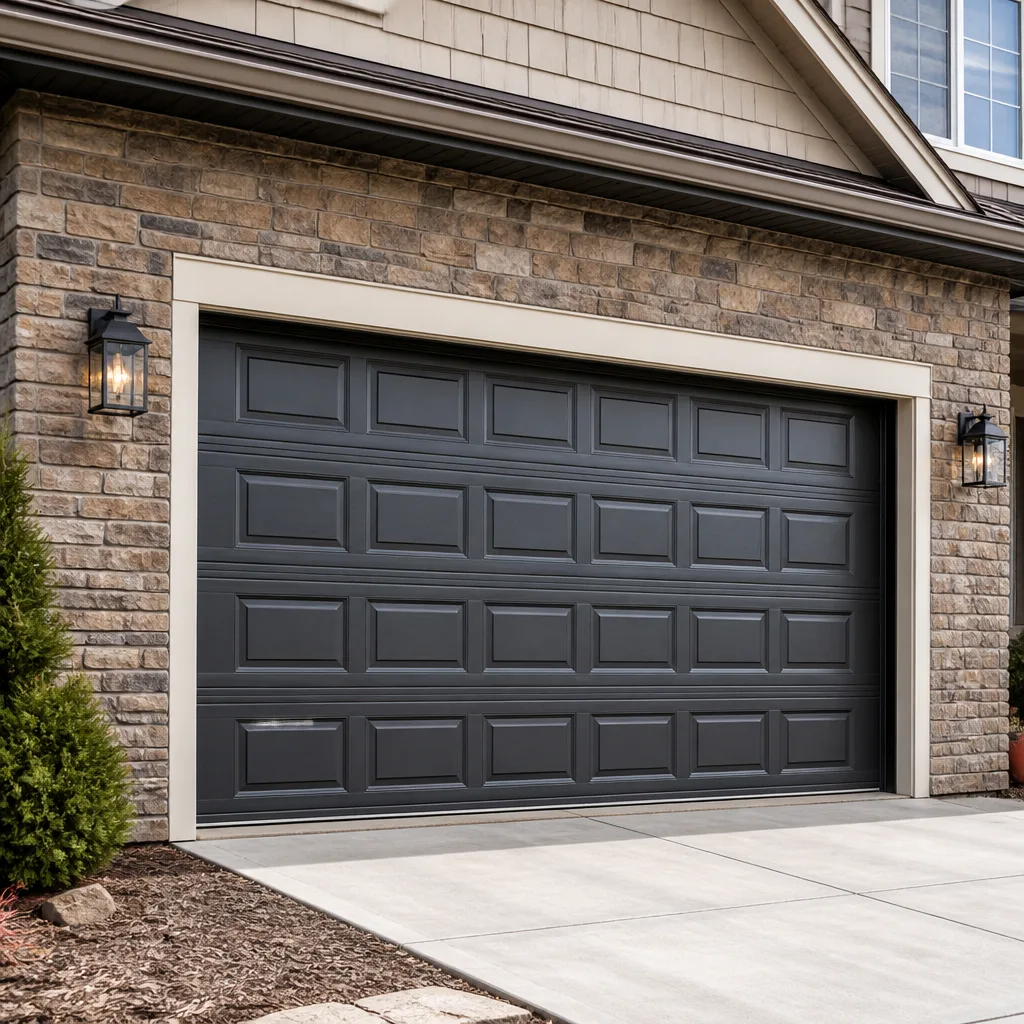 Raised-panel steel
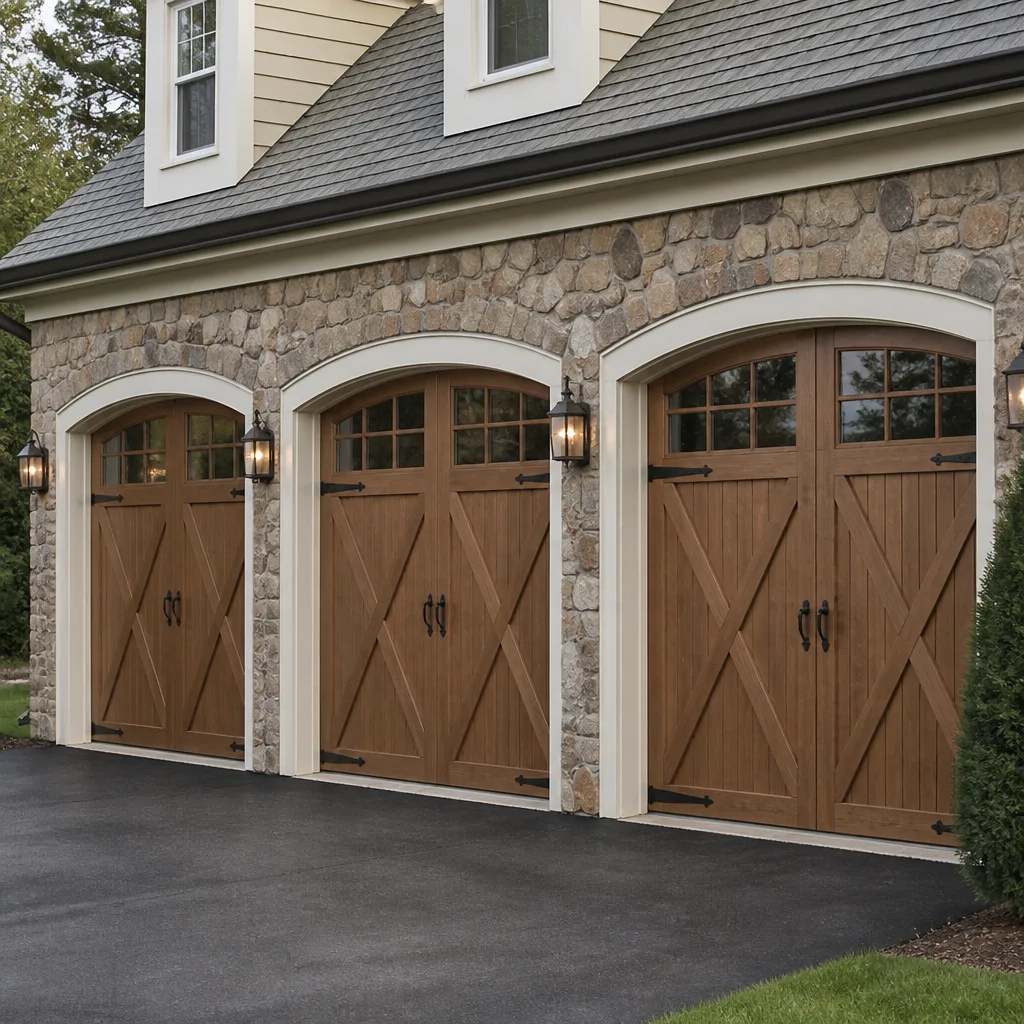 Carriage house
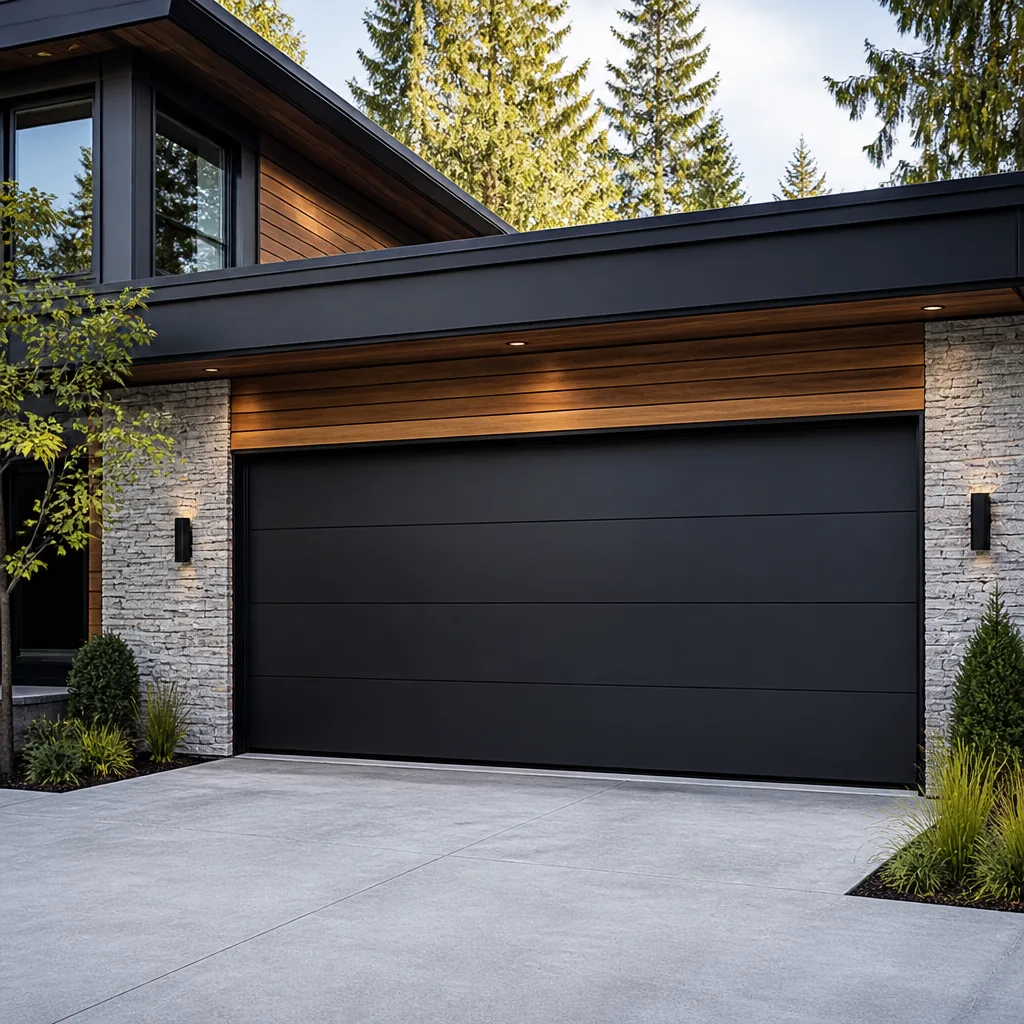 Modern flush
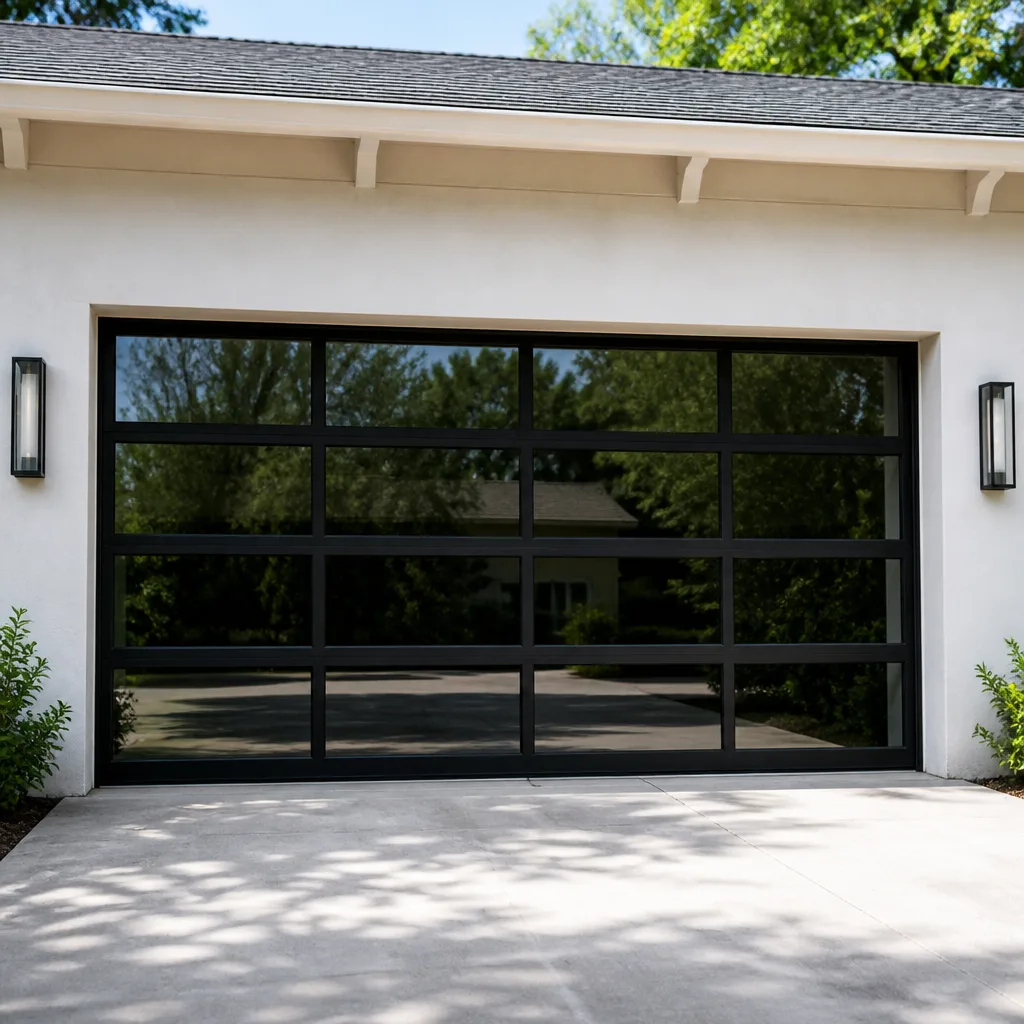 Full-view glass
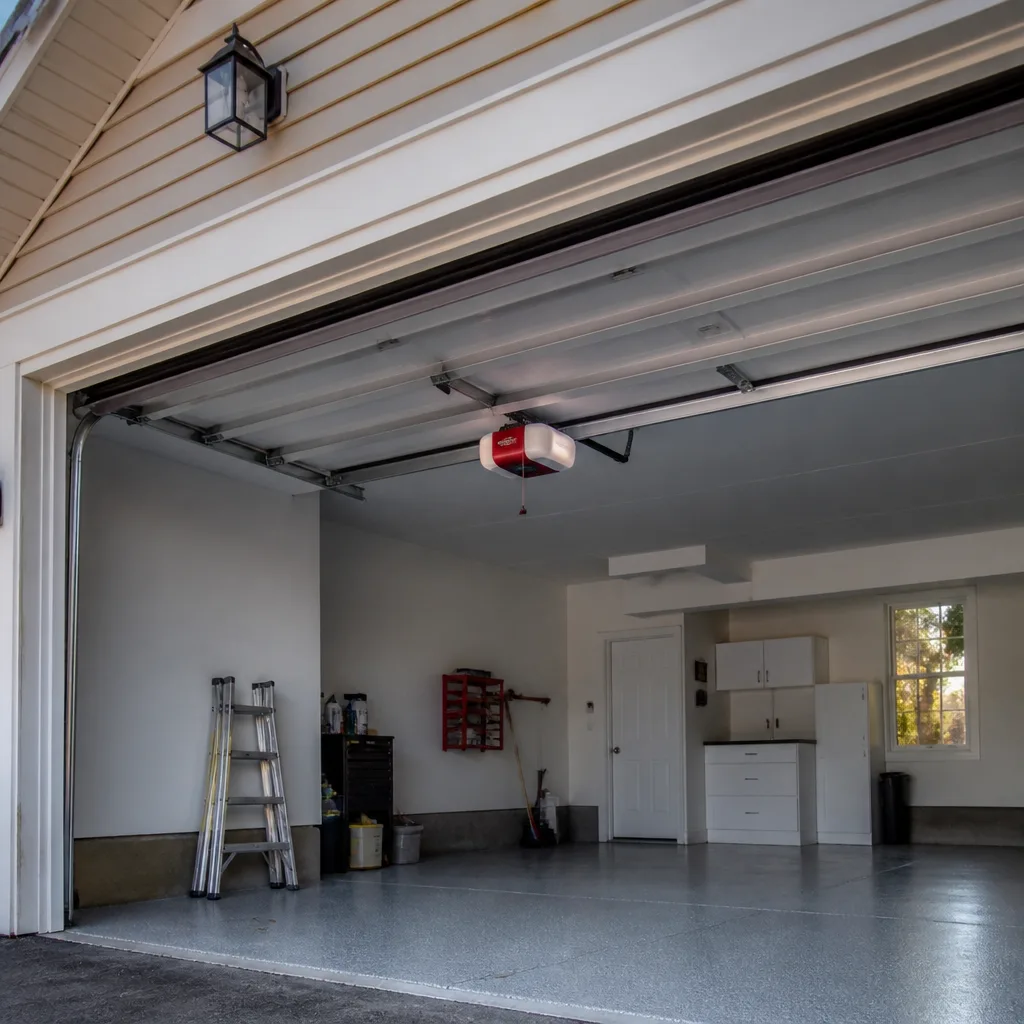 LiftMaster openers
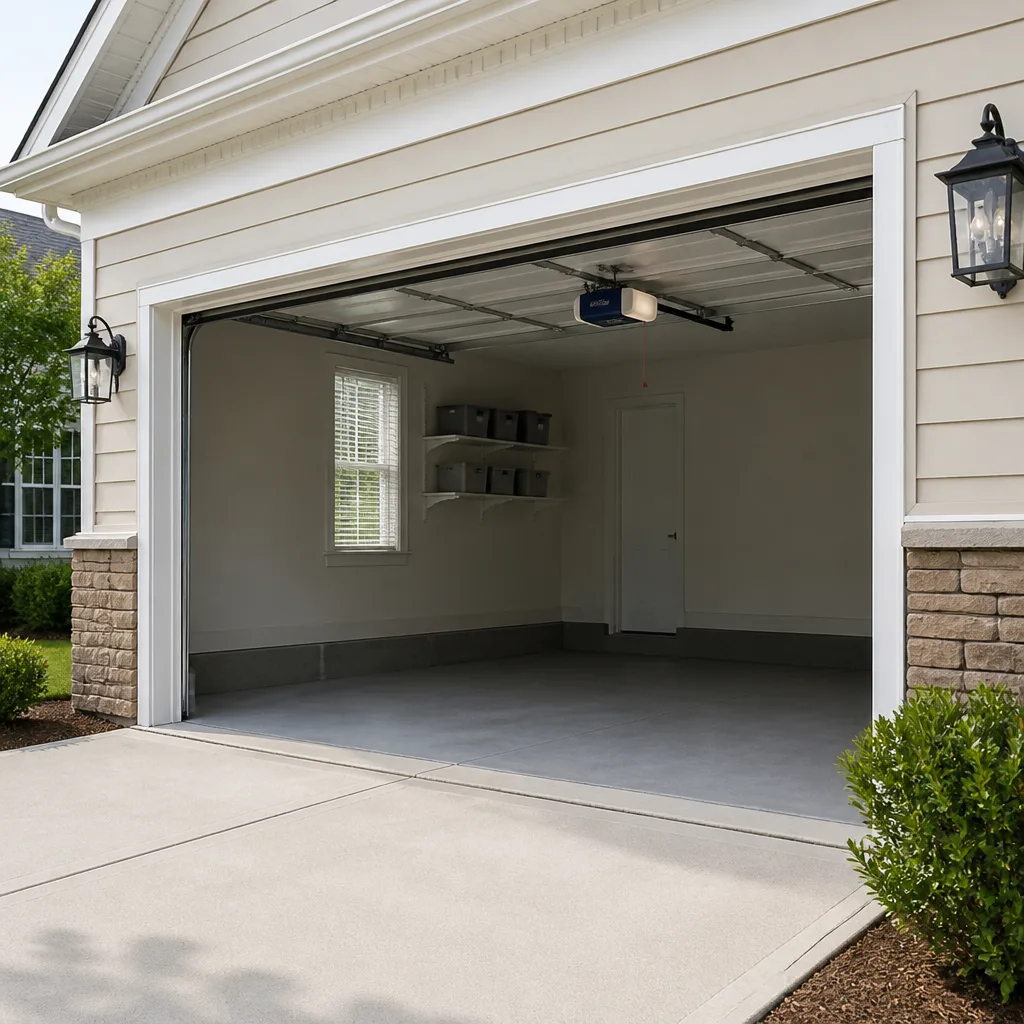 Chamberlain openers
Full 25-point door and opener safety check with every visit - springs, cables, rollers, tracks, and your LiftMaster or Chamberlain opener included
You get a price before we start. It does not change when the pro arrives.
Get your free estimateGarage Door Repair Maintenance Checklist for Bellevue Homeowners
Most garage door advice tells you to lubricate the rollers and call it a year. That misses how a door actually fails. In our experience across Bellevue, the call that wakes a homeowner up is almost always a snapped torsion spring, and that spring gave off warning signs for weeks before it let go: a widening coil gap, a line of orange rust, a cycle count nobody was tracking. A generic checklist won’t catch any of that. This guide organizes maintenance around failure modes instead, in the order they really happen on a door system. You’ll learn what breaks first, second, and third, which lubricants survive Bellevue’s wet climate, how to inspect a spring without touching it, and how to diagnose a modern opener. It’s written for daily drivers in a city where the garage is the front door.
Quick Answer
The most effective garage door maintenance checklist in Bellevue tracks components by failure sequence rather than by a flat seasonal list: inspect springs visually every month, lubricate moving parts every 6 to 12 months with a grit-resistant product, balance-test the door twice a year, and run opener diagnostics on a fixed schedule. That sequencing matters because on a typical 10 to 15 year old door system the springs, rollers, and opener logic board fail in a predictable order. Matching your effort to that order prevents the failures that cause the most expensive emergency calls.
Styles & brands we work with
- Raised-panel steel
- Carriage house
- Modern flush
- Full-view glass
- LiftMaster openers
- Chamberlain openers
Table of Contents
- The Component-by-Component Failure Timeline
- How to Inspect Your Springs Without Touching Them
- Lubrication That Holds Up in Bellevue’s Wet Climate
- Opener Diagnostics for Legacy and Smart Systems
- Maintenance Intervals for Bellevue Usage Patterns
- The Safety Reverse Test and Balance Test
- How Bellevue Weather and Housing Shape Wear
- Common Mistakes to Avoid
The Component-by-Component Failure Timeline
On a 10 to 15 year old door system, parts don’t fail at random. They fail in roughly the same order, and knowing that order tells you where to aim your attention. Here’s the sequence we see again and again in Bellevue homes.
First to go: springs. A torsion spring is under high tension every time the door opens and closes, and those cycles add up. Springs are typically rated for a fixed number of cycles, and a household that uses the garage as its main entry burns through them faster than one that parks outside. When a spring fails it’s usually a snap, not a slow decline, but the wear leading up to it is visible.
Second: rollers and hinges. These take the vibration and grit of daily use. Nylon rollers wear flat; steel rollers loosen and rattle. By the time a door is 10 to 15 years old, worn rollers are common and they put extra strain on the opener.
Third: the opener. Gears wear, logic boards age, and safety sensors get bumped out of alignment. A chain-drive unit that’s 12 years old may still run, but it’s working harder against worn rollers and a stiffening door.
Fourth: cables and bottom brackets. These follow the springs into failure because they carry the same load. A frayed cable is a safety issue and shouldn’t wait.
Match your maintenance effort to this order. Spend most of your inspection time on springs and rollers, and treat the opener as a diagnostic routine rather than a once-a-year glance. When you notice wear on several of these at once, it’s usually cheaper to fix them together than to handle them one emergency at a time. Our garage door repair service exists for exactly this clustering problem.
How to Inspect Your Springs Without Touching Them
Springs are the most dangerous part of your door, and we handle them for a reason. A wound torsion spring holds enough stored energy to cause serious injury if it’s adjusted or released without the right training and tools. So we never recommend a homeowner touch, wind, or adjust a spring. What you can do safely is look at it from a distance and read the signs. Here’s what to check.
- Look for gaps in the coil. On a torsion spring above the door, run your eye along the coil. A healthy spring is a tight, even spiral. A widening gap between coils is a sign the spring is stretching as it fatigues.
- Check for rust. A line or patch of orange rust, especially near the ends, means moisture has gotten into the steel. Rust weakens the spring and often shows up first in our damp stretches of weather.
- Watch for a sagging door. If the door sits unevenly or drops faster on one side, the spring may already be failing.
- Listen. A loud bang from the garage, or a door you can barely lift by hand, usually means a spring has snapped.
- Note the color code. Many springs are painted a color that indicates size or tension. If you ever need a replacement, that code saves time.
If you find a gap or rust, that’s your cue to stop operating the door and call us. Our Garage Door Repair Bellevue Pros team treats spring work as a core specialty, not an add-on, because it’s the most technically demanding part of the job. Read the spring like a gauge. It’s telling you how much life is left long before it fails.
Lubrication That Holds Up in Bellevue’s Wet Climate
Bellevue’s long, wet stretches of weather change the lubrication question. The product that works in a dry climate isn’t necessarily the one that protects here. In damp conditions, the wrong lubricant turns into a grit magnet that accelerates wear instead of reducing it.
What works: a silicone-based spray lubricant or a lithium-grease product on metal-to-metal contact points holds up well in damp air and won’t hold onto grit. Apply it to hinges, rollers, and the pivot points, not the tracks themselves. Silicone in particular resists water well and stays put through wet months.
What to avoid: heavy wet grease applied too generously. It collects grit and dust, which then grinds against the rollers. WD-40 in its standard form is a light solvent, not a long-term lubricant, and it doesn’t last through a Bellevue winter. Likewise, avoid anything that leaves a sticky film.
How to apply it:
- Close the door fully.
- Spray a light coat on each hinge pivot and roller stem. A little goes a long way.
- Wipe off excess so it doesn’t attract grit.
- Wipe the track clean with a dry cloth rather than lubricating it.
Do this every 6 to 12 months, and more often if you hear squeaking. Lubrication is the cheapest maintenance you can do, and in our wet climate it’s the one that pays off most in extending roller and hinge life.
Opener Diagnostics for Legacy and Smart Systems
Openers across Bellevue span a wide range, from older chain-drive units to current Wi-Fi-enabled LiftMaster and Chamberlain models. A good diagnostic checklist works for both. The core checks are the same; the smart systems just add a few extra verification points.
For any opener:
- Listen for grinding or straining when the door moves. Grinding often means worn gears, and straining usually points to door or roller problems rather than the motor itself.
- Test the safety reverse. Put an object in the door’s path and confirm it stops and reverses.
- Check the safety sensors. If the door won’t close or reverses immediately, misaligned or dirty sensors are the usual cause.
- Watch for the door reversing partway down. That’s a force-setting or sensor issue.
- Inspect the rail and belt or chain for slack.
For Wi-Fi-enabled systems:
- Verify the app connection is live and reports door status correctly.
- Check that firmware or app updates haven’t reset force limits.
- Confirm the sensor pairing if the opener has a smart hub.
- Test the auto-close or timer features.
We’re factory-familiar with LiftMaster, Chamberlain, Genie, Clopay, Amarr, Wayne Dalton, Craftsman, and Raynor, which means our technicians diagnose by known specs rather than guesswork. Brands like Clopay and Amarr appear often on doors across the area, and their openers and door hardware have predictable behavior worth knowing. Our garage door opener repair section covers the full range. Built for your opener, not just any opener: that’s the diagnostic mindset that gets it right the first time.
Maintenance Intervals for Bellevue Usage Patterns
A house cat may not be the reason your door wears out. Cycles are. In Bellevue, an attached garage used as the primary entry point averages 4 to 6 cycles per door per day when you count everyone leaving, returning, and running errands. Multiply that across a family and a 15 year old door and the cycles add up fast. Here’s an interval schedule calibrated to that reality.
| Task | Recommended Interval |
|---|---|
| Visual spring inspection (gap, rust) | Monthly |
| Lubricate hinges, rollers, pivots | Every 6 to 12 months |
| Safety reverse test | Monthly |
| Balance test (lift door halfway by hand) | Twice a year |
| Full professional inspection | Once a year |
| Opener diagnostic checklist | Twice a year |
| Spring replacement (typical cycle life) | At rated cycles, often 10 to 15 years of daily use |
If your household cycles the door more than 6 times a day, tighten these intervals. A door in a busy Bellevue home that opens 10 times daily reaches the same wear point in fewer years than a quiet one.
The Safety Reverse Test and Balance Test
The safety reverse and balance tests catch problems before they reach a failure. They’re quick and they’re the two tests we recommend never skipping, because a door that doesn’t reverse on an object is a genuine hazard.
Safety reverse test:
- Open the door fully, then close it.
- As it closes, place a piece of wood or a roll of paper towels in its path.
- The door should reverse immediately on contact. If it doesn’t, the force settings or sensors need attention.
- Check the sensors at the base: a light or object placed in the beam should stop the door.
Balance test:
- Close the door and disconnect the opener by pulling the release handle.
- Lift the door by hand to about halfway open.
- Let go. A balanced door should hold roughly in place. If it slams down or takes effort to lift, the spring tension is off.
Don’t adjust the spring yourself to fix balance. That’s a job for a trained technician. If the door fails either test, stop using it and call us. The same routine applies whether you own a Clopay, Amarr, or Wayne Dalton door; the test is universal even if the garage work shouldn’t be treated as a multi-trade job.
How Bellevue Weather and Housing Shape Wear
Bellevue has a cool, wet climate for much of the year, and that’s the single biggest local factor in garage door wear. Damp air gets into springs, hinges, and tracks. Rust forms faster on steel that’s exposed to repeated moisture. Good lubrication and prompt attention to rust spots matter more here than in dry regions.
Temperatures swing between seasons too, and metal expands and contracts. A door that fit perfectly in summer can feel tight or misaligned in winter. Tracks pull out of alignment, bolts loosen. That’s not a defect, it’s normal movement, and a twice-a-year balance test catches it early.
Housing style matters as well. Many Bellevue homes have attached garages that see heavy daily use, and a growing share have modern smart openers and insulated doors. Wayne Dalton and Clopay doors are common, and their hardware has known wear patterns. Older Craftsman openers still run in plenty of homes, and a worn Craftsman chain drive often signals gear wear before the motor fails.
One more local note: some Bellevue neighborhoods see a lot of tree cover, and pine needles, leaves, and grit collect in tracks. Keep the tracks clean of debris, especially after storms. Grit in a track is a slow killer of rollers and hinges.
When windstorms roll through, inspect the door and track before opening it again. Storm and impact damage doesn’t always show up right away.
Common Mistakes to Avoid
- Greasing the tracks. Tracks should stay clean and dry. Grease collects grit, and grit wears rollers faster. Wipe them down instead.
- Winding or adjusting springs yourself. Springs are under high tension. This is the most dangerous part of your door, and it’s not a homeowner repair. Call a trained technician for anything involving the spring.
- Skipping the safety reverse test. A door that doesn’t reverse on a person or object is a hazard. Test it monthly.
- Using WD-40 as a long-term lubricant. It’s a solvent, not a lasting protectant, and it won’t hold up through a Bellevue winter.
- Ignoring a small rust spot on the spring. Rust weakens the coil and often precedes a snap. A spot today is a failure later.
- Assuming a noisy door is normal. Squeaks and grinding usually mean worn rollers or an opener problem, not “just how it is.”
- Waiting for total failure. A single spring snap may leave the door unusable, and a matched pair usually gets replaced together. Catching wear early lets you plan instead of panic.
See the difference
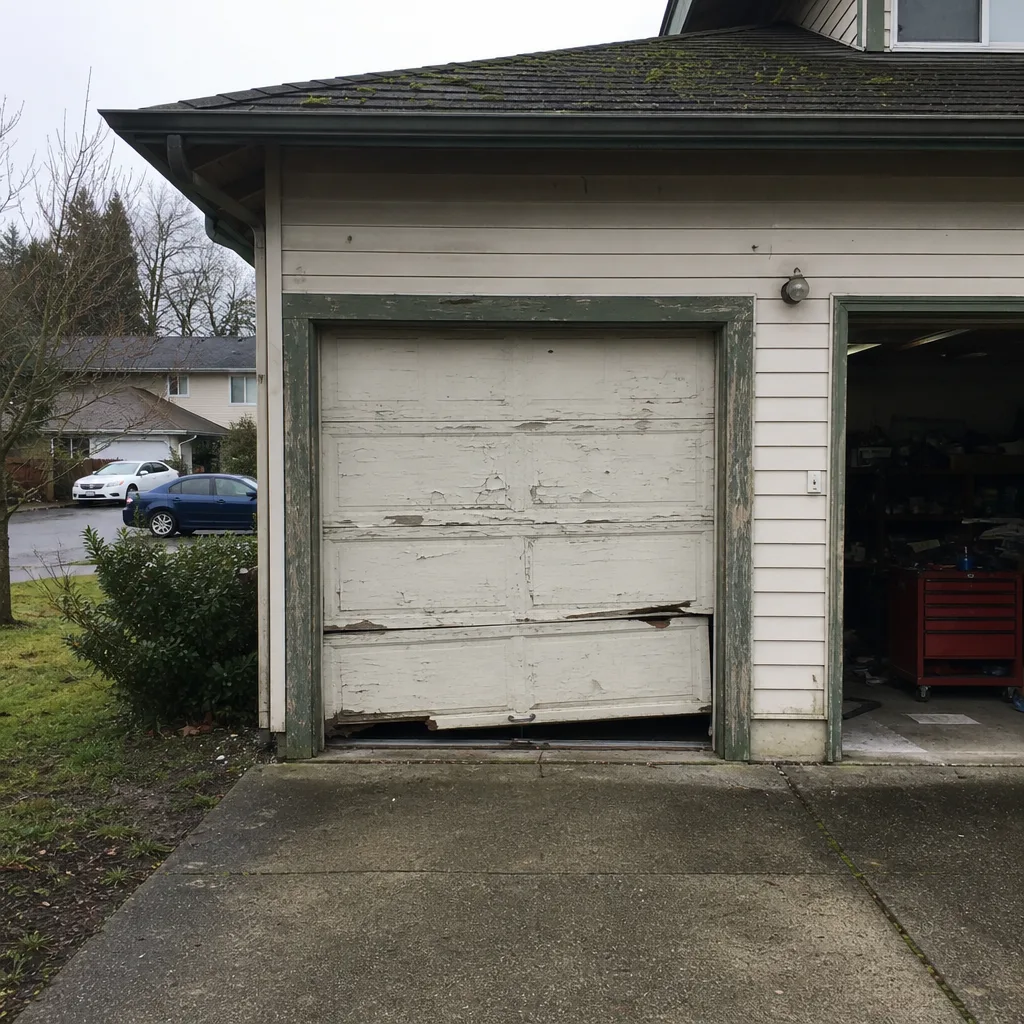 Before
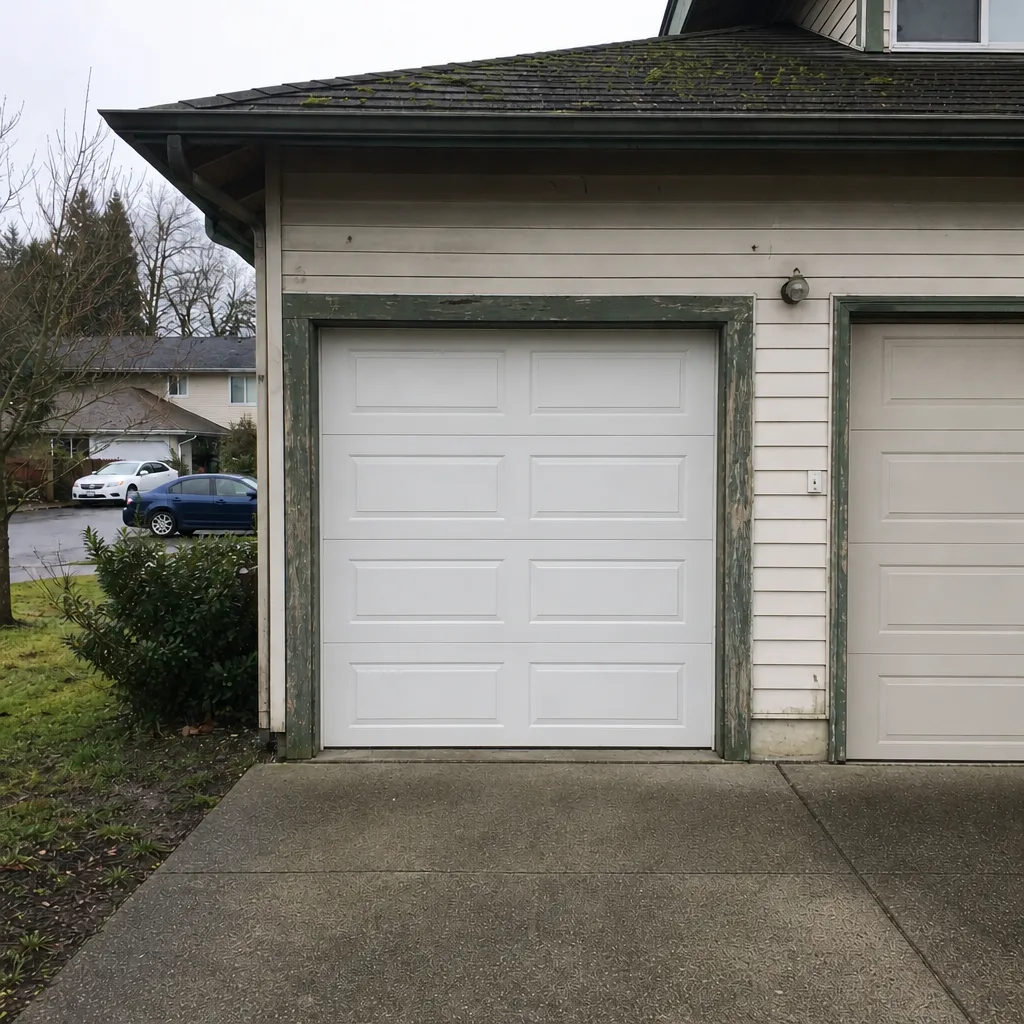 After
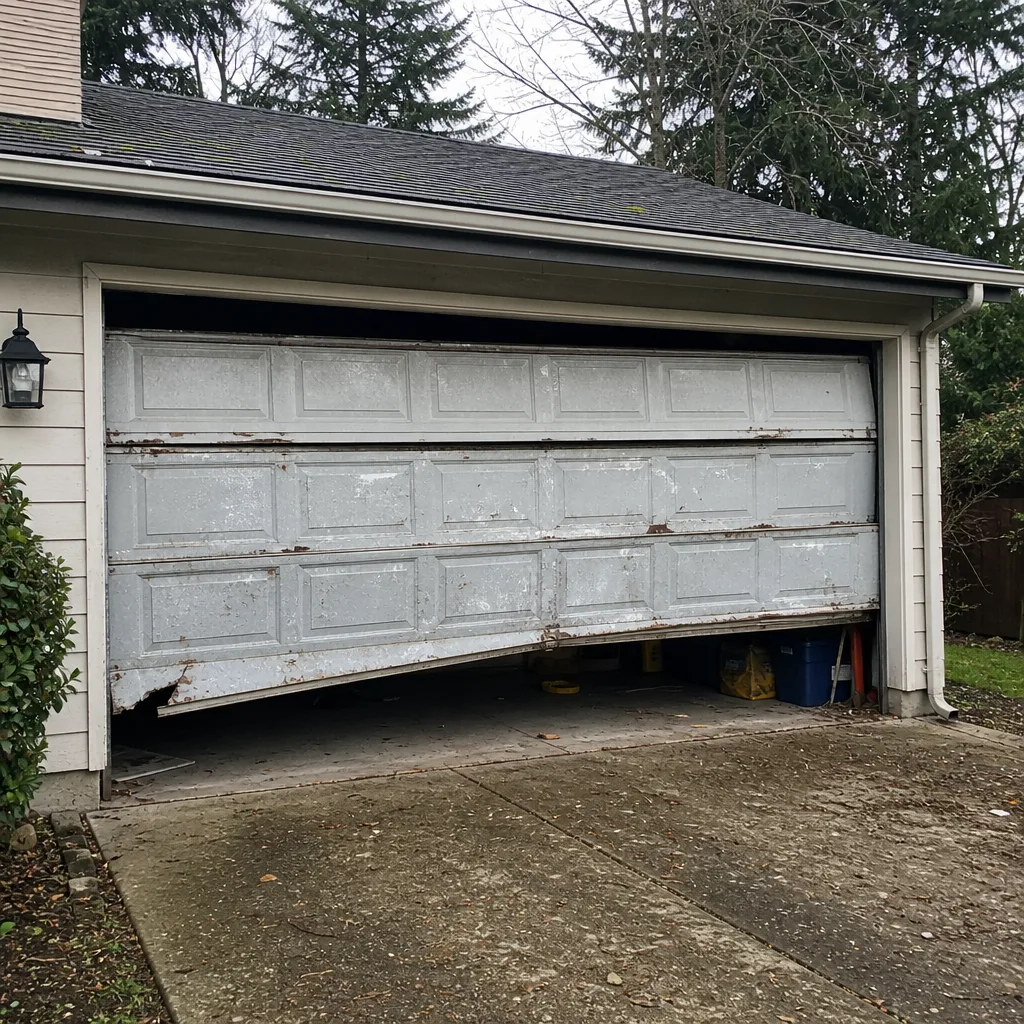 Before
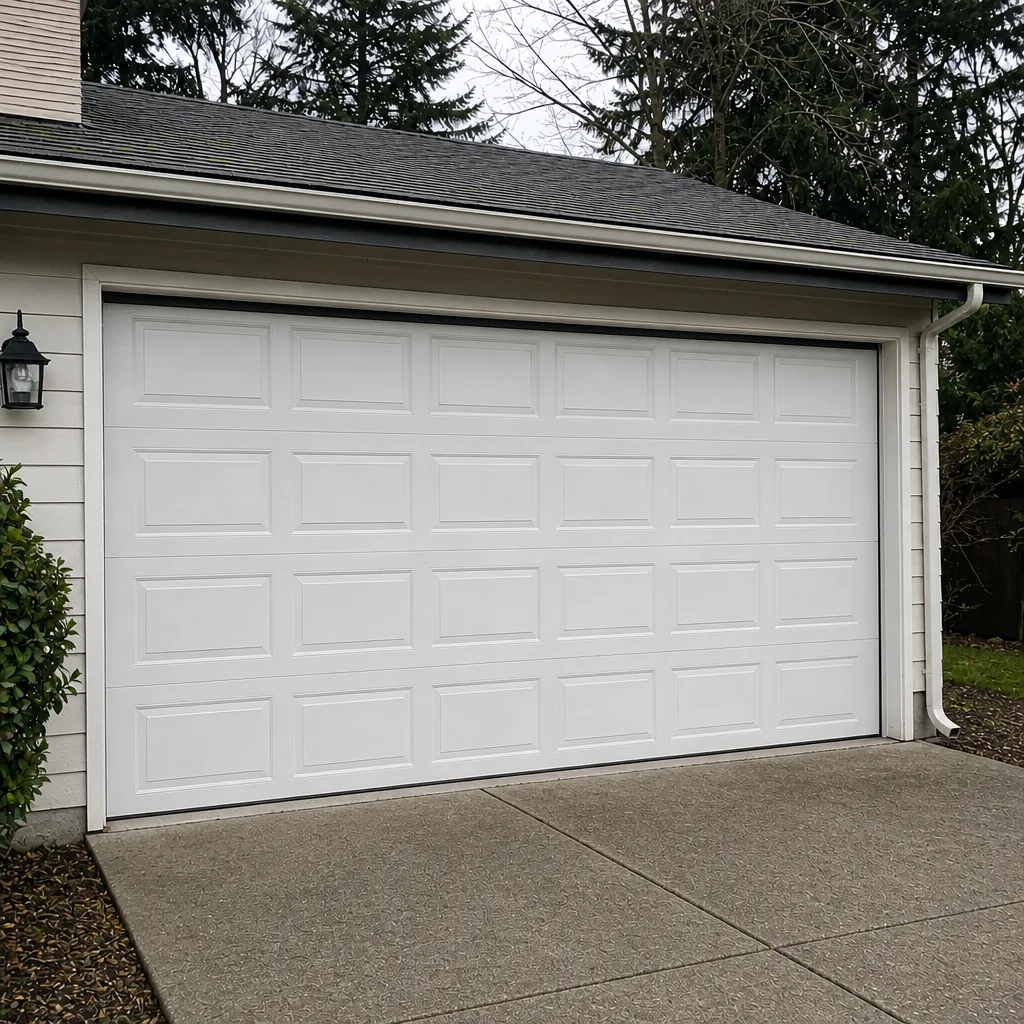 After
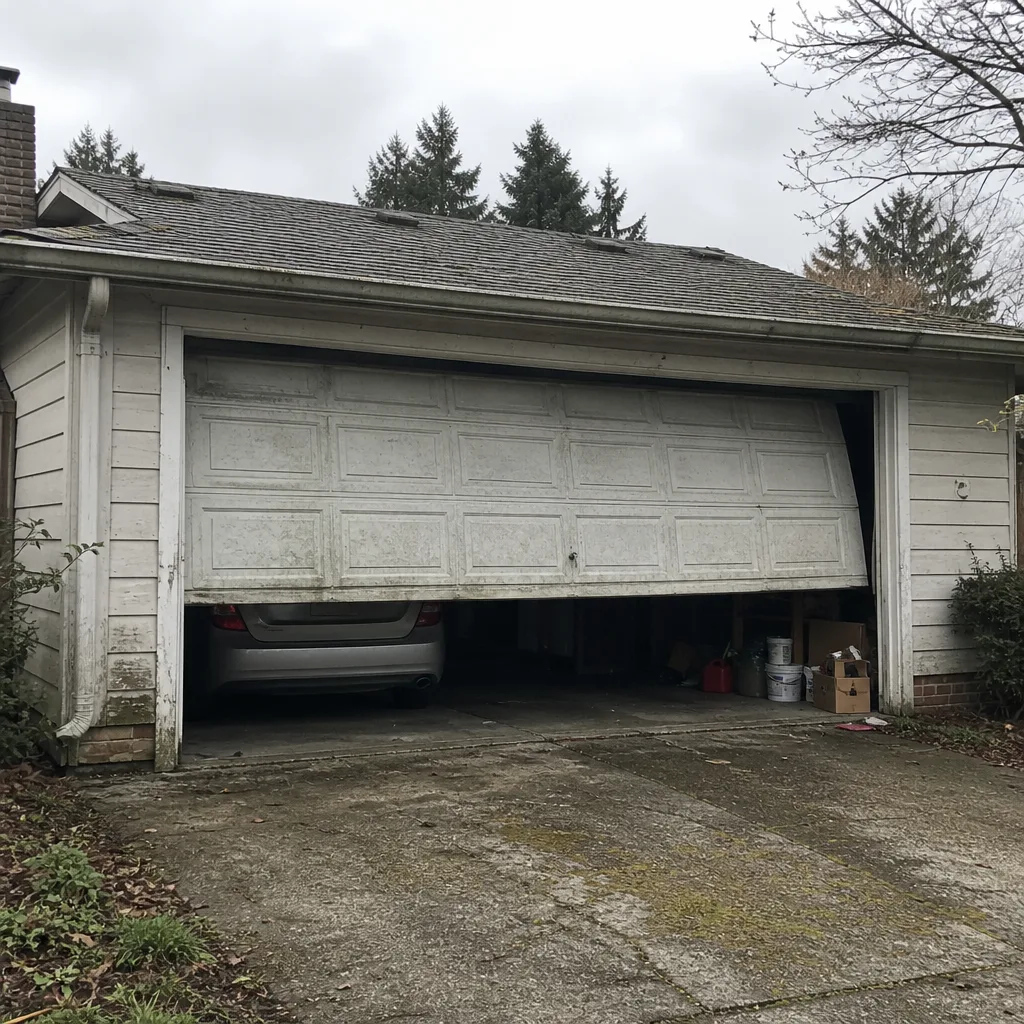 Before
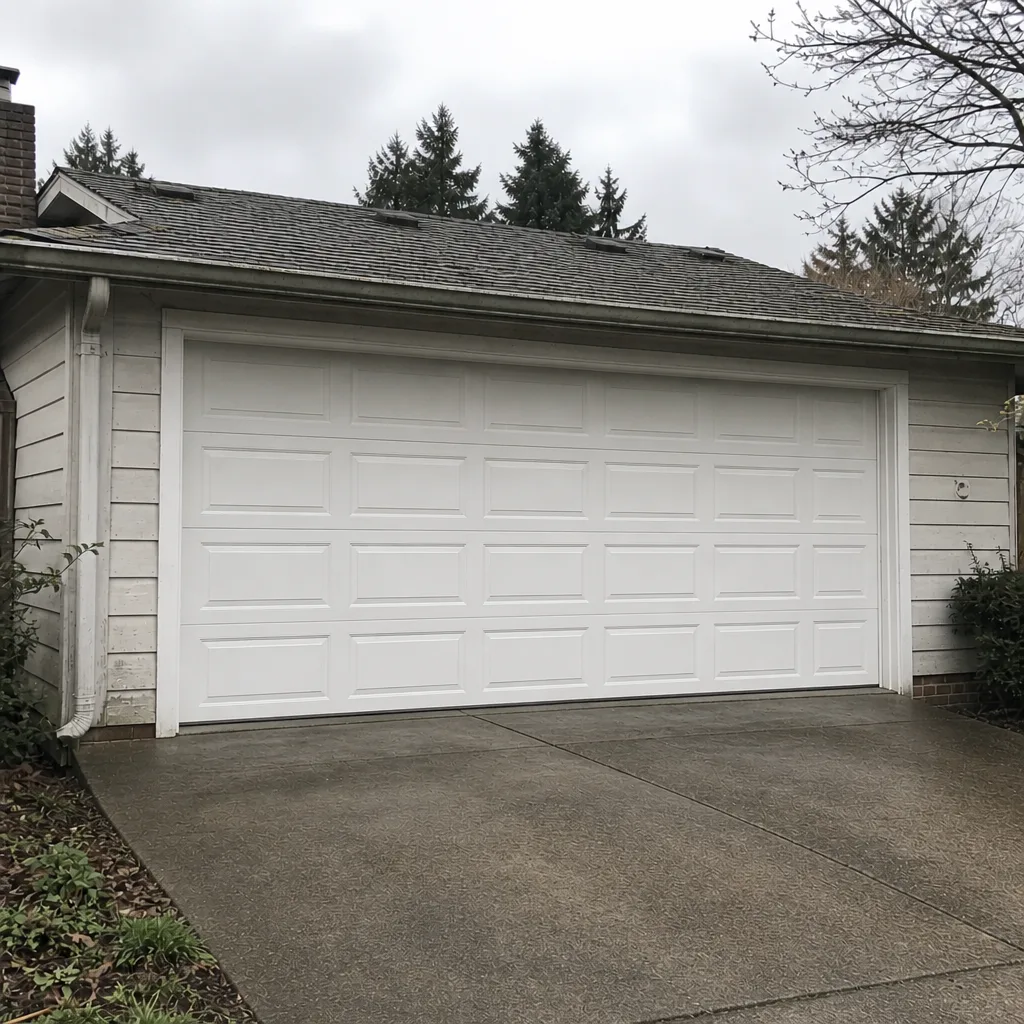 After
When to Call a Professional
Some jobs belong to a trained technician, and a garage-door specialist is the right call for anything involving springs, cables, or the opener’s internal mechanics. Call us if you see rust or a coil gap in the spring, if the door feels very heavy in the balance test, if a door is off its tracks or damaged in a storm, if the opener grinds or reverses unexpectedly, or if you’re planning an upgrade and want a real assessment. Our technicians have up to 8 years of experience, and we handle spring, opener, and door work as a single-trade specialist. If you’re weighing a replacement, our garage door installation team can walk you through options for a full system. Garage Door Repair Bellevue Pros offers free estimates in Bellevue, and a written price is agreed before any work starts. Call (833) 962-9266.
Frequently Asked Questions
In Bellevue, plan on a visual inspection monthly, lubrication every 6 to 12 months, and a professional inspection once a year. Homes that use the garage as their main entry and cycle the door more than 6 times daily should tighten those intervals. The best guide is how your door is behaving, not just the calendar. Call (833) 962-9266 for an exact quote; estimates are free.
No. A torsion spring stores enough energy to cause serious injury, and releasing or winding one without the right training and equipment is dangerous. Springs are the most dangerous part of your door, so we recommend a trained, safety-equipped technician. We handle spring repair as a core service and can get your door safely back on track.
The written estimate is the price. We quote and agree the cost before any work starts, so you won’t get an invoice bigger than the number you approved. What we tell you on the estimate is what you pay unless you approve a change. Call (833) 962-9266 for a free estimate.
The local pro we connect you with is licensed and insured as their state requires. We connect homeowners with independent local professionals, and each technician brings up to 8 years of experience. Call (833) 962-9266 to ask about your specific job.
Yes, opener problems are same-day territory in Bellevue. Fast dispatch runs from 7am to 7pm, Sunday through Friday. We answer 24/7, so call (833) 962-9266. A call outside dispatch hours is booked into the next opening, Sunday through Friday, 7am to 7pm.
On a door that age, focus on spring inspection, roller and hinge wear, and opener diagnostics, because that’s the failure order. Lubricate moving parts, test safety reverse monthly, and run the balance test twice a year. If you see worn rollers alongside a stiff opener, fix them together. Our garage door repair team can assess all of it in one visit. Call (833) 962-9266 for a free estimate.
The Bottom Line
A garage door maintenance checklist works best when it follows how parts actually fail, not a generic seasonal reminder. In Bellevue, that means watching springs for coil gaps and rust, keeping lubricant grit-resistant and water-ready for our wet months, and testing safety reverse and balance on a real schedule. Springs, rollers, the opener, and cables fail in sequence, and matching your effort to that sequence is what prevents the emergency calls. Our technicians have up to 8 years of experience and handle LiftMaster, Chamberlain, Genie, Clopay, Amarr, Wayne Dalton, Craftsman, and Raynor. Call (833) 962-9266 for a free estimate. We answer 24/7, with fast dispatch from 7am to 7pm, Sunday through Friday.
Written by the team at Garage Door Repair Bellevue Pros.