
Last updated November 20, 2026
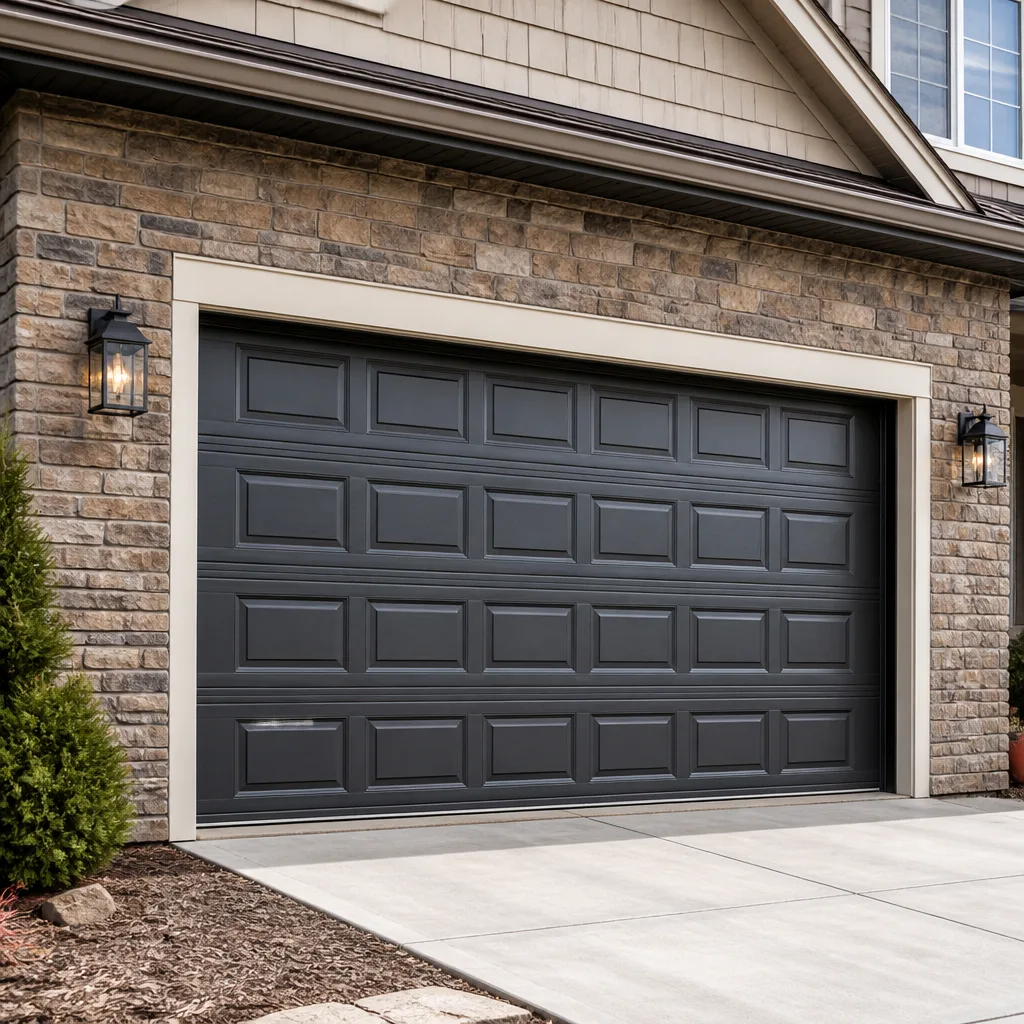 Raised-panel steel
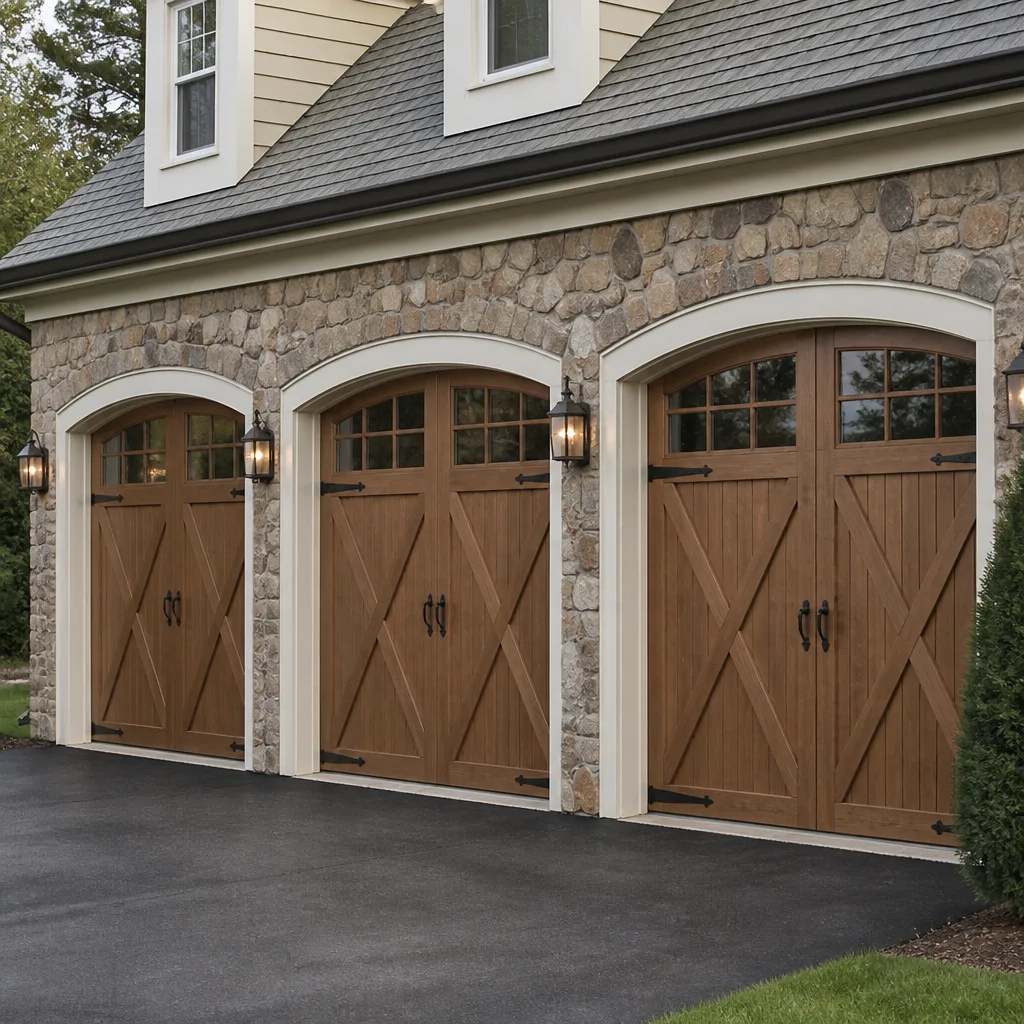 Carriage house
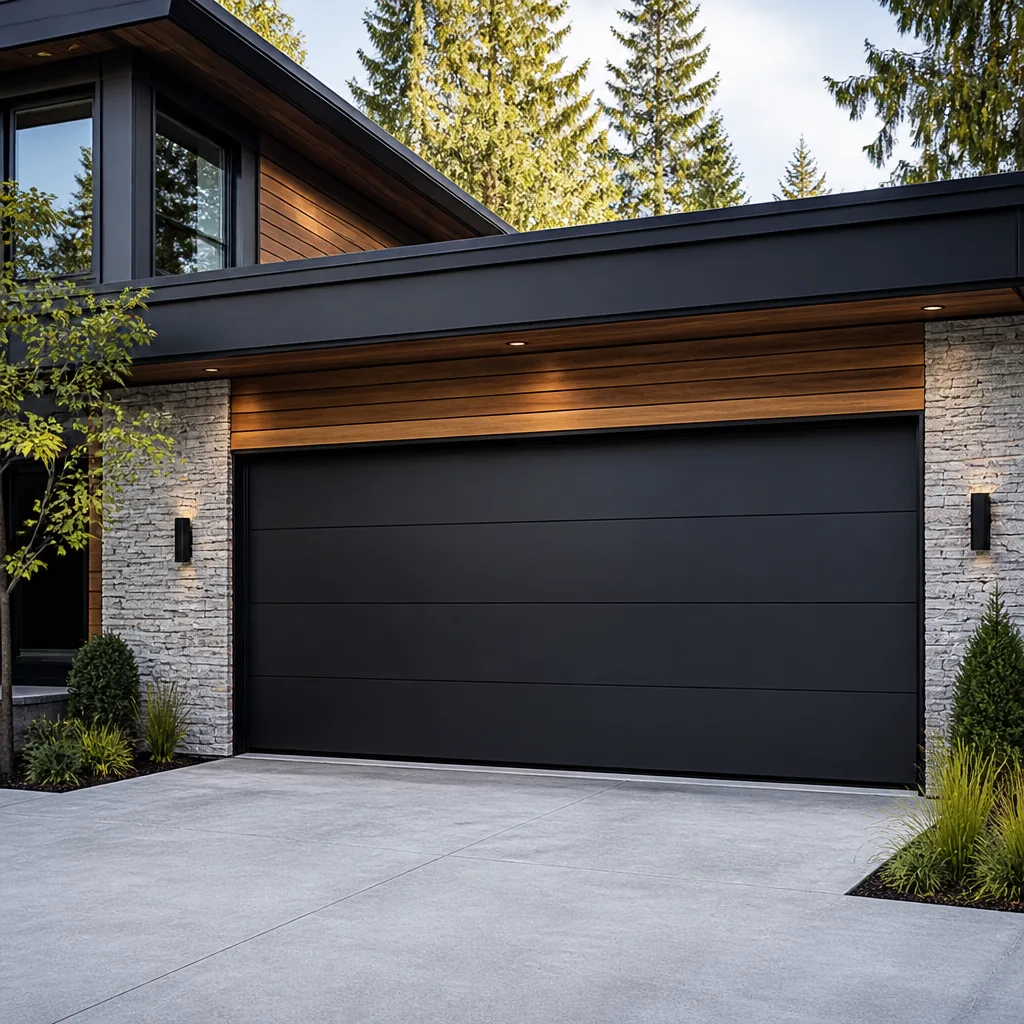 Modern flush
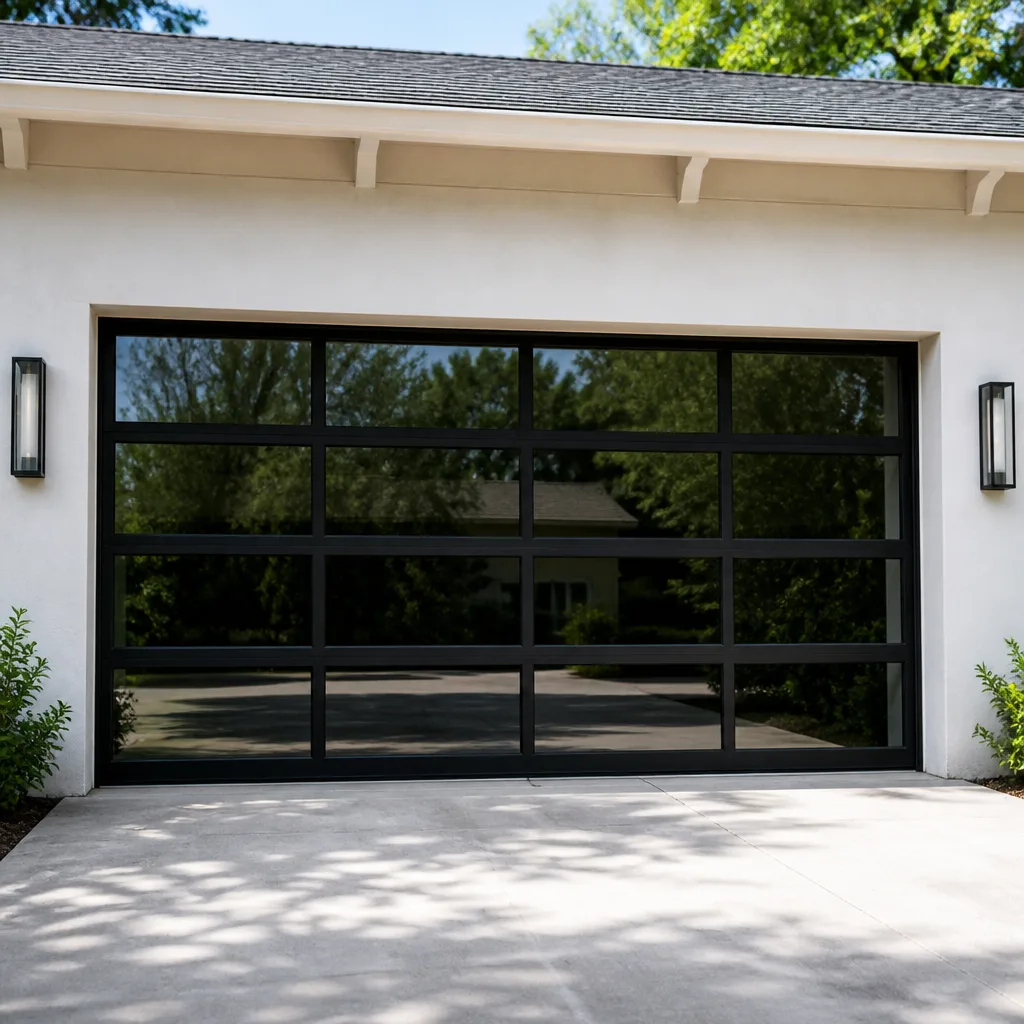 Full-view glass
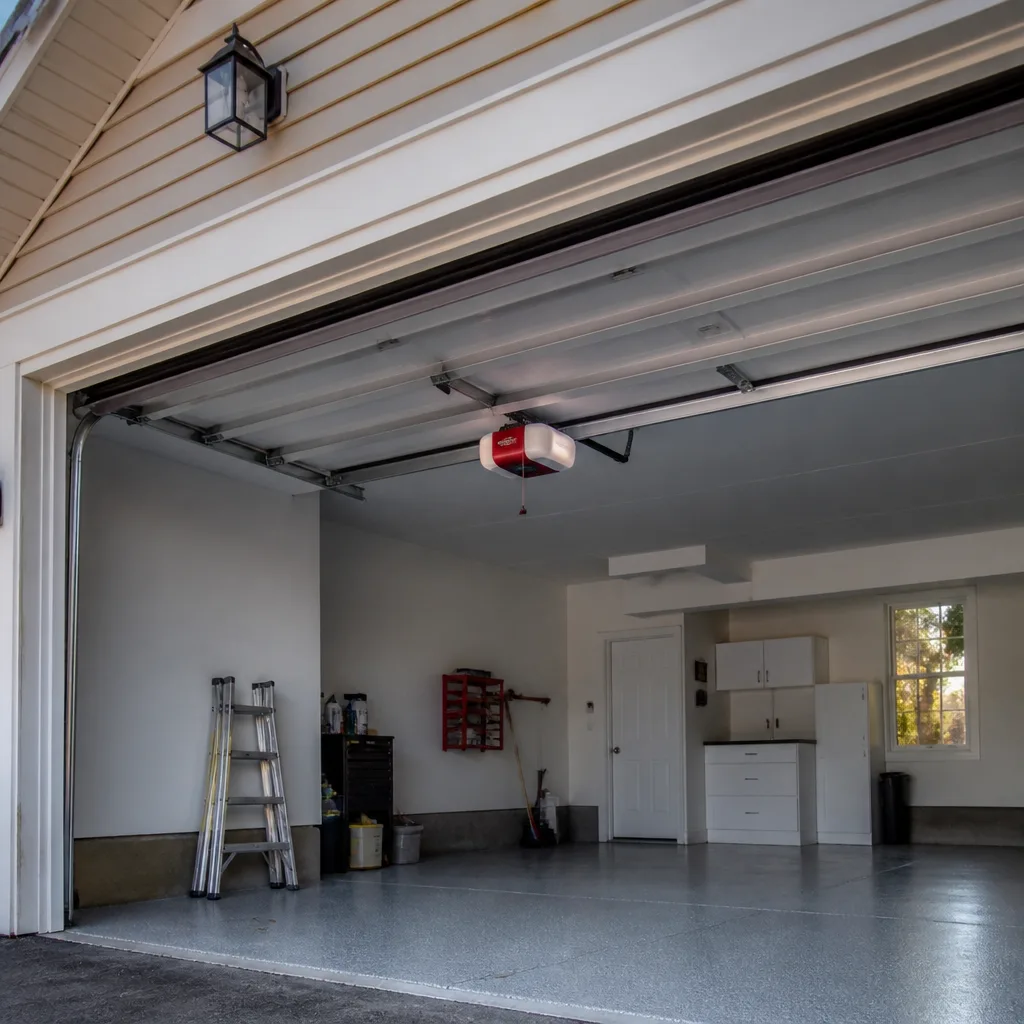 LiftMaster openers
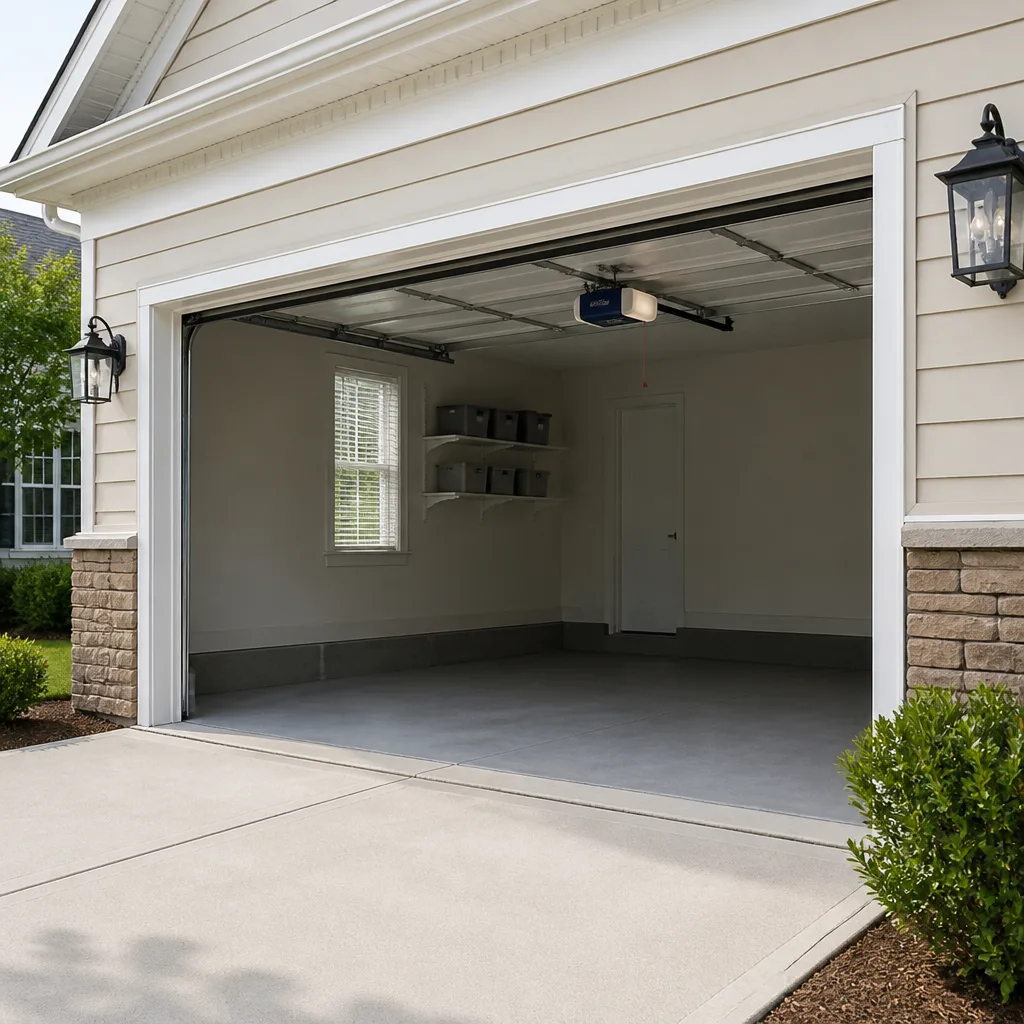 Chamberlain openers
Full 25-point door and opener safety check with every visit - springs, cables, rollers, tracks, and your LiftMaster or Chamberlain opener included
You get a price before we start. It does not change when the pro arrives.
Get your free estimateThe Complete Guide to Garage Doors in Bellevue
Most garage door guides are written for Phoenix or Atlanta. Bellevue gets 150+ days of overcast moisture per year, sits in earthquake country, and has a housing stock that skews toward premium finishes. None of that shows up in the advice most homeowners are reading. A door spec that works in the desert can fail here in a few winters, and the opener brands concentrated in Bellevue’s newer neighborhoods aren’t the ones most national guides feature. This guide maps every decision material, mechanism, insulation, brand, and repair versus replace to the actual conditions of owning a home in Bellevue, so you can make a call that holds up for the next decade, not the next dry season.
Quick Answer
Garage door decisions in Bellevue come down to moisture tolerance, seismic bracing, and hillside geometry. Steel or composite doors with a factory finish and a properly sealed bottom handle the wet season better than raw wood; torsion springs sized for a heavier door are what sloped driveways and premium finishes demand; and opener torque needs to match door weight, not the other way around. Repair makes sense when the door panels and tracks are sound and only components (springs, cables, opener) have failed. Replace when the panels, framing, or safety reverse system are compromised, or when the door was never sized for the grade of the driveway.
Styles & brands we work with
- Raised-panel steel
- Carriage house
- Modern flush
- Full-view glass
- LiftMaster openers
- Chamberlain openers
Table of Contents
- How Pacific Northwest Moisture Affects Door Longevity
- Bellevue’s Housing Stock and the Equipment Inside It
- Hillside Lots, Sloped Driveways, and Door Weight
- Springs: The Most Dangerous Part of Your Door
- Openers: Matching Torque to the Door You Actually Have
- Noise, HOA Standards, and Eastside Design Rules
- Repair or Replace? A Bellevue Decision Tree
- What Installation Involves in Bellevue
How Pacific Northwest Moisture Affects Door Longevity
Bellevue’s wet season tests a garage door in ways national R-value charts don’t capture. Those charts are built around heat transfer, not water absorption, and they assume a dry wall assembly. Here, the door faces months of high humidity, frequent cycling between soaking rain and dry cold snaps, and a bottom seal that spends the winter sitting against a wet apron. A door rated well on paper can still delaminate at the edges if the finish isn’t sealed, because the chart never measured how a panel edge behaves after a hundred wet mornings.
Material choice is the biggest lever, and the difference shows up fast in our experience:
- Steel: The best baseline for Bellevue. A factory finish over galvanized steel resists rust well, but the bottom edge and any scratched panel is where moisture gets in. Inspect the bottom section each fall and touch up bare spots before the rains settle in.
- Wood: Beautiful and it matches many of Bellevue’s premium homes, but it needs repainting or resealing on a tighter schedule than most homeowners expect. Wood with a failing finish absorbs moisture, swells at the joints, and warps enough to throw off the track alignment.
- Composite and wood-look steel: Growing in popularity on the Eastside because they carry the look of wood without the repainting cycle. The right pick for a homeowner who wants the appearance and doesn’t want to think about it every other year.
Temperature swings matter too. Bellevue’s shoulder seasons can swing twenty degrees or more in a day. That motion works the seals and the weatherstripping, and it’s often the first thing to fail before the door itself does. A cheap bottom seal is the quiet cause of a lot of drafts.
Bellevue’s Housing Stock and the Equipment Inside It
Bellevue’s building boom from the 2000s onward created a concentration of equipment that shows up repeatedly on repair calls. Newer construction in the area leans toward builder-grade openers with a handful of brand names, and those same names recur across hundreds of homes built in the same few years. That’s good news for a homeowner: the failure modes are known, and a technician who works the brand regularly can often diagnose by symptom over the phone before arriving.
What we see most in newer Bellevue homes:
- LiftMaster and Chamberlain belt-drive openers, standard in many 2000s-and-later builds because they’re quiet and builder-friendly. Belt-drive is more vibration-sensitive than chain-drive, so a loose belt or a worn idler pulley produces a specific rattle that’s easy to misdiagnose as a motor problem.
- Craftsman chain-drive units on older homes and some remodels. These are durable but louder, and the plastic drive gears eventually strip. A loud grind that gets worse over a few weeks is usually the gear, not the motor.
- Torsion spring setups with two springs on heavier double-car doors in newer construction. Builders often went to two springs to handle a heavier insulated door; that means a matched pair replacement, not a single spring swap.
- Wi-Fi-enabled openers in more recent builds, where the homeowner now controls the door from an app. These add a control board and antenna that can fail independently of the mechanical parts. Diagnosing one is a different job than diagnosing a 15-year-old chain-drive.
If you’re unsure what you have, the make and model are usually printed on the motor housing or on a label inside the door panel. That information alone shortens the diagnostic time considerably.
Hillside Lots, Sloped Driveways, and Door Weight
Bellevue’s hillside lots and sloped driveways change the math on door weight, spring tension, and opener torque. A door on a graded driveway is often heavier than a comparable door on a flat lot, because the framing and panel construction needed to span the opening tend to be beefier. That weight has to be counterbalanced by correctly sized springs and moved by an opener rated for it. An opener that’s under-spec’d for a heavy door will work for a while, then start straining, reversing randomly, or failing to lift the last few inches.
What a properly matched setup looks like:
- Springs sized to the actual door weight, not to a generic door size. A heavier door needs more turns of tension to counterbalance. Under-tensioned springs make the opener do work it wasn’t built for; over-tensioned springs make the door unsafe and hard on the cables.
- An opener rated above the door weight, with headroom for the extra friction a sloped track adds. When we spec an opener for a Bellevue install, the door’s weight and the grade it travels along both factor in.
- A track and bracket setup that tolerates the grade. On a steep driveway, the door’s travel path needs to be dead straight; any sag in the brackets translates to a door that drags on one side.
- Clearance checks at the top and sides, because hillside garages often have tighter headroom than flat-lot builds, which changes which opener model will fit.
This is where a generic national guide falls short. It never asks what grade your driveway sits on, and that grade often decides whether a mid-range opener is enough or whether a heavier unit is the right call.
Springs: The Most Dangerous Part of Your Door
Springs are the most dangerous part of your door, and they’re the part we take most seriously. A torsion spring under tension stores enough energy to cause serious injury if released carelessly, and extension springs without safety containment can do real damage when they fail. This is not a component to diagnose by trial and error. We handle spring work with trained, safety-equipped technicians because the risk is genuine, not theoretical.
What a spring job actually involves, in general terms:
- Identify the spring type and rating. Torsion springs sit above the door on a shaft; extension springs run alongside the tracks. Each needs different tools and a different approach.
- Match the replacement to the door’s weight. Springs are rated by wire gauge, inside diameter, and length. A spring rated for the wrong weight is a safety problem even if it physically fits.
- Replace the pair when the setup uses two springs. A matched pair shares the load evenly. Replacing one and leaving the other means the new spring works harder and fails sooner. A pair costs about twice a single spring.
- Re-tension and test the balance. The door should lift with minimal effort by hand and stay put when opened halfway.
- Check cables, drums, and bearings while the door is apart. Cables that show fraying are replaced at the same time; a bad bearing is cheap to swap with the door already open.
For Bellevue homeowners, one pattern repeats: the wet season accelerates cable corrosion and bearing wear, so a spring that fails in the fall often comes with a cable or bearing issue that would have surfaced within months anyway. Handling both in one visit saves a second call.
Openers: Matching Torque to the Door You Actually Have
Opener repair is a specialty of its own, because the range of equipment in Bellevue homes spans legacy chain-drive units to modern Wi-Fi-enabled LiftMaster and Chamberlain smart systems. The failure modes aren’t the same across that range, and diagnosing one is not the same job as diagnosing the other. A 15-year-old chain-drive with a stripped gear is a mechanical fix. A Wi-Fi opener that drops off the app is usually a control board or antenna issue. A belt-drive that rumbles is usually a worn idler or belt tension problem.
How we approach an opener call:
- Start with the symptom. Won’t lift at all, lifts partway, reverses right after closing, runs but doesn’t move the door, or works by wall button but not remote. Each narrows the likely cause quickly.
- Check the safety reverse first. On any opener that won’t close or reverses unexpectedly, the safety reverse system and the photo-eye alignment are checked before anything else. This is a safety function, not a convenience.
- Separate mechanical from electronic. If the motor runs and the door doesn’t move, the problem is in the drive assembly or the door itself, not the opener electronics.
- Confirm the opener is rated for the door. On a Bellevue hillside lot, a mismatched opener is a common reason for repeat failures. If the opener is under-spec’d for the door weight, repairing it just resets the clock on the next breakdown.
We’re factory-familiar with the major brands, so we diagnose by known specs. That means fewer surprises on the visit and a faster path to a working door. If you’ve got a specific brand in mind, we cover the full range including Amarr, Wayne Dalton, Craftsman, and Raynor on the door side, and LiftMaster, Chamberlain, Genie, and Craftsman on the opener side.
Noise, HOA Standards, and Eastside Design Rules
Noise and design standards in Bellevue’s Eastside communities shape more garage door decisions than most homeowners realize. Many HOAs and planned communities have design review standards that specify door style, color, and material, and some restrict changes without approval. That matters when you’re replacing a door or picking a new opener: a belt-drive is quieter than a chain-drive, and in a home with bedrooms above the garage, that difference is noticeable at night.
What to check before any work starts:
- Read your HOA’s design standards before you order a door, not after. Color, panel style, and visible hardware are the usual watch items. Getting approval after the door is on the truck is an expensive problem.
- Check local noise expectations if you’re replacing an opener. A louder chain-drive is fine on a detached garage, but on a home where the garage shares a wall with a bedroom, belt-drive is the calmer choice.
- Ask about permit requirements. Most cities require a permit for structural work, and some replacement installations fall under that. Your city’s building department is the right place to confirm what your specific project needs.
- Consider the door from the street. In Eastside communities, a mismatched door color or panel style stands out. If resale is anywhere on your horizon, matching the home’s architecture carries real value.
For a homeowner making a big decision, the noise question is often settled by the door’s insulation and the opener’s drive type together. A well-insulated door on a belt-drive opener is the quieter combination, and in a shared-wall home that’s worth prioritizing over a small cost difference.
Repair or Replace? A Bellevue Decision Tree
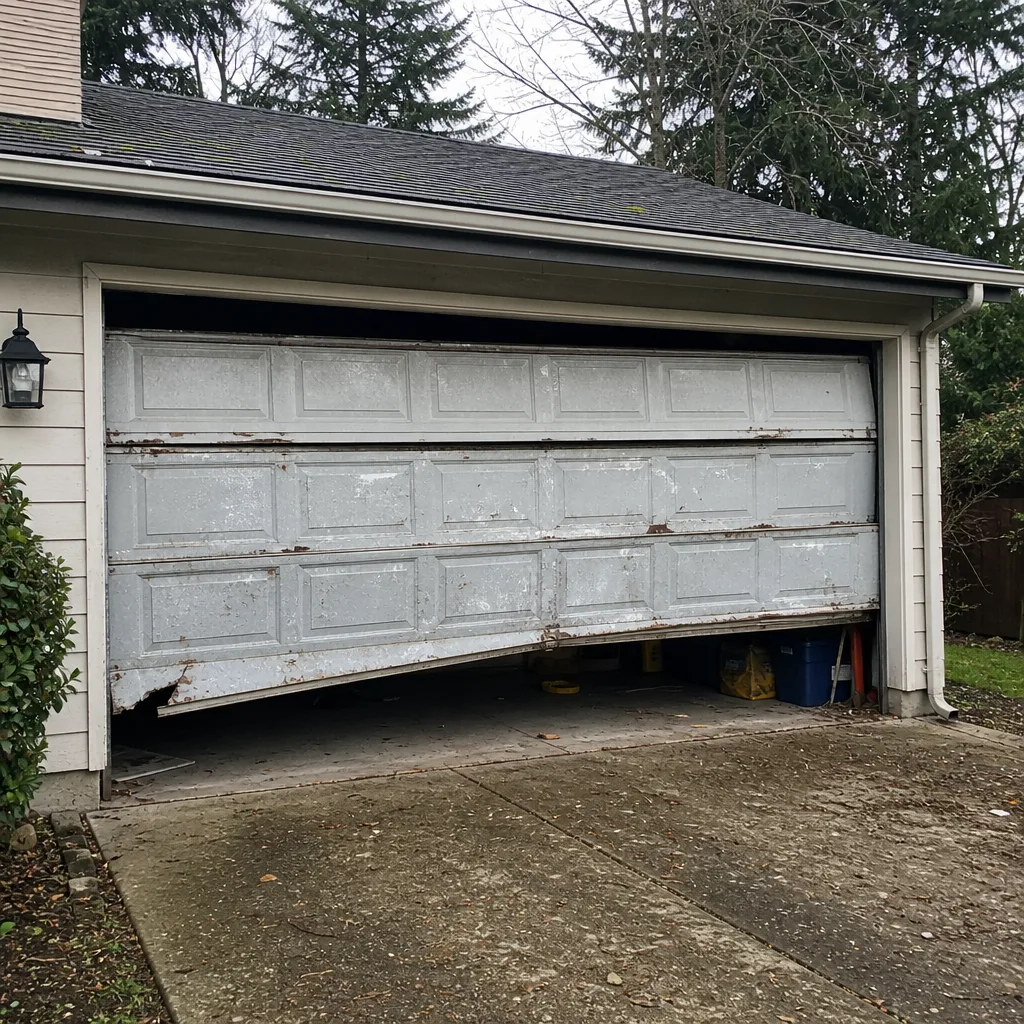
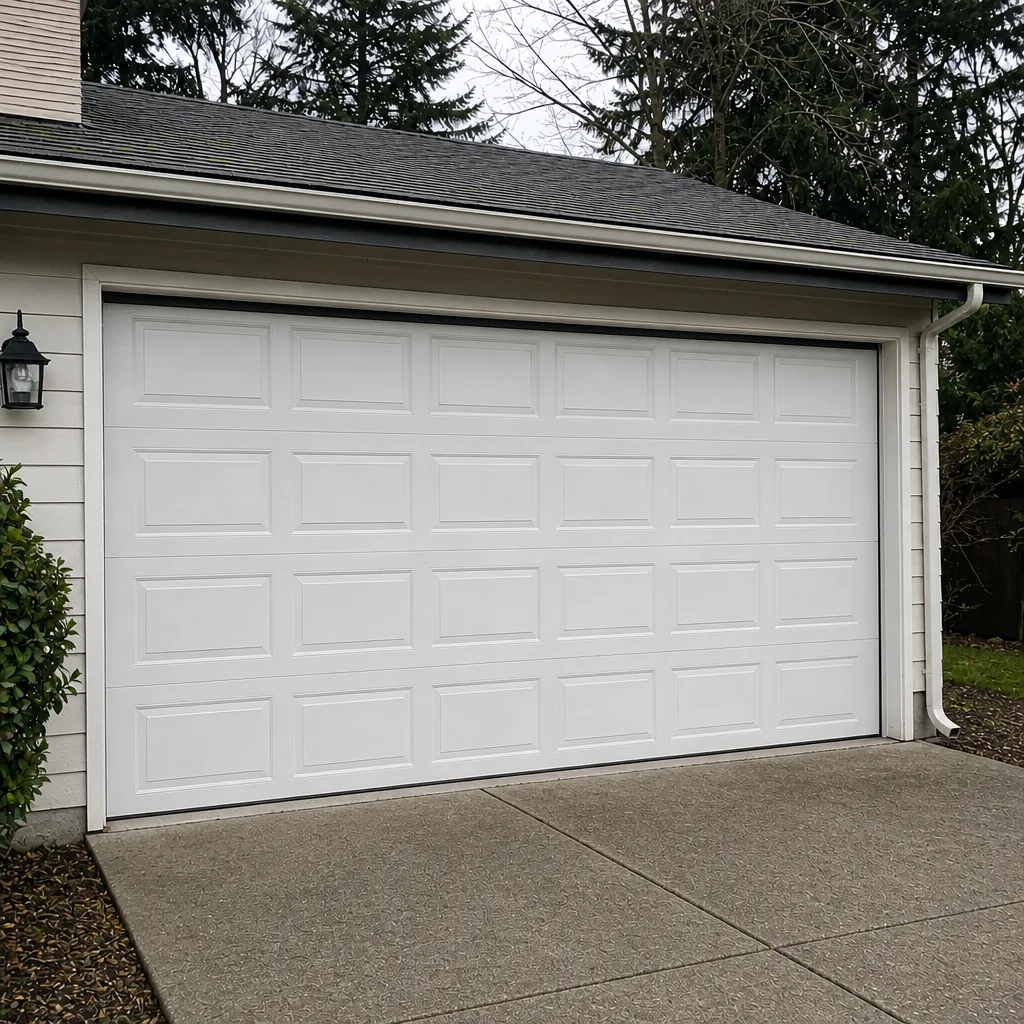
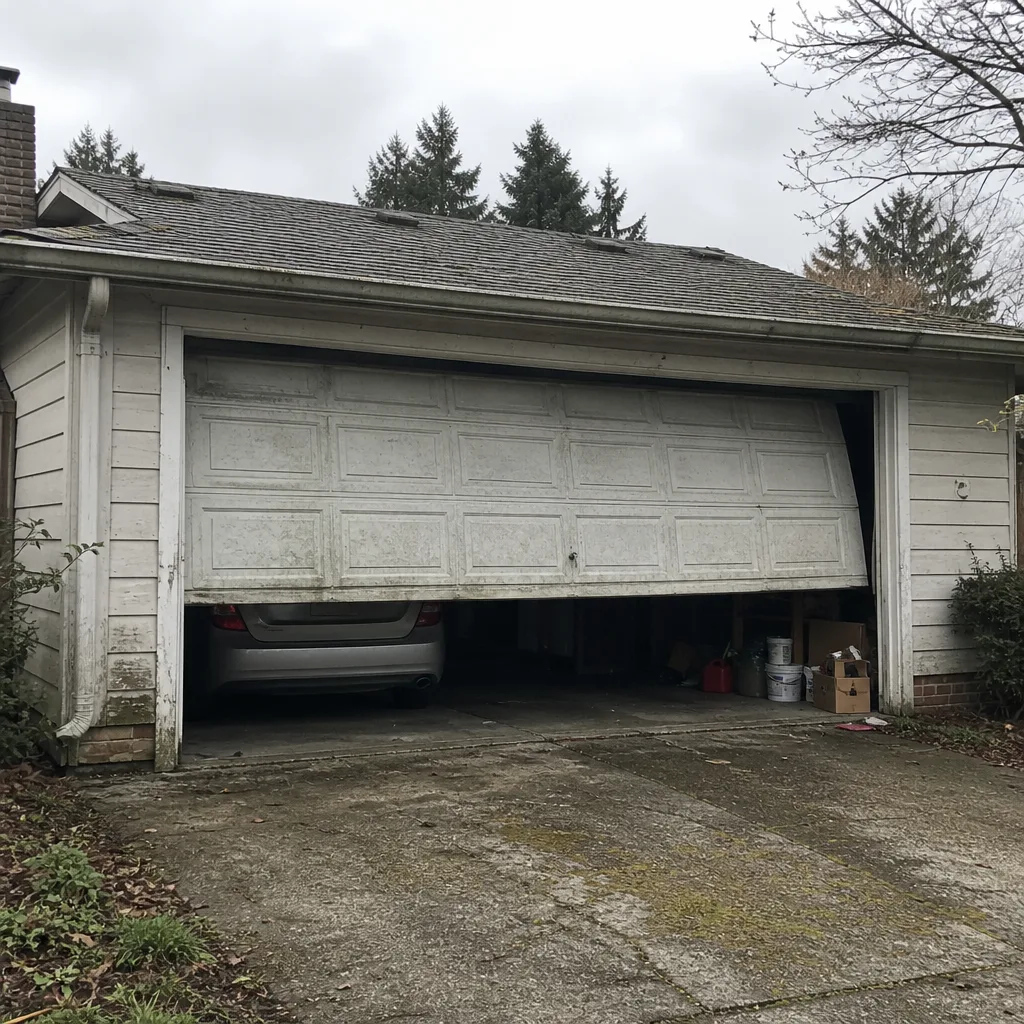
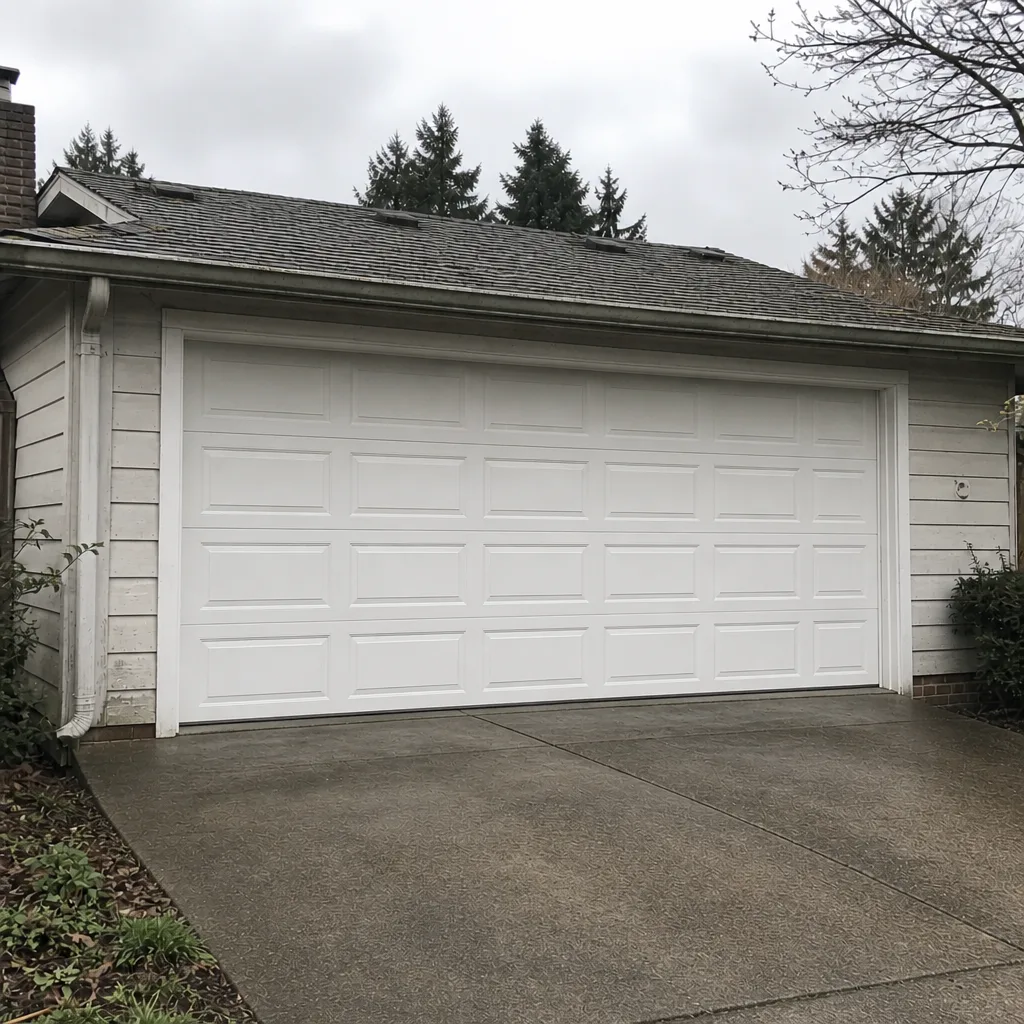
Repair or replace comes down to the condition of the door panels, tracks, and framing versus the condition of the components. If the panels are sound and the tracks are straight, the failure is almost always in a component (spring, cable, opener, roller) and repair is the right call. If the panels are warped, dented through, or the framing has shifted, replacement is the more sensible path.
Work through these questions in order:
- Are the panels straight and free of deep dents or separation at the joints? Yes: repair is likely viable. No: replacement moves up the list, because panel damage affects sealing, weight balance, and appearance.
- Do the tracks look straight and true? A track that’s been hit by a car or has sagged from grade problems can sometimes be straightened, but a badly bent track usually means the door has been running out of alignment for a while, which stresses springs and openers.
- Is the door’s bottom seal and weatherstripping intact? In Bellevue’s wet season, this is a moisture question, not just a draft question. A failing seal lets water into the door’s bottom edge, and that’s where steel starts to rust and wood starts to swell.
- How old is the opener, and is it rated for the door? An older opener that’s already been repaired once is often a better candidate for replacement than a second repair, especially if it was never spec’d for a heavy hillside door.
- What’s the door’s finish doing? A factory finish nearing the end of its life means repainting is coming. If the door also has panel damage, replacement is the better value than repair plus paint.
Bellevue material and labor costs make the decision concrete. Steel replacement doors have a wide range depending on size, insulation, and finish, and installation labor adds to that. A single component repair is a fraction of that number. The written estimate you get from the technician will show both paths when both are viable, so you can compare like for like.
What Installation Involves in Bellevue
Installation is not a same-day job, and it shouldn’t be treated like one. A new door is measured, ordered, and scheduled, because the panel sizes and the opener rating have to match your opening, your grade, and your home’s design standards. That measured approach is why we promise a free measure and a written price instead of a same-day promise on installation work.
- Measure the opening and the grade. Door width, height, headroom, and the slope of the driveway all factor in. Hillside lots often need a custom-fit door rather than a standard size.
- Confirm HOA approval and permit requirements. Your HOA standards and your city’s building department decide what’s allowed before the door is ordered.
- Order the door and opener to spec. The door’s weight and the opener’s torque rating are picked together, not separately. A heavier insulated door needs a stronger opener and correctly rated springs.
- Remove the old door and prepare the opening. Tracks, brackets, and the spring system are stripped. The framing and sill are checked for rot or moisture damage before the new door goes on.
- Install, tension the springs, and balance the door. The door is mounted, the springs are set for the door’s weight, and the door is tested by hand before the opener is connected.
- Connect and test the opener. The opener is programed, the safety reverse system is verified, and the travel limits are set so the door closes fully without overpressure.
If your goal is repair, we can often do that on a same-day basis. If it’s a new door, the free measure and written estimate are the first step. The written quote is the price, and the price is agreed before any work starts.
Common Mistakes to Avoid
- Replacing one spring when the setup uses two. A matched pair shares the load. Replacing one and leaving the other means the new spring works harder and fails sooner. Plan for the pair.
- Choosing a door by R-value chart alone. Those charts measure heat transfer, not moisture behavior. In Bellevue’s wet season, a factory-sealed steel or composite door often outperforms a higher-rated door with a failing finish.
- Skipping the HOA check before ordering. Eastside design standards can restrict color and style. Checking after the door is delivered is an expensive mistake.
- Diagnosing a Wi-Fi opener like a mechanical one. If it works by wall button but not the app, the problem is likely the antenna or control board, not the drive. Don’t buy a new opener before checking.
- Ignoring the bottom seal. A cheap failing seal lets water into the door’s bottom edge and rots steel or swells wood. Replacing it is inexpensive and it protects the door’s most exposed section.
- Mismatching opener torque to a heavy hillside door. An under-spec’d opener works at first then strains. If the door is heavier than the opener is rated for, the answer is a correctly rated unit, not a repair.
- Treating spring work as a do-it-yourself job. Springs store enough energy to cause serious injury. This is the one component where the safe call is a trained, safety-equipped technician from the start.
See the difference
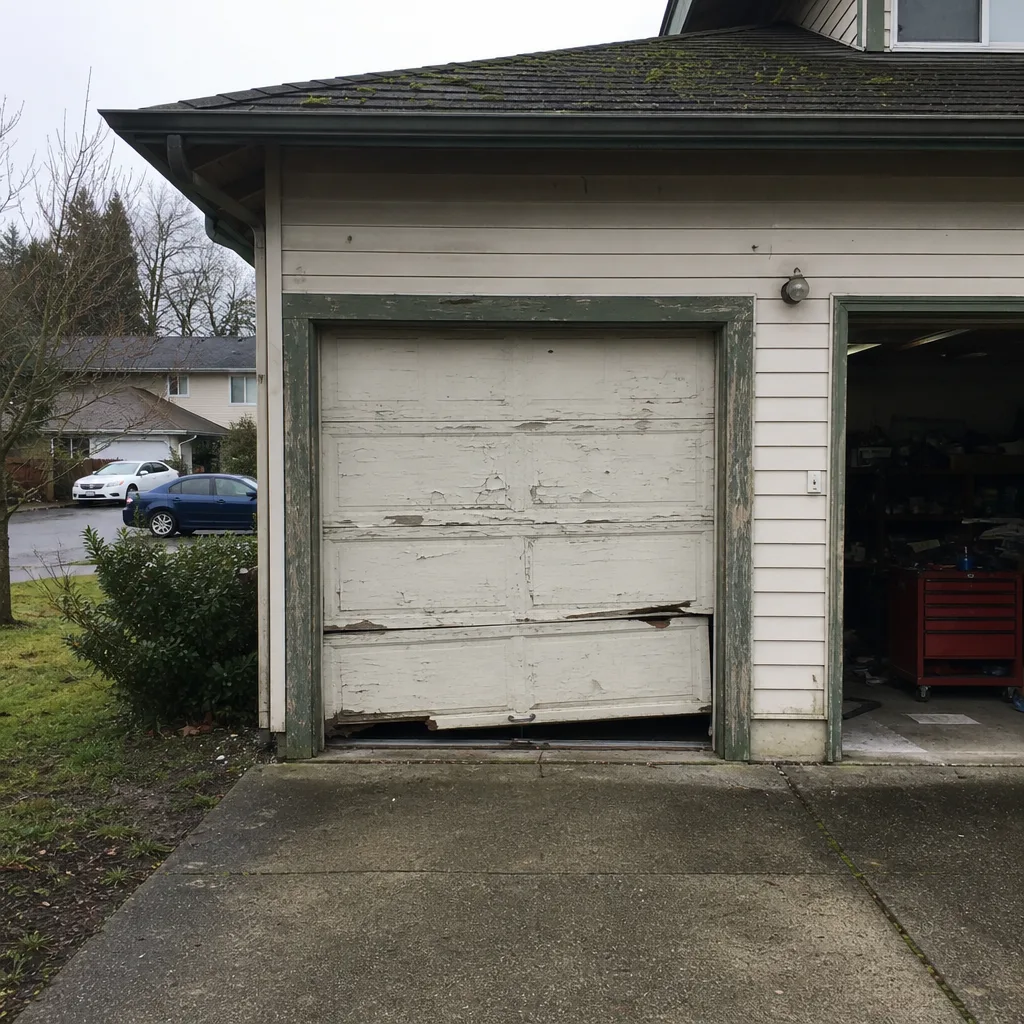 Before
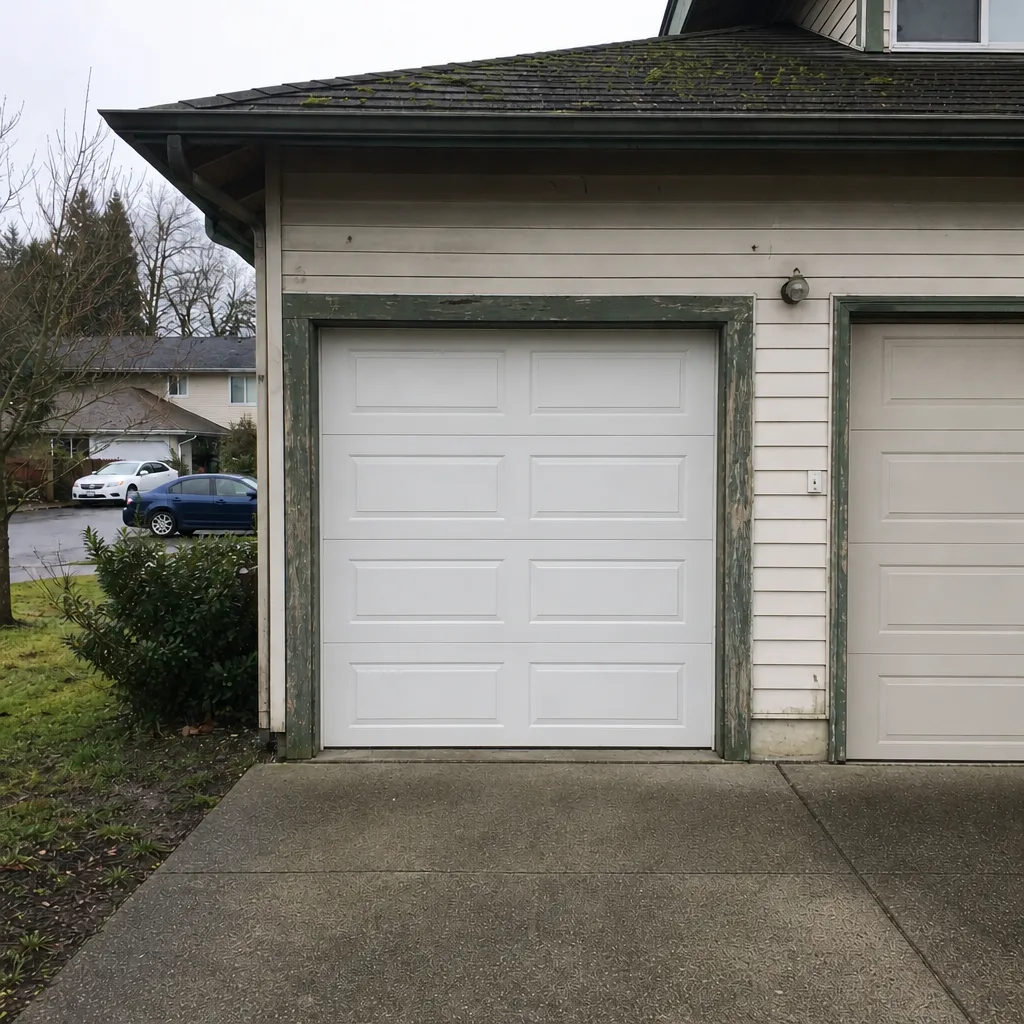 After
 Before
 After
 Before
 After
When to Call a Professional
Call a professional when a spring snaps or the door won’t lift, when the door reverses or closes on an obstruction, when a cable is frayed or off its drum, or when the opener runs but the door doesn’t move. Call if the door has been struck and the tracks look bent, if the door’s balance has changed and it lifts easily by hand or won’t stay open, or if you’re planning a replacement and need the opening measured against your grade and your design standards. Never attempt spring or cable work yourself; those are the parts a trained technician with the right tools should handle.
Garage Door Repair Bellevue Pros offers free estimates in Bellevue. Same-day service is available for repair calls, and fast dispatch from 7am to 7pm, Sunday through Friday. Call (833) 962-9266. We answer 24/7.
Frequently Asked Questions
A single spring replacement typically runs $180 to $340, and a matched pair runs about twice that, since most two-spring setups are replaced together. The written estimate you get from the technician is the price, agreed before any work starts. Call (833) 962-9266 for a free estimate.
Same-day service is available for repair calls. Fast dispatch from 7am to 7pm, Sunday through Friday. Call (833) 962-9266. We answer 24/7. A call outside dispatch hours is booked into the next opening, Sunday through Friday, 7am to 7pm.
No, the written estimate sets the price, and it’s agreed before any work starts. If we find something different on arrival, we tell you and re-quote before proceeding, so there are no surprises on the invoice. Call (833) 962-9266 for a free estimate.
The local pro we connect you with is licensed and insured as their state requires. Our technicians have up to 8 years of experience, and we focus exclusively on garage doors, openers, springs, and installations. Call (833) 962-9266 with any questions.
A steel or composite door with a factory finish and a properly sealed bottom is the best fit for Bellevue’s wet season, since wood needs repainting or resealing on a tighter cycle and failing finishes let moisture into the door. A well-insulated door matters, but on a shared-wall home, the quieter combination of an insulated door on a belt-drive opener matters more. Call (833) 962-9266 for an estimate.
Some replacement projects require a permit and some don’t, depending on the scope of the work. Your city’s building department is the right place to confirm what your specific project needs before you order the door. We can walk through the installation process with you at the free measure. Call (833) 962-9266.
The Bottom Line
Bellevue’s climate, seismic ground, and hillside geometry make garage door decisions here different from what national guides describe. The shortest version of everything above: choose a material that handles moisture (steel or composite with a sealed bottom), pair it with springs and an opener sized to the door’s actual weight, check HOA and permit requirements before ordering, and treat spring work as the professional-only job it is. Repair is often the right call when the panels and tracks are sound; replacement is the better value when the door’s finish and structure are both fading. For any of it, Garage Door Repair Bellevue Pros covers the four jobs that matter: garage door repair, garage door opener repair, garage door installation, and spring repair. One call covers it.
Call (833) 962-9266 for a free estimate. We answer 24/7. Fast dispatch from 7am to 7pm, Sunday through Friday.
Written by the team at Garage Door Repair Bellevue Pros.