
Last updated November 20, 2026
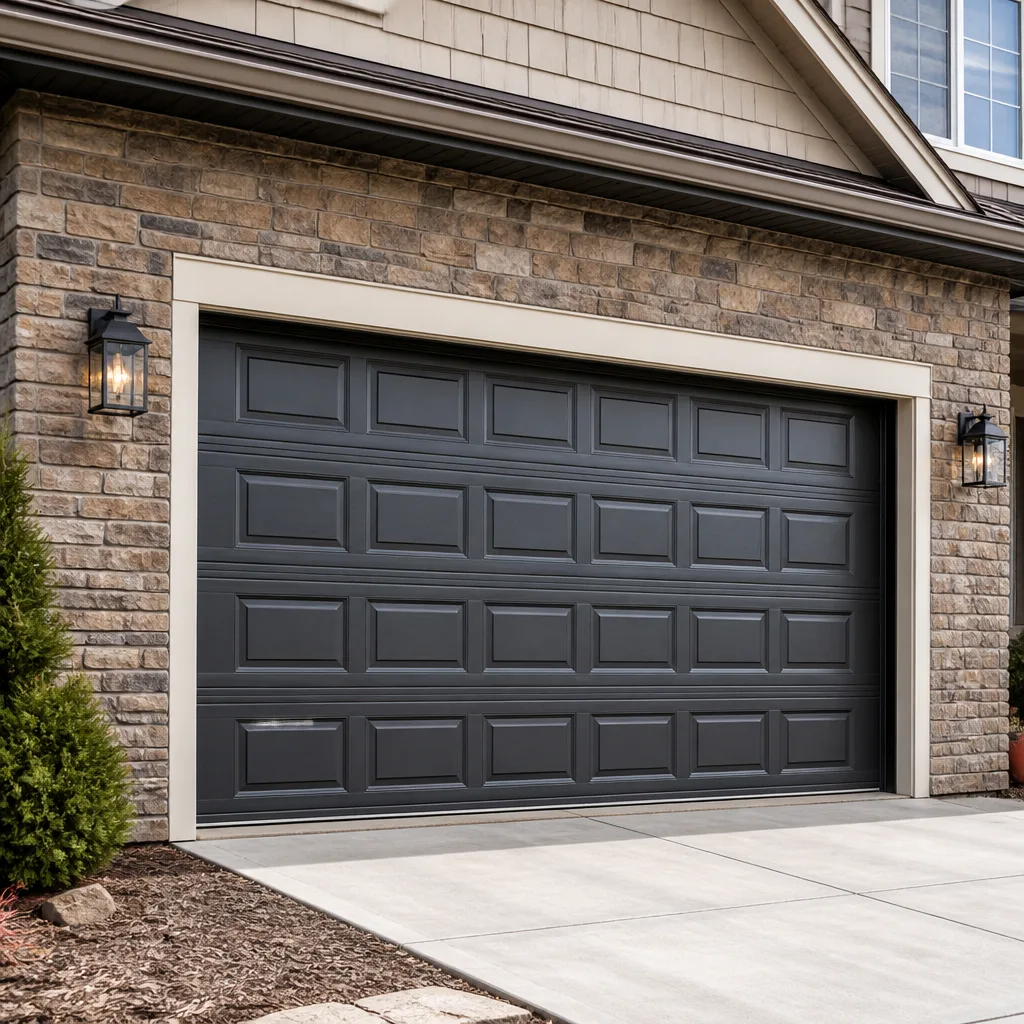 Raised-panel steel
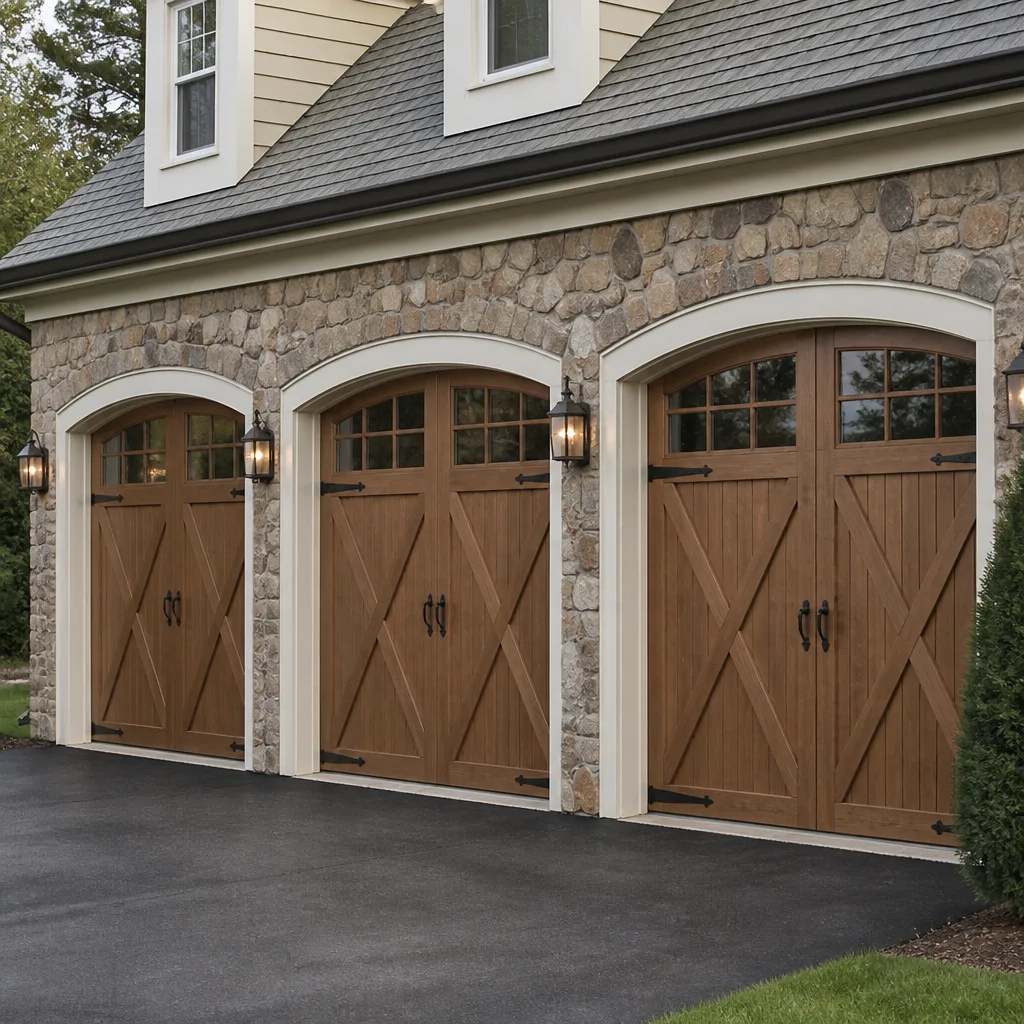 Carriage house
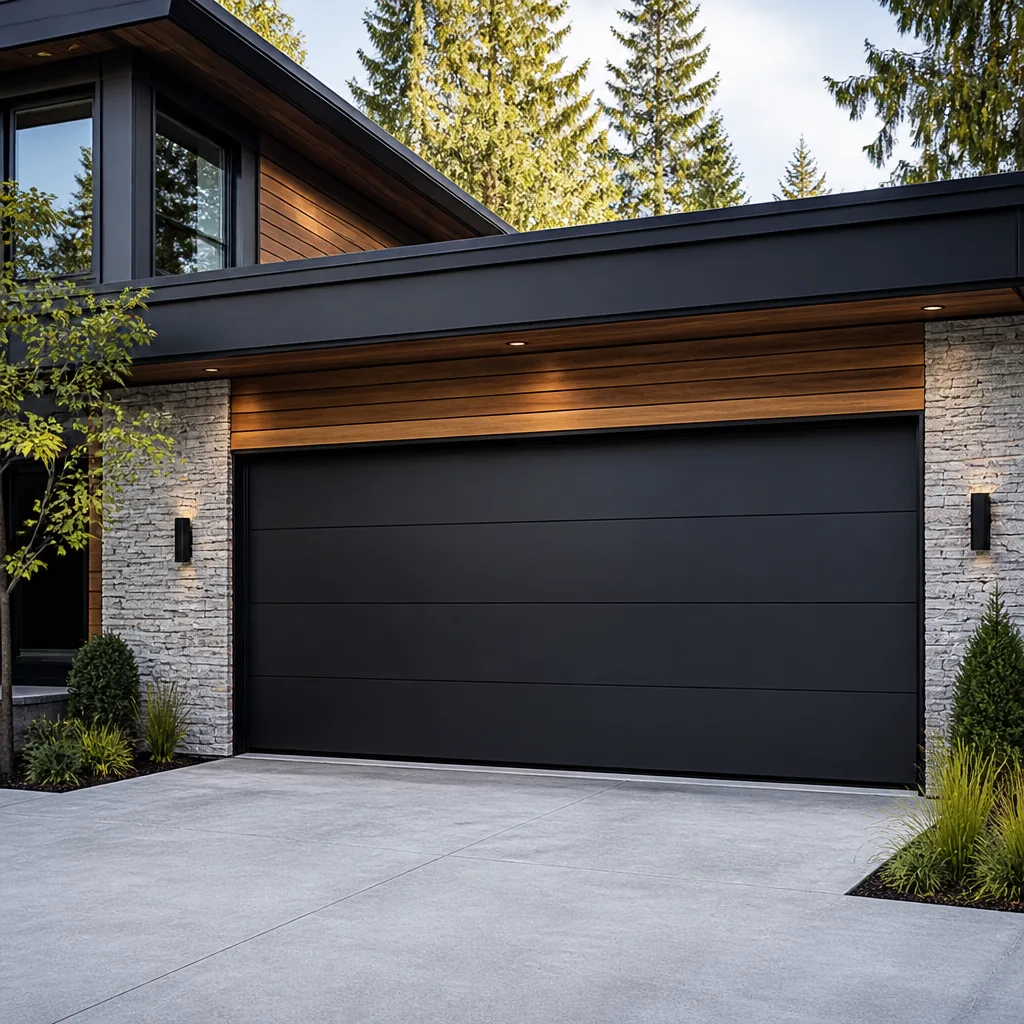 Modern flush
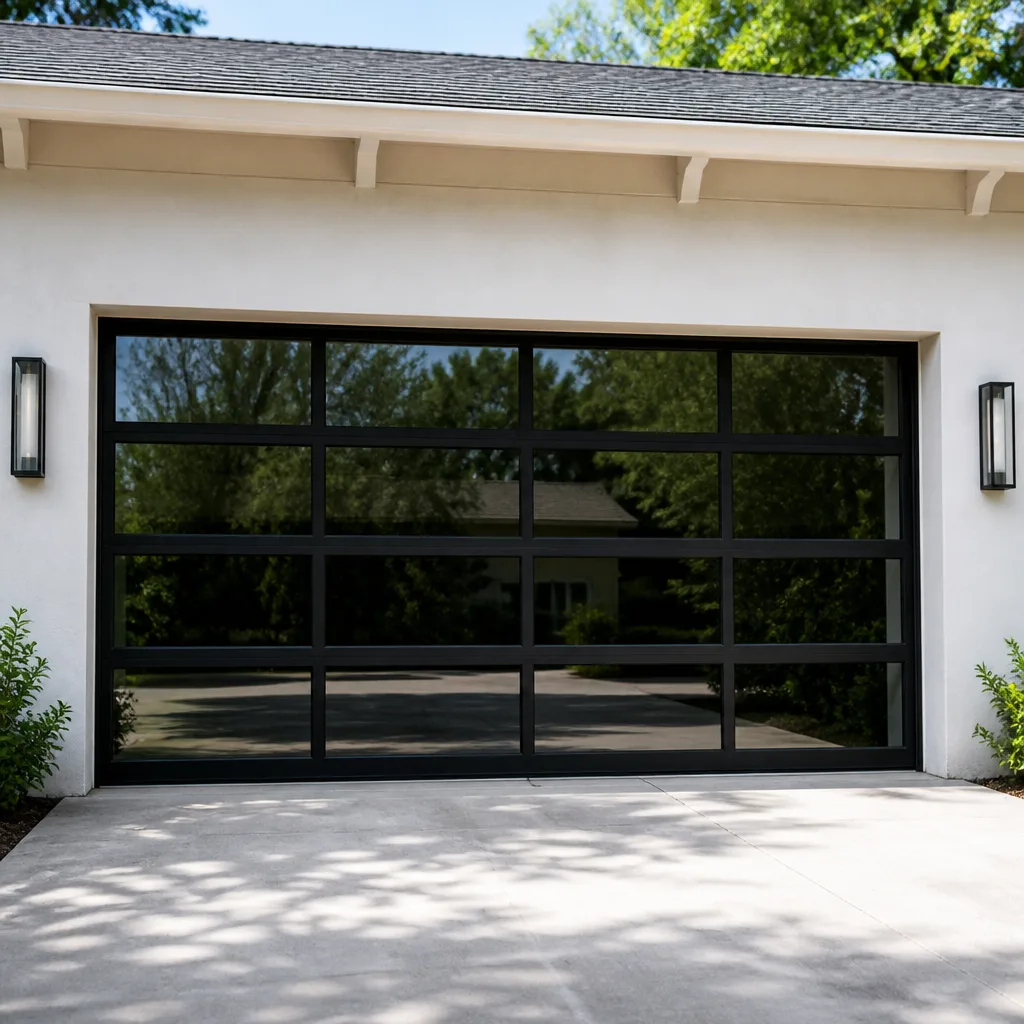 Full-view glass
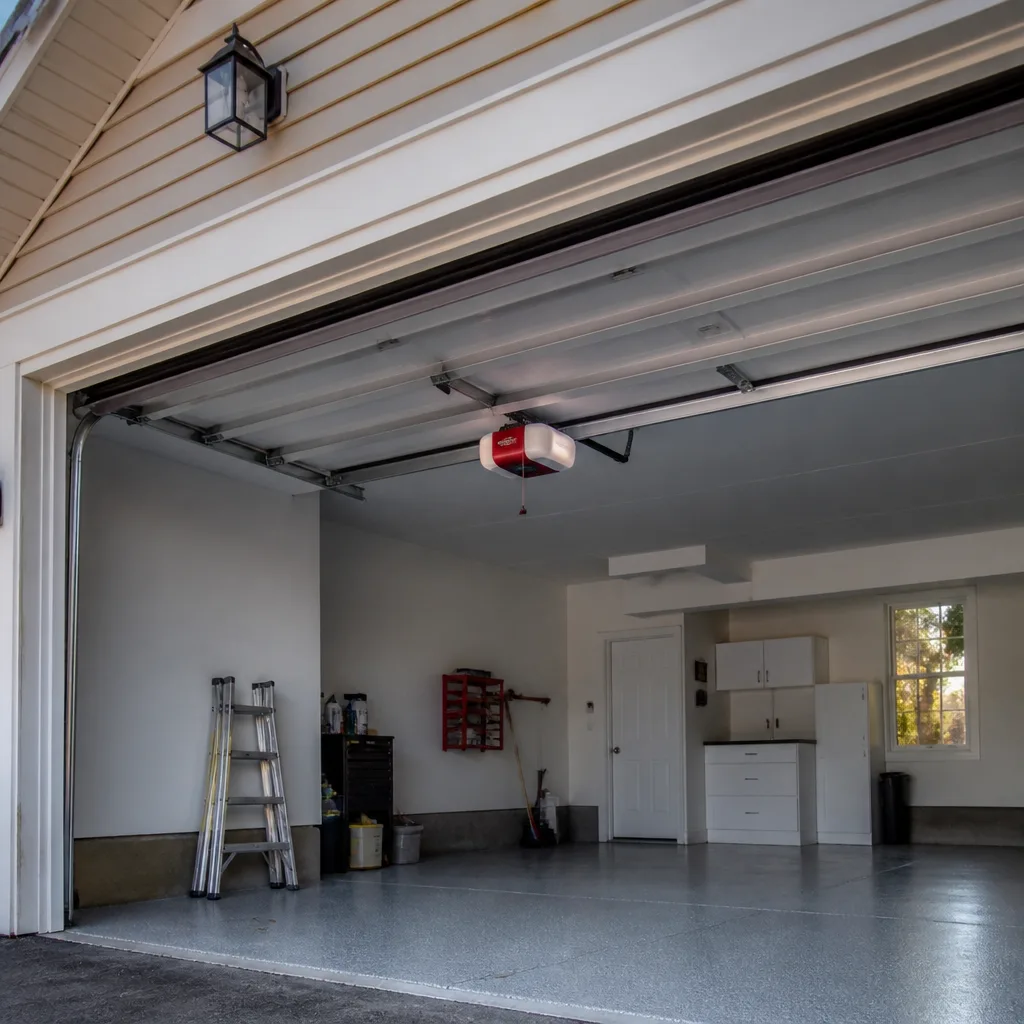 LiftMaster openers
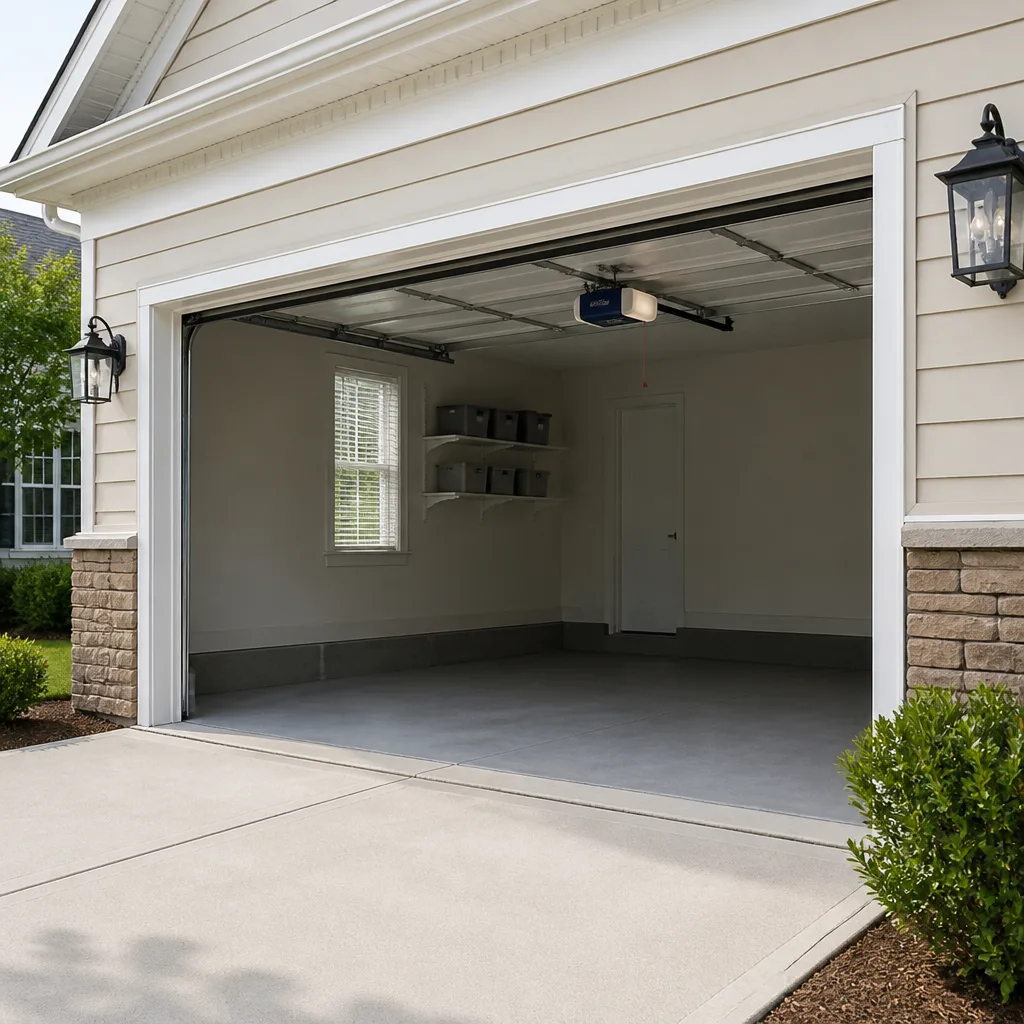 Chamberlain openers
Full 25-point door and opener safety check with every visit - springs, cables, rollers, tracks, and your LiftMaster or Chamberlain opener included
You get a price before we start. It does not change when the pro arrives.
Get your free estimateDIY vs Professional Garage Door: The Bellevue Homeowner’s Decision Guide
Most garage door problems look like one thing and are actually another. A door that won’t close often gets blamed on the opener, when the real culprit is a photo-eye lens knocked out of alignment by a garden hose. A door that jerks on the way up gets called “sticky,” when the torsion spring is two or three cycles from failure. That gap between what a door appears to be doing and what it’s actually doing is the whole reason this decision is harder than it looks. In this guide we’ll walk through which fixes a careful homeowner can genuinely handle in Bellevue, which ones belong with a trained technician, and how to tell the difference before you pick up a wrench.
Quick Answer
Routine maintenance and sensor or track adjustments are reasonable DIY projects. Springs, cables, and opener internals are not: a torsion spring under load can cause serious injury if you’re not trained and equipped for it, and opener boards and capacitors hold a charge even with the power off. If you’re in Bellevue and the problem involves tension, the door’s balance, or the opener’s electrical components, call a professional.
Styles & brands we work with
- Raised-panel steel
- Carriage house
- Modern flush
- Full-view glass
- LiftMaster openers
- Chamberlain openers
Table of Contents
- How a Garage Door Actually Works
- What’s Safe to Handle Yourself in Bellevue
- What You Should Never DIY
- Why Bellevue Homes See Specific Door Problems
- A Diagnostic Walkthrough You Can Do Before Calling Anyone
- DIY vs Professional: What Each Really Costs
- How to Choose a Garage Door Pro in Bellevue
- Step-by-Step: Safe Maintenance Tasks You Can Do
How a Garage Door Actually Works
A sectional garage door is a balanced system, not a motorized panel that lifts itself. The opener’s job is small: it nudges a door that’s already nearly weightless because a spring system counterbalances almost all of it. That’s the part most homeowners miss, and it changes how you should think about every problem you have.
Here’s the basic chain of parts:
- Torsion or extension springs carry the door’s weight. A torsion spring sits on a shaft above the door and stores energy by twisting. Extension springs stretch along the horizontal tracks on each side. Both are under constant tension, whether the door is open or closed.
- Cables run from the bottom corners of the door to drums on the spring shaft, transferring spring force to the door.
- Tracks and rollers guide the panels through their curve.
- Hinges connect the panels and let the door articulate.
- Bottom brackets anchor the cable ends at the door’s lower corners.
- The opener runs the chain or belt drive, raises the door on a rail, and uses a trolley to pull it up.
- Safety sensors sit at the bottom of the opening and reverse the door if something blocks the beam.
When a door feels heavy, binds halfway up, or drifts back down after opening, the balance is off. That usually points to springs, not the opener. Homeowners replace openers to fix a balance problem more often than any other misdiagnosis we see. In our experience as a Bellevue-specific garage door operation, the door itself is often perfectly repairable and doesn’t need a new motor at all. Understand the balance-and-lift split and every symptom you’re about to read makes more sense.
What’s Safe to Handle Yourself in Bellevue
Several garage door tasks are genuinely reasonable for a careful homeowner with a basic toolkit. The line to hold is simple: you can work on things with no stored energy and no live electricity. Anything that touches a loaded spring, a cable, or an opener circuit board stays with a technician.
Tasks that fit a homeowner’s skill level
- Lubricating hinges, rollers, and the spring shaft. A garage-rated lubricant sprayed on hinges, roller stems, and the spring shaft cuts squealing and friction. Do this a couple of times a year and rollers run noticeably smoother.
- Testing the door’s balance. Disconnect the opener, lift the door by hand to about waist height, and let go. A balanced door stays put. A door that slides down on its own means the springs are losing their tension.
- Testing the safety sensors. Close the door, then block the beam with your leg or an object. The door should reverse. If it doesn’t, check the lens alignment and clearance first.
- Cleaning and aligning the photo-eyes. A wiped lens fixes more “my door won’t close” calls than anything else. Both sensors sit about six inches off the floor and need a clear line of sight.
- Tightening track bolts. Loose rollers and knocking noises often trace to a few loose bolts. A socket wrench and a few minutes are all it takes – just don’t loosen anything, only snug up what’s come loose.
- Replacing the opener’s remote battery or re-pairing a remote. Legacy Craftsman and Raynor units as well as newer Wi-Fi-capable LiftMaster and Chamberlain openers are all straightforward to re-pair using the manual.
- Cleaning the door’s exterior and touching up paint. It protects the panels and helps them last.
None of this needs a technician. Where Bellevue homeowners get into trouble is the point at which one of these safe tasks points to a bigger problem – a door that won’t stay up, a cable that looks slack, a sensor that reverses on its own even after cleaning.
What You Should Never DIY
Four categories absolutely belong with a trained technician. We want to be direct here because this is a genuine safety issue, not a sales pitch. A garage door spring or cable under tension can release without warning and cause serious injury. If your problem falls into any of these, stop and place the call.
1. Torsion and extension springs
Springs hold hundreds of pounds of stored force. Replacing one requires specific winding bars, the right technique, and a great deal of respect for the tension. A torsion spring that lets go while you’re winding it can badly injure an arm or hand. We handle spring repair as a named service because it’s the most dangerous component in any garage door system and deserves a technician who does this every week. Our technicians have up to 8 years of experience with both torsion and extension springs on the eight major opener and door brands.
2. Cables and bottom brackets
A cable under tension and the bottom bracket it anchors to are both part of the spring system. A bottom bracket can whip free under load and cause severe injury. Cables are high-tension components with a real risk profile, even when they look slack. They are not homeowner work.
3. Opener electrical components
Circuit boards, capacitors, wiring, and the logic board itself stay charged even after the breaker is off. Diagnosing an opener that clicks without lifting, or a LiftMaster or Chamberlain that beeps and won’t move, means working around stored electrical energy. Whole opener replacement and component-level repair both belong with a specialist. That’s why opener repair is a separate specialty for us, covering legacy chain drives, belt-drive systems, and today’s smart-enabled openers.
4. The door’s structural panels and balance adjustments
Adjusting spring tension, replacing drum assemblies, and reworking the door’s structural support aren’t homeowner work either. A misadjusted door can throw a cable or drop a panel; the tradeoff for saving money on the job doesn’t come anywhere near the risk.
The broader point: if you’re not sure which category applies, call and describe what’s happening. The team at garage door repair Bellevue pros can tell you over the phone whether the problem is a DIY job or a technician call.
Why Bellevue Homes See Specific Door Problems
Bellevue’s mix of older split-levels, newer townhome rows, and hillside properties means garage door wear doesn’t run on a single schedule. A full-size door on a long horizontal run behaves very differently from a pair of compact doors on a townhome. That’s the first thing to look at when you’re trying to decide between DIY and a pro.
Hilly driveways and slope pressure
Many Bellevue properties sit on slopes, and that changes how often a door’s balance needs checking. A door that has to work against a slight slope on the tracks, or that sits on a driveway with more runoff, can lose alignment faster than a flat-lot install. Homes in areas like Bridle Trails and Somerset are good examples: driveways with pitch and drainage moving across the slab. That doesn’t break a door, but it does mean door and track checks are worth doing more often than the manufacturer’s baseline.
Humidity and seasonal movement
Western Washington’s wet winters and dry summers mean wood frame members around the garage opening move with the seasons. That’s often behind a door that closes smoothly in summer and drags a bit in January. It’s rarely a serious problem, but it means a “new” noise in winter is worth investigating before assuming something has failed.
Townhome density and shared walls
Bellevue has a lot of attached housing, and shared walls put a premium on noise and smoothness. A door that’s off-balance rattles through the whole row. In a townhome setting, a professional balance and tune-up often makes a bigger day-to-day difference than a piece of DIY equipment.
Older and newer construction side by side
Older Bellevue homes often have original single-car doors and legacy chain openers, while newer construction tends to have Wi-Fi-enabled LiftMaster or Chamberlain systems and insulated doors. Both are on our regular work list, and we’re factory-familiar with both ends of the spectrum. Older doors pull spring and cable problems, newer ones pull opener electronics and sensor faults. Knowing which vintage you’re dealing with tells you a lot about what’s likely wrong.
One note on permit requirements: if you’re replacing a whole door or changing the opening itself, ask the City of Bellevue’s building department what applies. We won’t guess at your specific requirements, and neither should you.
A Diagnostic Walkthrough You Can Do Before Calling Anyone
You can learn a lot about a garage door problem in five minutes without taking anything apart or touching a spring. This sequence tells you which kind of problem you have and whether to handle it yourself or make the call.
- Look before you touch. Check for a visibly bent track, a broken spring (a clean gap in the coil is the giveaway), a cable dangling loose, or a roller that’s popped out. If you see a spring gap or a slack cable, stop the walkthrough right there. That’s a professional call.
- Check the sensors. Look at the two photo-eye lenses near the floor. Are they lit? Is one bumped out of line? Wipe both and check the beam is unobstructed from side to side.
- Test the door’s balance. Pull the emergency release cord to disconnect the opener, then lift the door manually to about waist height and let it go. If it stays, the spring system is holding. If it slides back down, that’s a spring or cable problem.
- Reconnect and run the door. Once it’s reconnected to the opener, listen for a repeated clicking without movement, or a door that rises a few inches and reverses. That rules out balance and points to the opener itself.
- Read the opener’s indicator lights or error codes against the manual. If your opener has a Wi-Fi app, the log will often tell you whether the problem is a sensor, a wall control panel, or the motor unit itself.
Whatever the walkthrough shows, don’t attempt a fix on springs, cables, or the opener’s internal parts. The sequence is a decision-making tool, not a repair guide.
DIY vs Professional: What Each Really Costs
The tradeoff is easy to misread. A homeowner compares the part price to a technician’s quote and concludes the DIY route saves money, but that comparison skips the cost of getting it wrong, redone, or injured. On a Bellevue garage door, the useful comparison breaks down like this.
What DIY actually involves
- Tool cost: a socket set, winding bars for spring work (never use these without training), a garage-rated lubricant, replacement rollers, a voltage tester if you’re touching opener wiring.
- Part cost: a replacement torsion or extension spring, rollers, hinges, a remote battery, a bottom bracket if a cable pulls loose.
- Time cost: a sensor alignment takes twenty minutes; a full spring replacement takes a trained technician half an hour; the same job without training can take several hours and carries serious injury risk.
- Risk cost: a dropped door, a sprung cable, an opener wiring fault, or a wound-spring failure. Any of those means a bigger repair than the original problem.
What a professional service involves
Prices are set per job by the written estimate, not by a fee that appears on the invoice. When you call, we walk through the problem, confirm a price before any work starts, and there are no surprise costs afterward. The estimate itself is free. That’s the standard for our office and one of the main reasons a technician call can be cheaper overall than a lost evening and a second repair.
What you get on a pro call: the correct spring sized for your door’s weight, cables re-tensioned and secured, a balance check, and a safety inspection. Nobody arrives at a Bellevue house with a “we’ll see when we open it up” price. The written estimate has the number and it holds.
The one specific case where professional service is a clear cost win: springs and cables. Parts for a matched pair of springs cost roughly twice a single spring, and replacing one without a matched partner shortens the life of the other. A pro will size the correct pair; a homeowner with a single spring is often buying the wrong part for the door’s weight.
How to Choose a Garage Door Pro in Bellevue
If you’re using a professional, it’s worth keeping the scope focused. A garage-door specialist works on doors and openers end to end – springs, cables, tracks, hinges, openers, and full door installation. A handyman or appliance repair outfit treats a garage door as a side job. You’ll get the right part the first time with the specialist and often a second visit with the generalist.
What to ask before you book a garage-door call in Bellevue:
- What brands do you work on? You want a technician who knows your opener or door brand specifically. We work on all eight major brands – LiftMaster, Chamberlain, Genie, Clopay, Amarr, Wayne Dalton, Craftsman, and Raynor.
- Do you offer spring repair as a standard service? If the answer is that they’d have to subcontract it, that tells you about their depth. Spring repair is a named, everyday service for us.
- Can I get a written estimate before any work starts? Any reputable operation will put the number in writing before a technician begins.
- Do you handle opener repair and installation, or only doors? A full-service specialist handles door repair, opener repair, spring repair, and full installation. That’s the full spectrum we cover in one call.
- Are the technicians vetted and licensed as the state requires? The local professional dispatched to your Bellevue home is licensed and insured as their state requires. Ask, and don’t be shy about it.
A final check: ask how they diagnose an unfamiliar opener. A specialist talks about the specific model and known failure points, not a generic “we’ll figure it out.” Familiarity with a brand – a LiftMaster belt drive versus a Chamberlain chain drive versus a legacy craftsman opener – is the difference between a fast diagnosis and guesswork.
Step-by-Step: Safe Maintenance Tasks You Can Do
The best way to reduce the number of pro calls is to keep the door well maintained, and every step below costs almost nothing. Set aside twenty minutes a couple of times a year and you’ll head off most avoidable repairs.
- Inspect the tracks. Look down the length of each track for bends or dents. A track that’s out of line is a realignment job, not a homeowner fix, but spotting it early means it gets handled before the rollers wear.
- Lubricate the moving parts. Spray garage-door lubricant on the hinges, roller stems, and the spring shaft. Avoid the tracks themselves; they’re meant to stay dry so the rollers can roll rather than slide.
- Test the door’s balance as described above. Do this once a season.
- Test the safety sensors according to the opener manual. Every opener has a specific test process, and it’s worth running through it in full every season.
- Tighten loose hardware. Snug up any bolts on the tracks and hinges that have worked loose. Don’t loosen or back off anything – only tighten what’s come loose.
- Replace the opener’s remote battery once a year. It’s the simplest fix on the list and often explains a “my remote stopped working” call.
- Check the door’s weather seal at the bottom. A worn bottom seal lets wind and water in, and replaces in a few minutes with basic tools.
Notice a pattern: nothing on that list involves a spring, a cable, a bottom bracket, or the inside of an opener. Do these and the professional work you’ll eventually need is smaller and rarer.
One step to leave out entirely: don’t back off or adjust the spring’s winding. It’s tempting to “tighten it up a little” when a door drifts, but the spring’s stored energy has no margin for untrained adjustments.
Common Mistakes to Avoid
- Blaming the opener for a balance problem. A door that won’t stay up in the middle of its travel has a spring problem, not a motor problem. Replacing the opener fixes nothing and duplicates the symptom on the new unit.
- Replacing one spring when both are matched. Springs wear at the same rate, and a single replacement puts uneven load on the door and shortens the life of the newer spring. If one has failed, look at both.
- Lubricating the tracks. Grease on a door track collects grit and makes rollers slide rather than roll. Lubricate hinges, rollers, and the spring shaft, not the track face.
- Ignoring a sensor that won’t stay aligned. If cleaning and alignment keep failing, the sensor or its wiring needs a technician. Re-taping a loose sensor repeatedly isn’t a fix.
- Skipping the emergency release test. The release cord exists so the door can be opened by hand if the opener fails. If it’s seized, you’ll find out at the worst possible time. Test it twice a year.
- Attempting your own spring or cable replacement. A bottom bracket under load can whip free in an instant, and a wound spring can release without warning. These two jobs are the reason a technician exists.
- Letting a small track bend go. A bent section adds wear to the rollers and raises the chance of a bigger repair later. Fix it when it’s still small.
See the difference
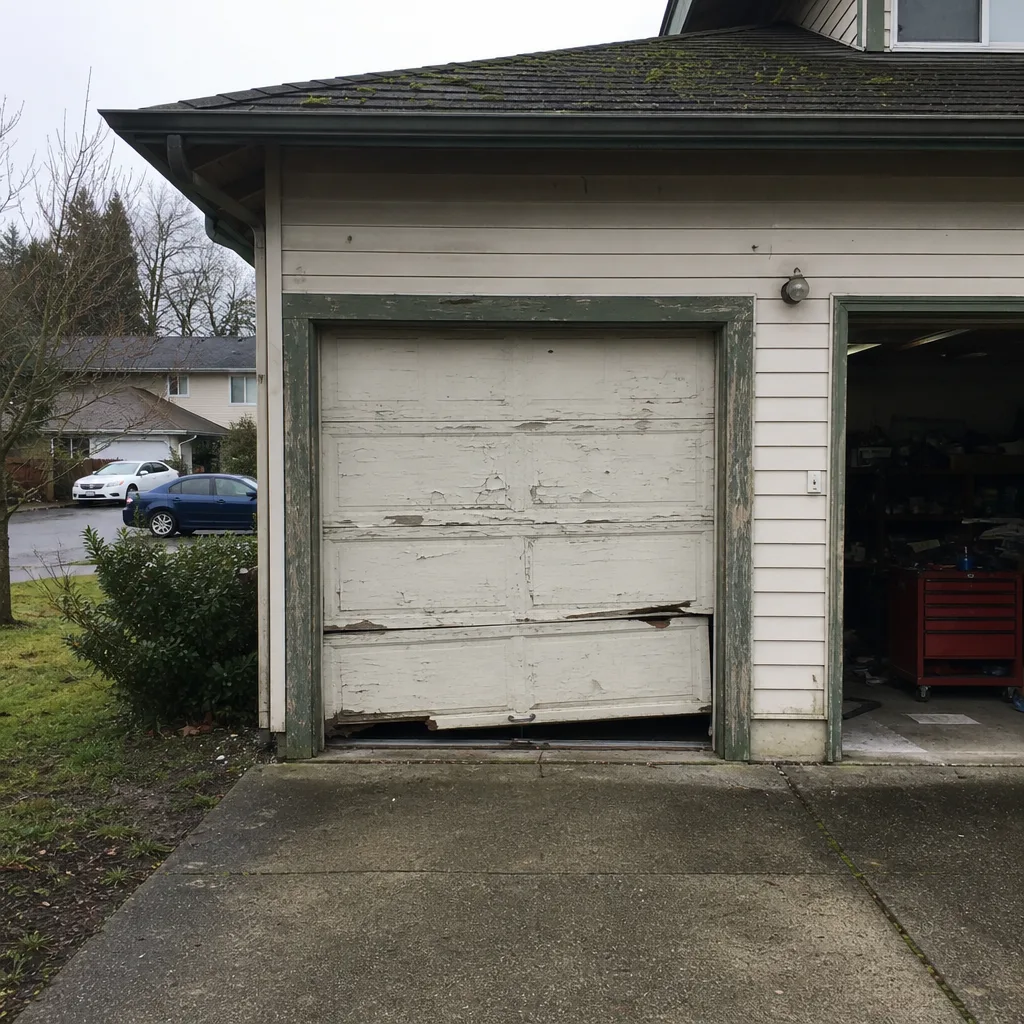 Before
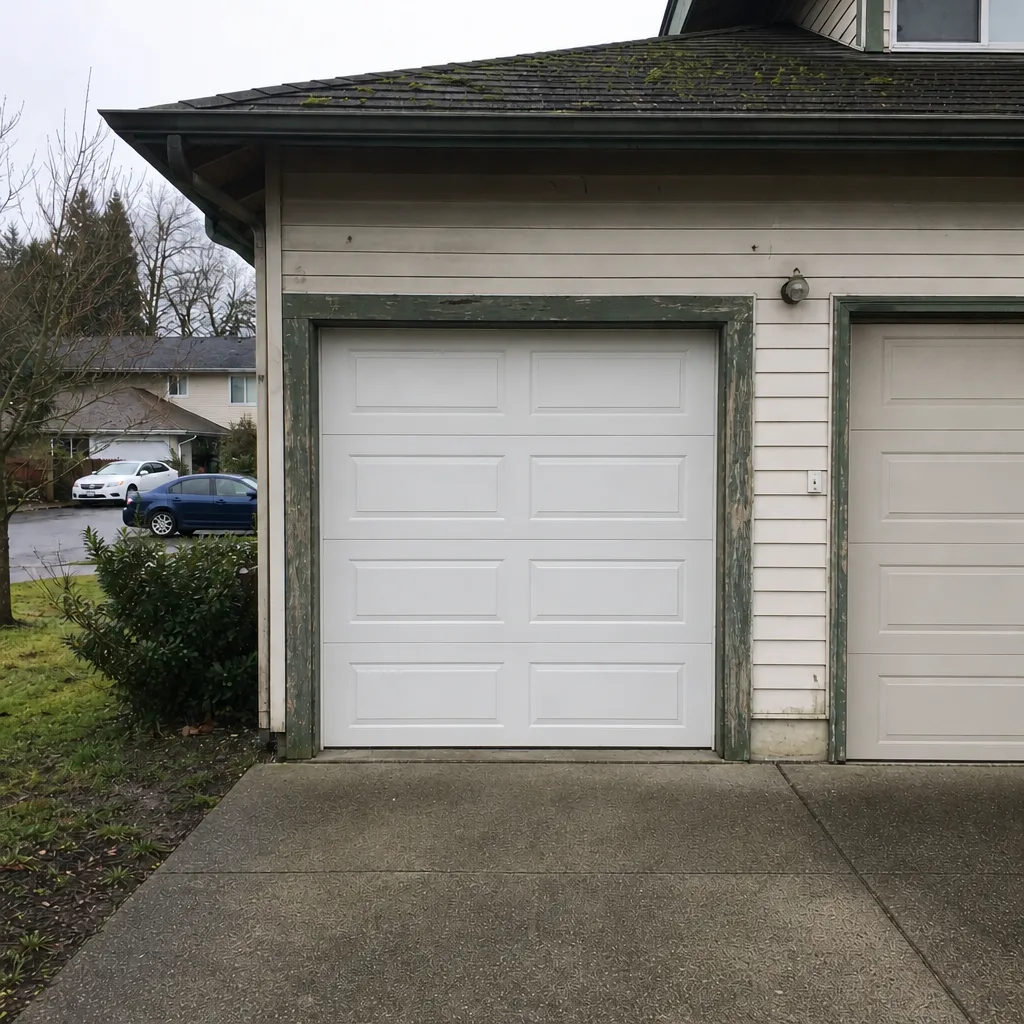 After
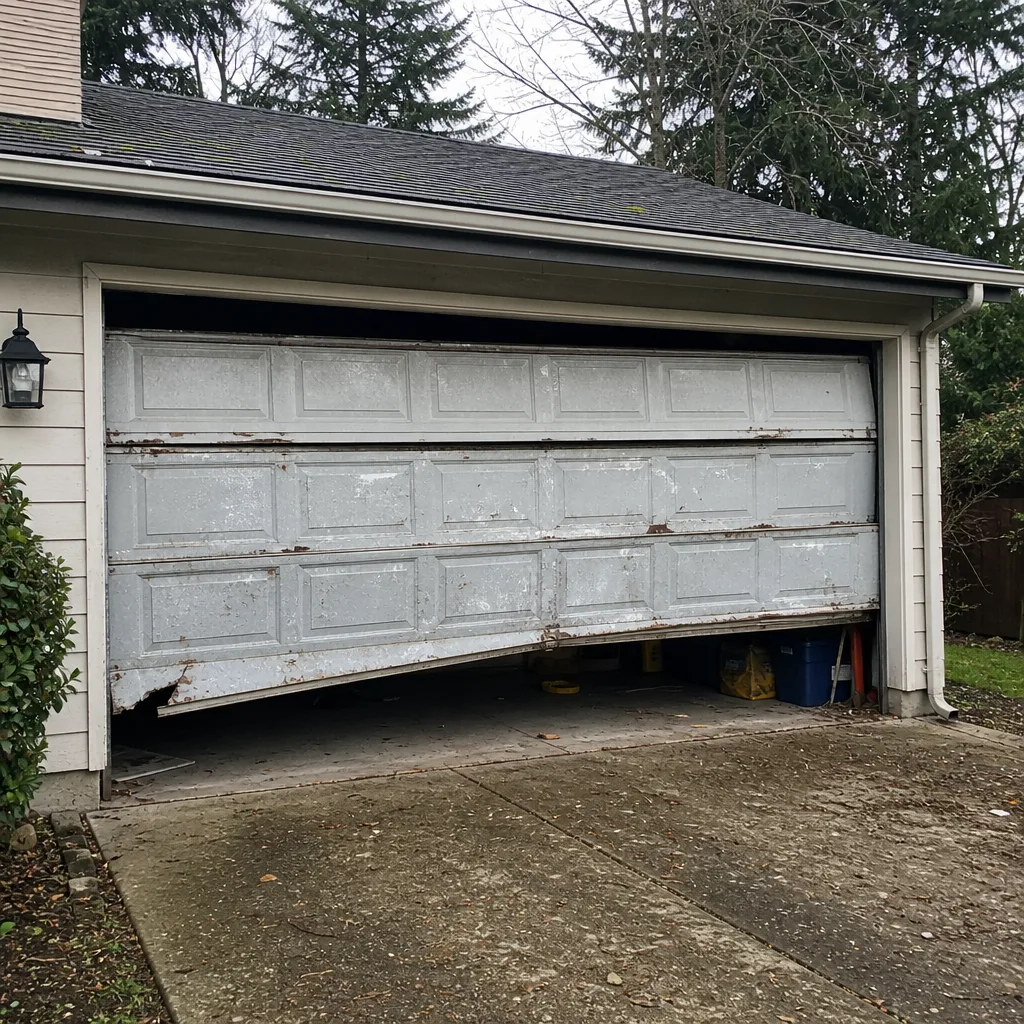 Before
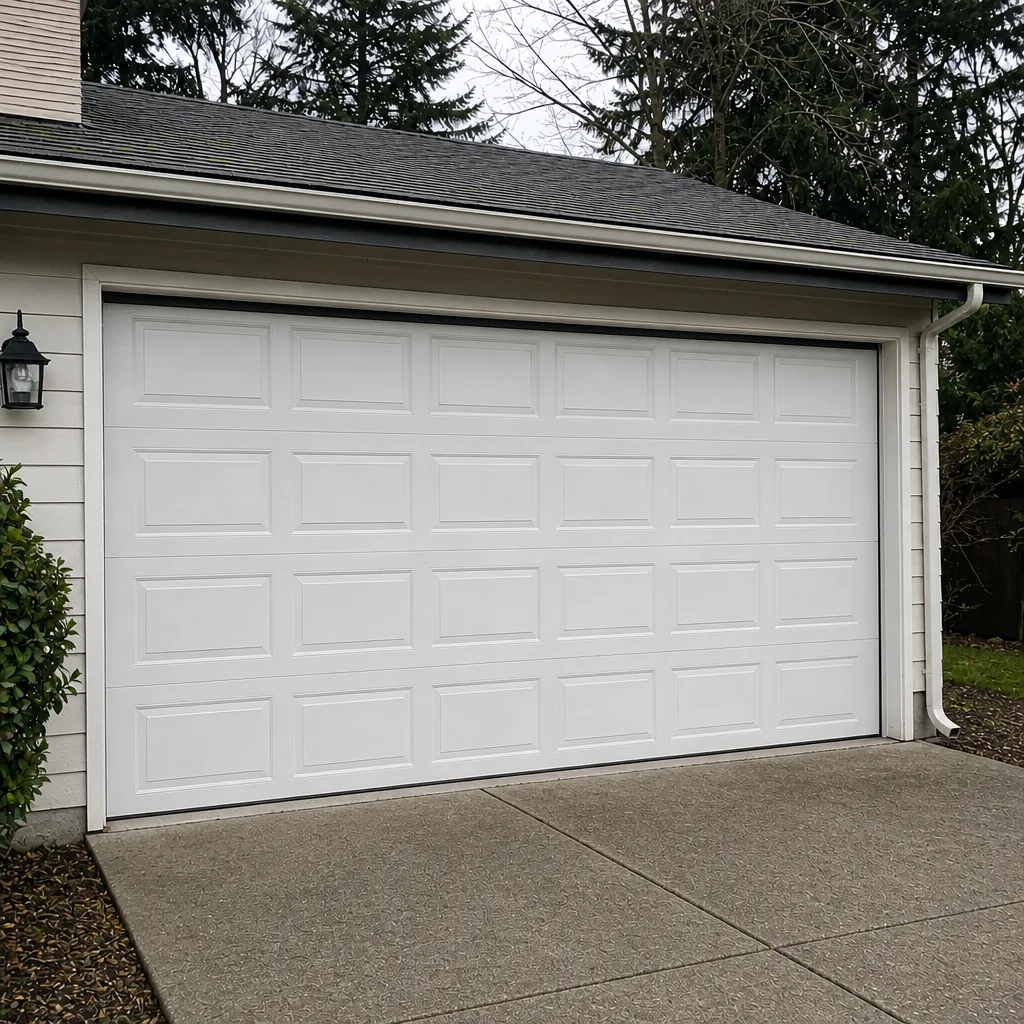 After
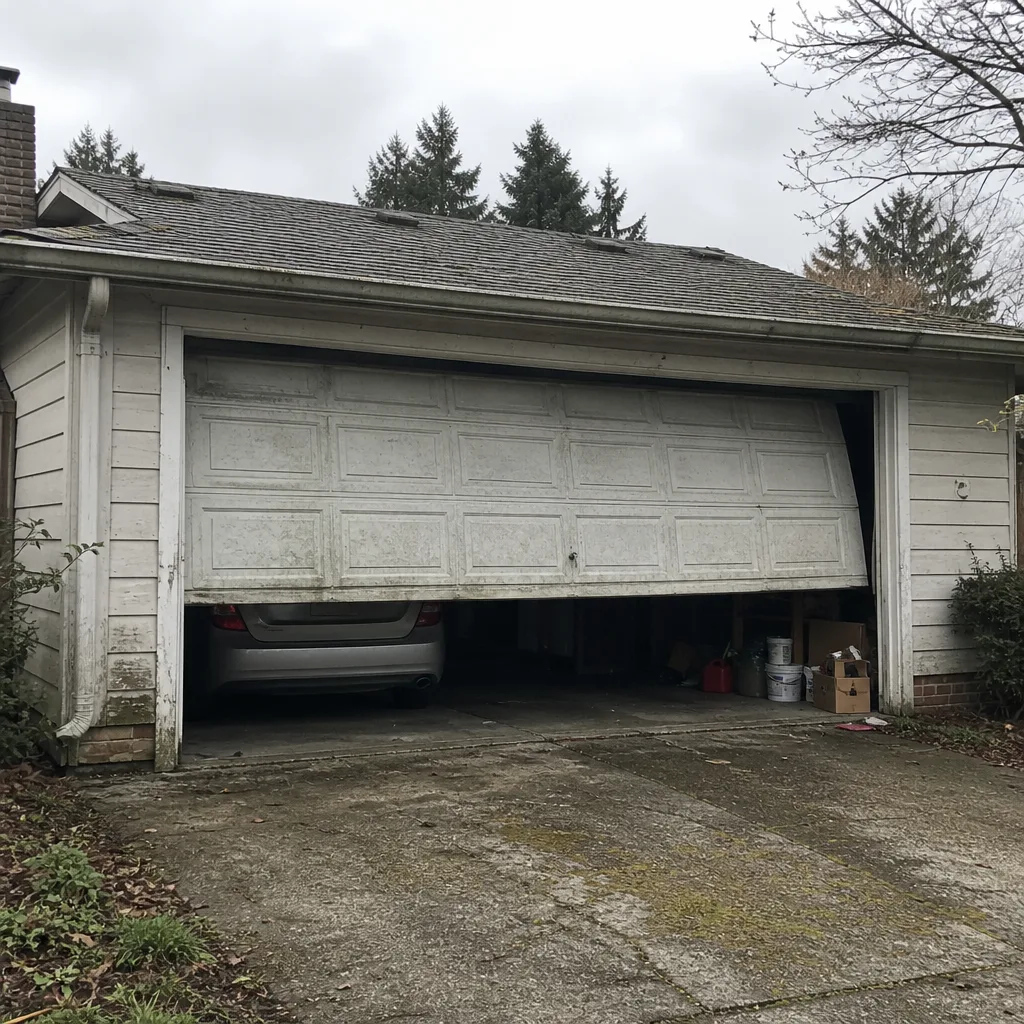 Before
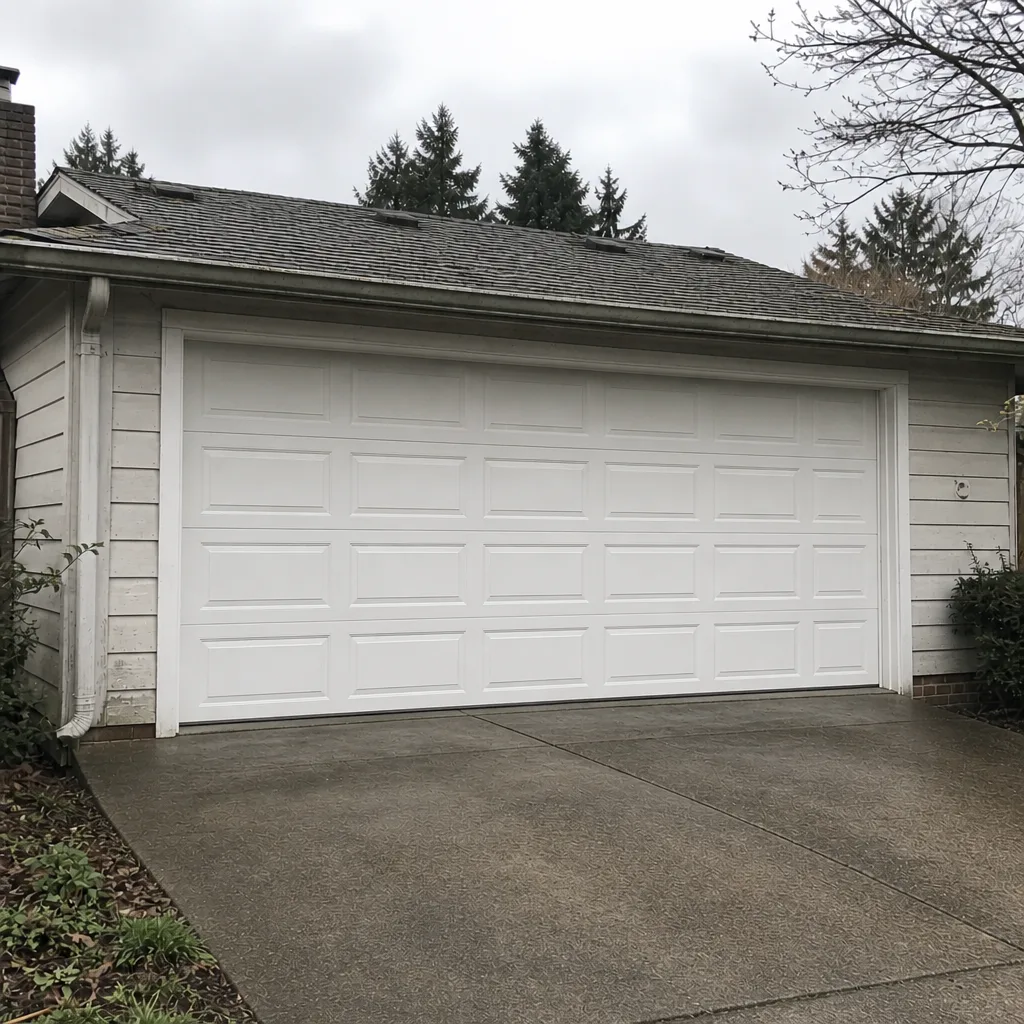 After
When to Call a Professional
Call a professional the moment the problem involves tension, the opener’s electrical components, or a door that has stopped balancing. Broken spring, a cable off its drum, a door that slams down, an opener that clicks without moving, a door that reverses without an obstruction, or a panel that’s cracked through its frame – all of those belong with a trained technician, and none of them are worth trying yourself. A door that won’t stay up is dangerous; a question that starts with “should I wind this myself?” is answered.
Garage Door Repair Bellevue Pros offers free estimates in Bellevue – call (833) 962-9266. We answer 24/7. Fast dispatch from 7am to 7pm, Sunday through Friday. Estimating is free, the price is agreed before any work starts, and a Bellevue technician arrives knowing your door’s brand and its known failure points.
Frequently Asked Questions
No. A torsion or extension spring carries enough stored force to cause serious injury, and the winding process needs training and specific tools to do safely. This is the one garage door job we’d never recommend as a DIY project, and it’s why spring repair is a dedicated service for us rather than a general repair.
That’s usually a sensor or alignment problem, which you can absolutely handle yourself. Check both photo-eye lenses near the floor, wipe them, and make sure nothing is blocking the beam. If it still reverses after cleaning and realigning, the sensor or its wiring needs a technician, and it’s worth calling rather than replacing parts on guesswork.
Most repairs – a spring replacement, a cable re-tension, an opener component replacement – take under two hours once the technician is on site. Exact timing depends on the problem and the brand. The estimate process is where the diagnosis is confirmed, so call first and describe what the door is doing. Estimates are free. Call (833) 962-9266 for an exact quote.
No. The price is agreed and put in writing before any work starts. Diagnosing on site sometimes confirms a bigger job than the phone description suggested, but you’ll hear that before anyone picks up a tool, and you can decide then. The written estimate is the price.
Yes – the local professional who comes to your Bellevue home is licensed and insured as their state requires. We work with vetted local technicians, and garage doors and openers are their entire specialty. If you’d like to confirm any details before booking, call (833) 962-9266.
It depends on the scope of the job. A same-size door replacement is often treated differently from a change to the opening or the header, so the reliable answer is to ask the City of Bellevue’s building department directly. We can tell you what the installation involves, but we won’t guess at your specific permit requirements.
The Bottom Line
The DIY vs professional decision on a Bellevue garage door comes down to one line: no stored energy, no live electricity, and it’s fair game. Springs, cables, bottom brackets, and opener internals cross that line and stay with a trained technician. Sensors, tracks, lubrication, and balance tests are well within a homeowner’s reach. If a door won’t stay up, throws a cable, or an opener clicks without moving, it’s a technician call – and the estimate is free before a price is agreed. Fall into the safe category and you’ll book far fewer repairs over the door’s life. Call (833) 962-9266. We answer 24/7. Fast dispatch from 7am to 7pm, Sunday through Friday.
Written by the team at Garage Door Repair Bellevue Pros.