
Last updated November 20, 2026
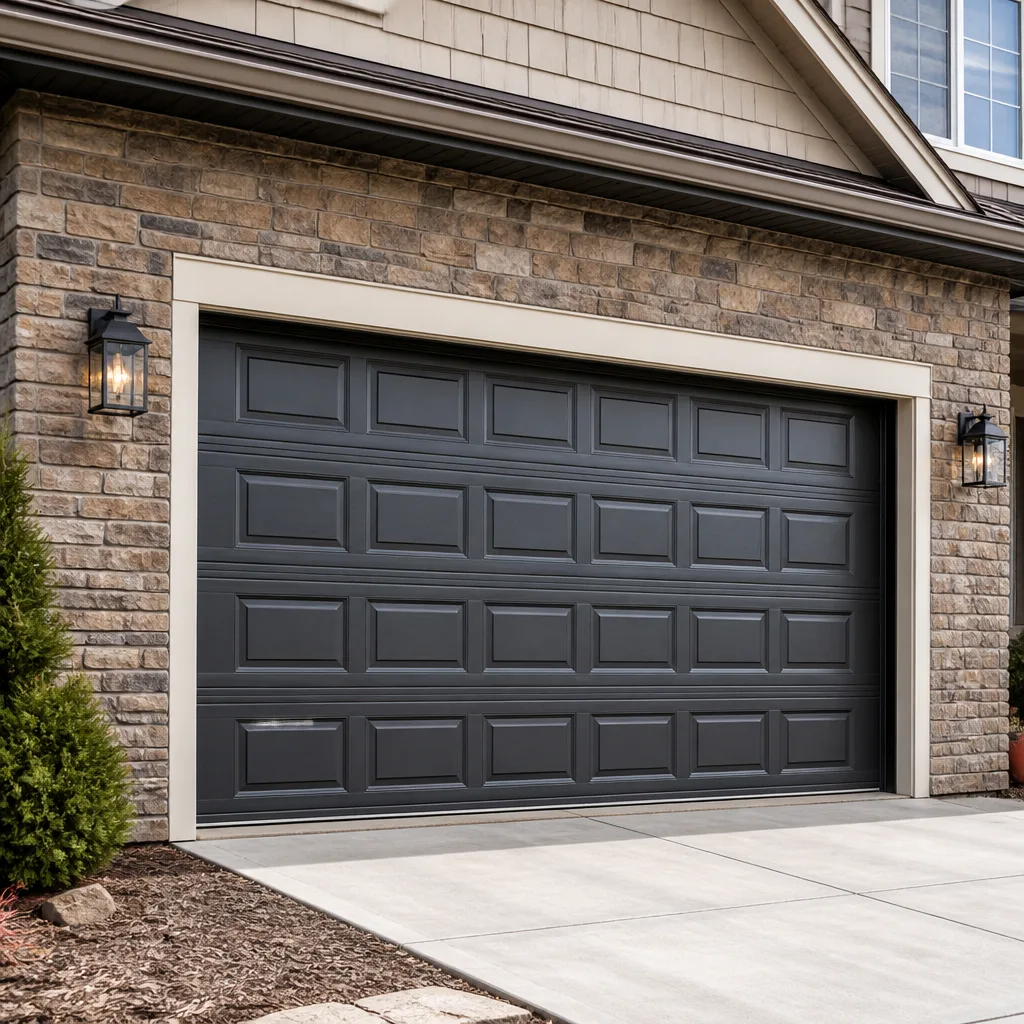 Raised-panel steel
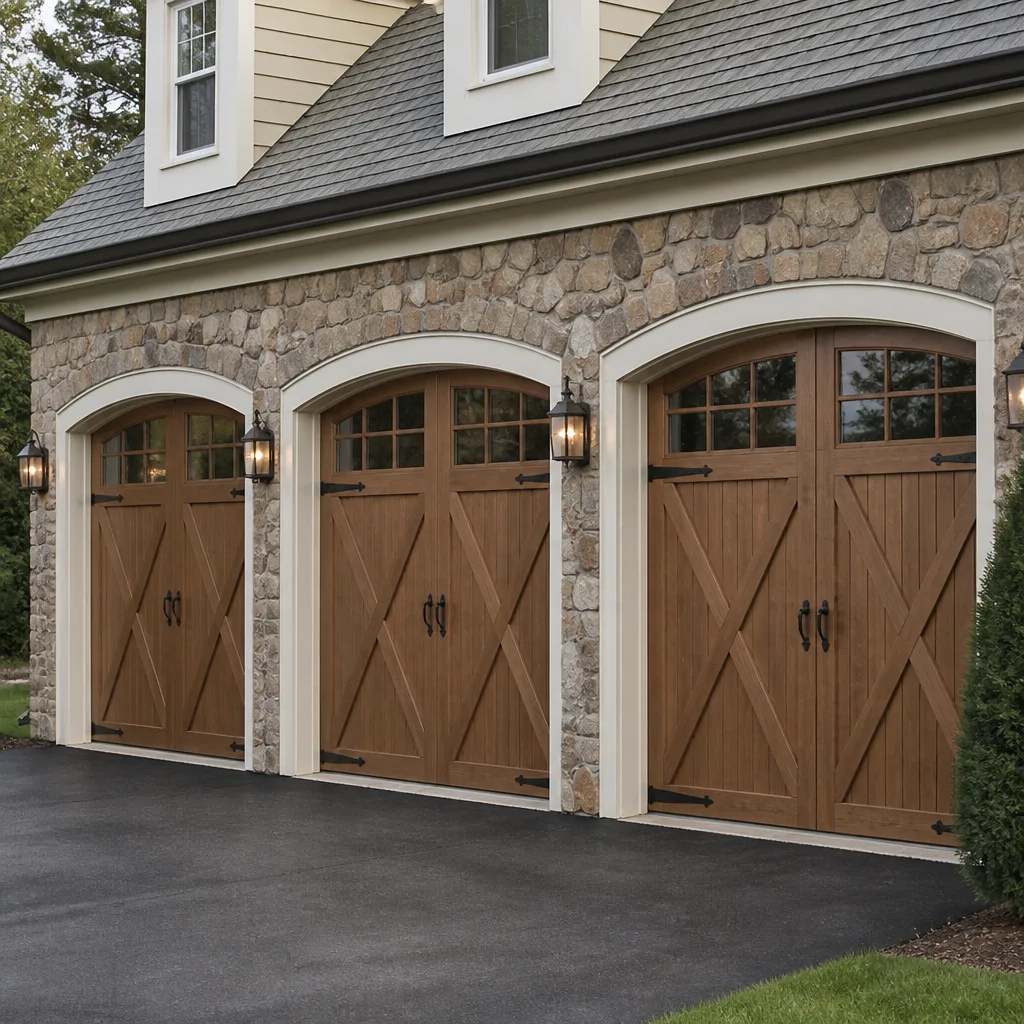 Carriage house
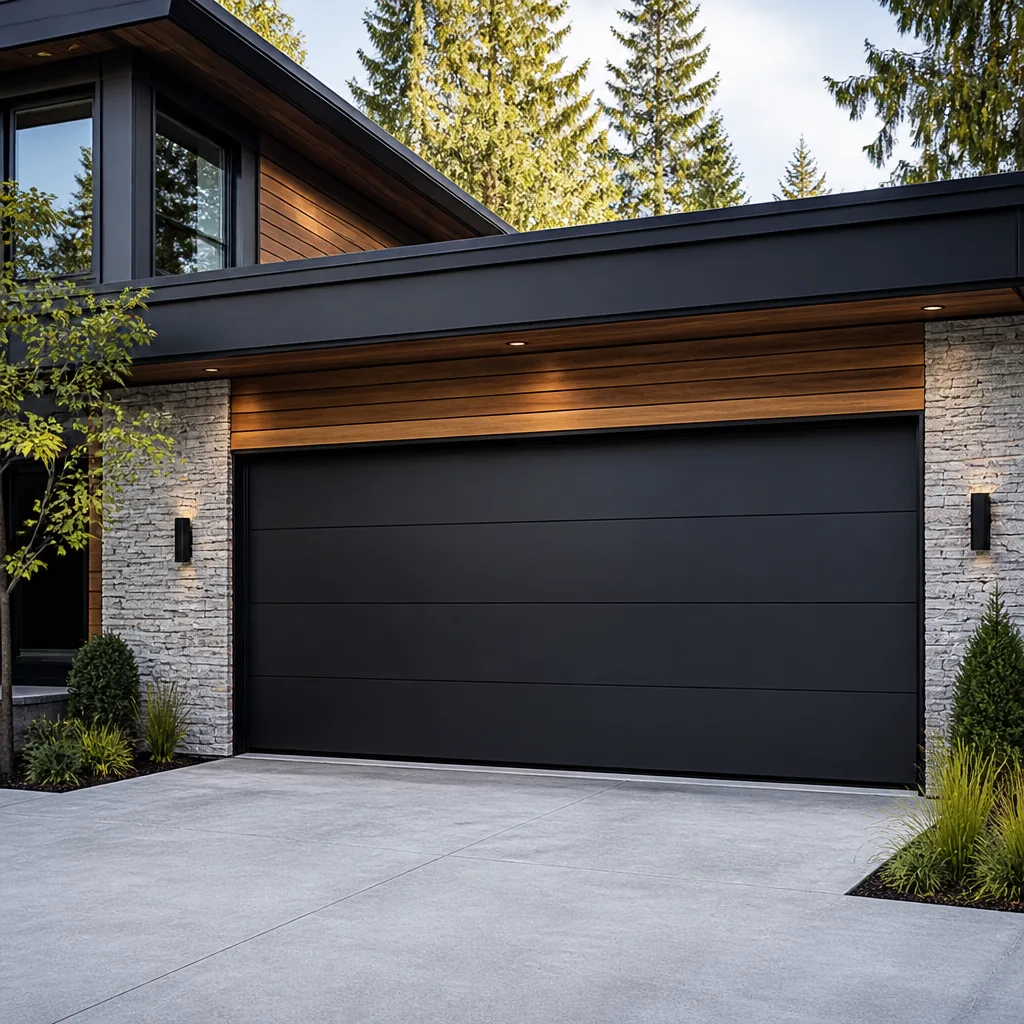 Modern flush
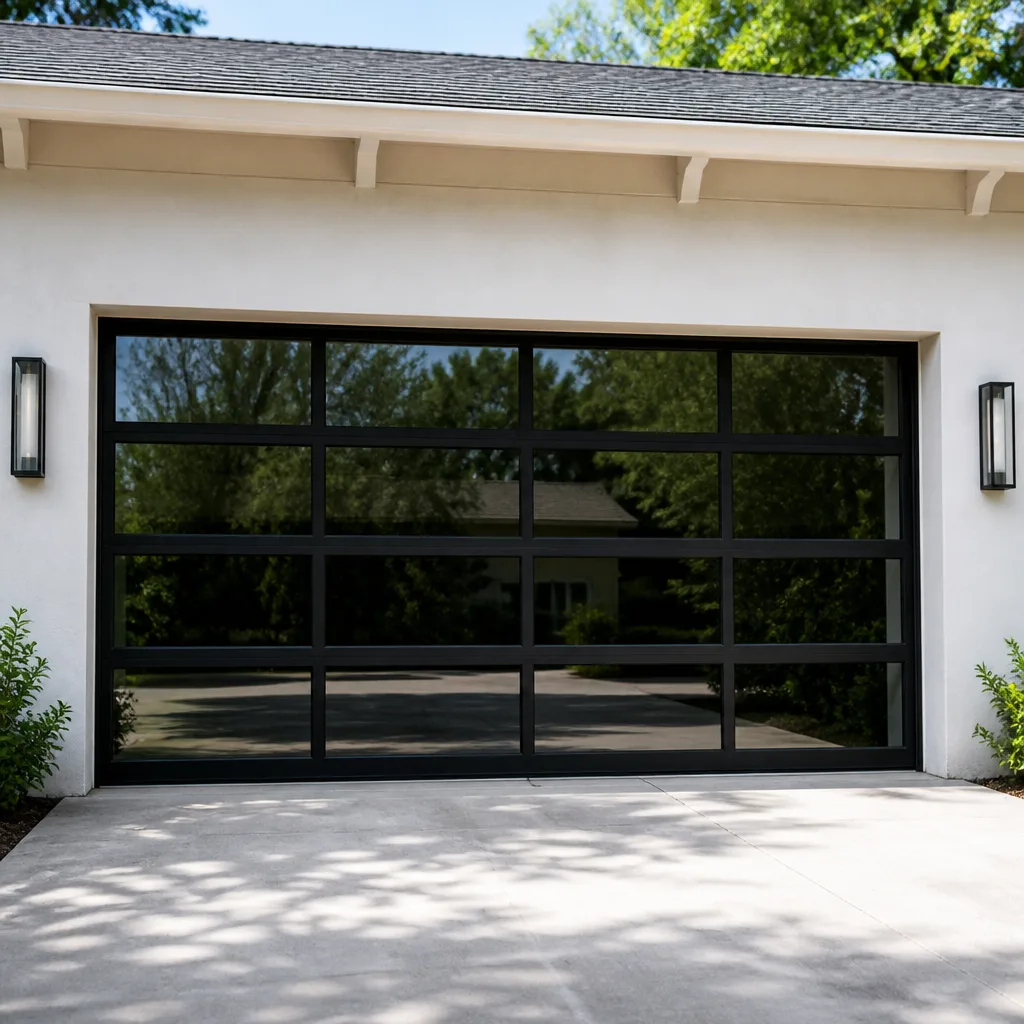 Full-view glass
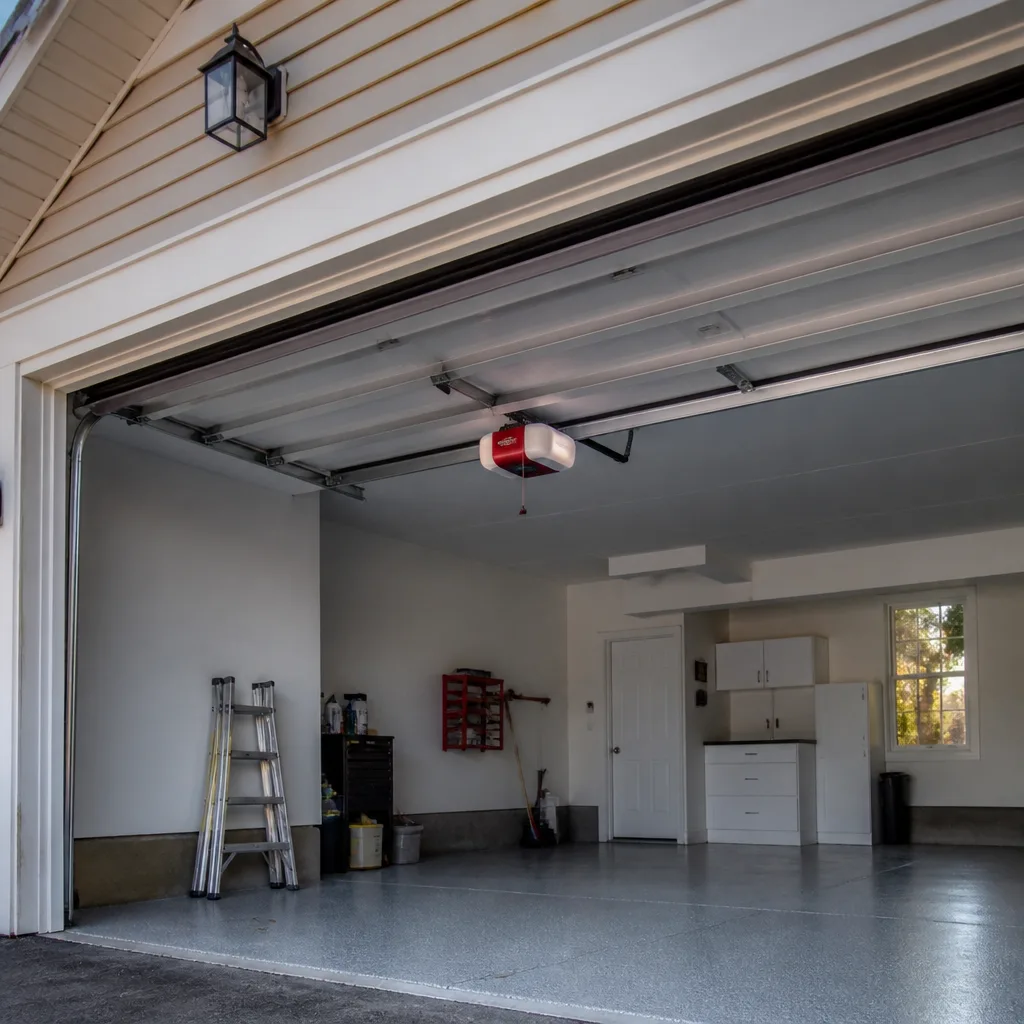 LiftMaster openers
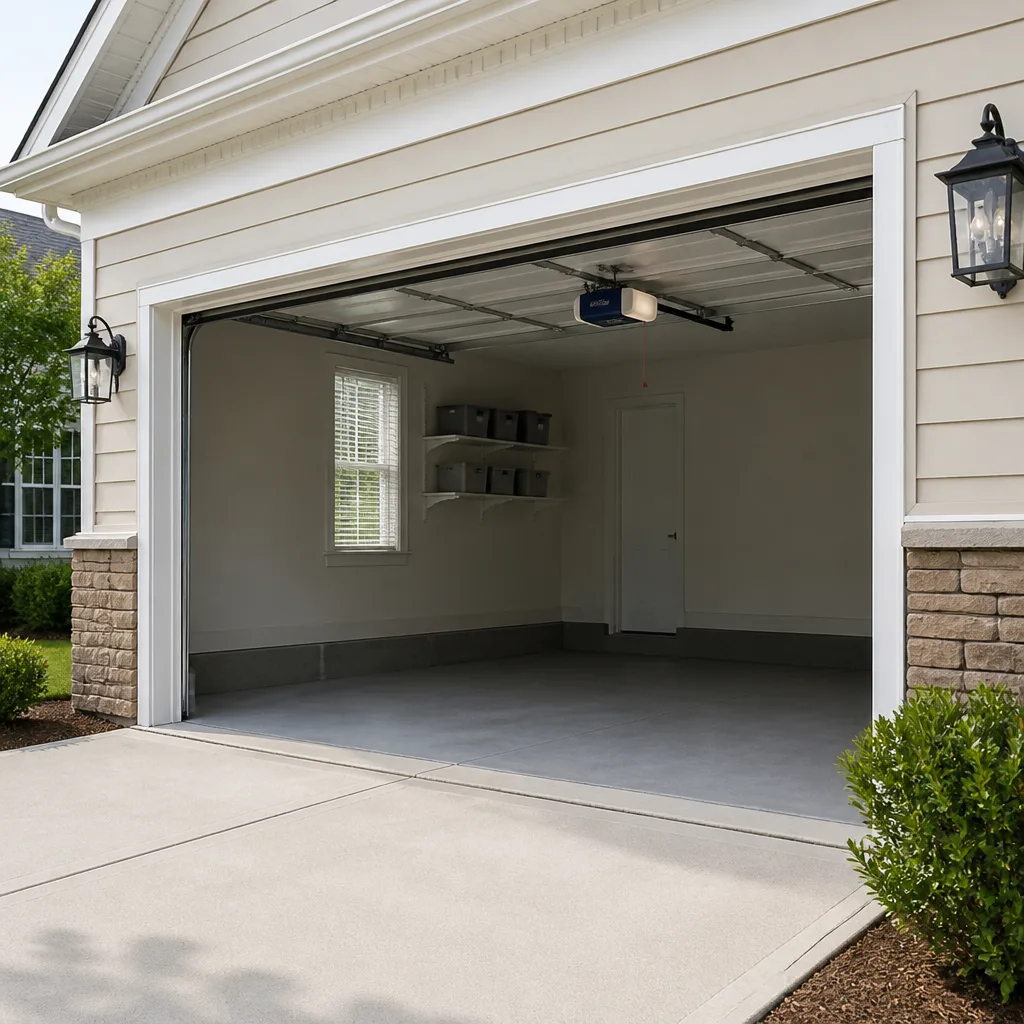 Chamberlain openers
Full 25-point door and opener safety check with every visit - springs, cables, rollers, tracks, and your LiftMaster or Chamberlain opener included
You get a price before we start. It does not change when the pro arrives.
Get your free estimateGarage Door Permits, Codes & Inspections in Bellevue, WA: What You Need to Know
Replacing a garage door in Bellevue looks simple: measure, order, install. The part nobody warns you about shows up months later, when a buyer’s home inspector notes an unpermitted installation and your closing stalls. Washington’s energy code has requirements for garage doors that many installers quietly skip because homeowners don’t know to ask. This guide walks through when a Bellevue permit is actually required, when a like-for-like swap qualifies as maintenance, how a building inspection works, and where HOA approval fits alongside city review. We’ll also cover spring mounting and opener wiring, the parts inspectors look at hardest.
Quick Answer
In Bellevue, a true like-for-like garage door replacement (same size, same material, same operation) usually qualifies as maintenance and doesn’t require a building permit, while a change in door size, structural opening, header, or spring system generally does. Any Bellevue garage door project that touches the structure should be checked with the city’s building department before work starts, and projects with insulation changes must also satisfy Washington State Energy Code requirements. Inspections examine the header, spring mounting, and opener wiring.
Styles & brands we work with
- Raised-panel steel
- Carriage house
- Modern flush
- Full-view glass
- LiftMaster openers
- Chamberlain openers
Table of Contents
- Does replacing a garage door need a permit in Bellevue?
- Like-for-like vs. structural change: what counts as maintenance
- Washington State Energy Code and garage door R-value
- What a Bellevue building inspection actually checks
- HOA approval vs. city permit: two different gates
- Seismic bracing and Bellevue’s code zone
- Spring mounting and opener wiring through the permit lens
- How to prepare for your inspection (step-by-step)
Does replacing a garage door need a permit in Bellevue?
Sometimes, and the deciding factor isn’t the door itself – it’s whether the project touches the structure around it. Bellevue’s municipal code treats a garage door like any other building component: if you’re swapping a worn door for the same type and size in the existing opening, it’s a maintenance-level change. If you’re enlarging the opening, changing the header, adding a new spring attachment point, or switching from one door type to another, the work involves structural or safety-system changes and usually triggers a permit requirement. The city’s building department is the final word on your specific project.
Homeowners in Bellevue get tripped up most often on two situations. First, an out-of-state installer who flies in for a low-bid job and doesn’t pull permits – because the homeowner never asked. Second, a homeowner who buys a door at a big-box store, installs it, and doesn’t realize that a new heavier door changes the spring and track load on the header. Both end up as notes on a home inspection report during a sale, and both can delay or reprice a transaction.
- Typically maintenance (no permit): same-size, same-material sectional door replacement; spring replacement with the original mounting; opener swap in an existing location with existing wiring.
- Typically permitted: enlarging or reducing the opening; changing the header; adding an attachment for a new spring type; converting a manual door to automatic; new construction or an addition that includes a garage.
- Ask the city: any door change where the manufacturer’s specification sheet calls for different framing, track, or spring anchor specs than what’s already there.
Permit fees are set by Bellevue’s fee schedule, not by us or any installer. If a contractor tells you a permit isn’t needed without checking the code section that applies to your project, ask which provision they’re relying on. A legitimate answer references the code. A hand-wave doesn’t.
Like-for-like vs. structural change: what counts as maintenance
“Like-for-like” is the phrase that decides most Bellevue permit questions, but it means more than the same color. A true like-for-like replacement keeps the door the same nominal size, the same operation (sectional, tilt, roll-up), and the same attachment method in the same opening without any framing change. When any of those change, the project starts to qualify as a structural modification instead of maintenance, and the permit question shifts.
Here’s the practical test we walk Bellevue homeowners through. If every answer is yes, you’re almost always in maintenance territory; if any answer is no, call the city.
- Is the new door the same width and height as the old one, within the manufacturer’s tolerance?
- Does the new door use the same type of spring (torsion vs. extension) with the same mounting points?
- Are you keeping the existing opener, or swapping it in the same location with the same wiring path?
- Is the header, jamb, and track configuration staying as-is?
- Does the new door meet insulation requirements without changing the opening’s thermal envelope?
The trap here is a Bellevue homeowner with a 1950s or 1960s home – common in older neighborhoods near downtown and along the lakefront – who wants to upgrade to a modern insulated door. If the new door uses a different spring type, changes the header load, or shifts the structural profile, permit territory starts. If the home is newer and the swap is a direct match to manufacturer spec, maintenance-level work covers it. The middle cases are where a call to the city is worth five minutes.
If you’re replacing a full system and aren’t sure how your existing frame and header will handle it, a garage door installation assessment is where we measure the opening, spec the door, and flag any structural change that would require a permit before we order anything.
Washington State Energy Code and garage door R-value
Washington’s energy code applies to certain garage door replacements, and this is the part most homeowners and even some installers overlook. The code (WAC 51-11C) sets thermal requirements for the building envelope, which includes an attached garage on the conditioned side of the building enclosure. When a Bellevue homeowner replaces a garage door on an attached garage, the replacement door’s insulation level should satisfy the code’s current R-value requirements for that assembly, unless a specific exemption applies to the project.
What does this mean in practice? It means a bare uninsulated steel door, cheap and common at big-box stores, isn’t automatically the right pick when the garage shares a wall or ceiling with the heated house. Insulated doors from brands like Clopay and Amarr are available with R-values in ranges that satisfy typical residential requirements, and a spec sheet from the manufacturer will state the value clearly. We match the door to the code requirement and the home’s thermal envelope, and we don’t guess.
- Attached garage: the door is part of the building’s thermal boundary in most cases and should meet the code’s envelope R-value requirements for the assembly.
- Detached garage, unconditioned: energy code insulation requirements generally don’t apply the same way, but the structure and permit rules for a new door still do.
- Multi-family and townhomes in Bellevue: some HOA rules and city requirements layer additional fire-rating and safety requirements onto the door spec; ask before ordering.
What code doesn’t do is pick the door for you. It sets a floor on insulation. Bellevue installers should present the R-value of every door they quote, along with the manufacturer’s data sheet, so you can verify the code compliance on your own. If a contractor can’t produce an R-value, that’s your answer.
What a Bellevue building inspection actually checks
When a Bellevue garage door project does require inspection, the inspector is looking at three things above all: the structural header above the opening, the spring mounting, and the opener wiring. Each answers a safety question, and each is where a poorly executed installation shows up. Understanding what they check helps you prepare – and helps you spot a bad install before it’s inspected. In our experience with Bellevue installations across every major brand, the door itself gets tested by hand; the structure and safety systems get tested with a checklist.
Structural header. The header is the beam above the garage opening that carries the load of the wall above the door. An inspector wants to see that the header is intact, appropriately sized for the opening, and not notched, cut, or compromised by installation of the new door’s tracks or anchors. Enlarging an opening without a properly sized header is the classic fail point, and it’s why a change in door size means a structural review.
Spring mounting. Torsion and extension springs generate enormous force and must be attached to solid framing with the manufacturer’s specified hardware. The inspector isn’t testing spring tension (that’s a job for trained technicians), but they will look at mounting plates, anchor points, and whether the springs are properly secured and guarded. Poor spring mounting is a both a code and a safety issue, and it’s the single most common finding on a Bellevue garage door inspection.
Opener wiring and safety devices. Modern openers from LiftMaster, Chamberlain, Genie, and other brands require a proper electrical connection and functioning safety reversing systems, including the photo-eye sensors near the door base and the safety reverse feature that stops a closing door on contact. Wiring inside the wall gets checked for code compliance in most permitted installs; the safety reverse and photo eye get checked by simple functional test. No photo eyes, no pass.
HOA approval vs. city permit: two different gates
Two approvals can apply to the same Bellevue garage door project, and they answer completely different questions. The city permit is about life safety and building code. HOA architectural approval is about appearance and neighborhood design standards. A permit doesn’t substitute for HOA approval, and HOA approval doesn’t substitute for a permit. Both can apply, and skipping either creates a problem – one at inspection, one at a title search or a neighbor complaint.
Bellevue has a wide mix of HOA-governed communities, from newer townhome and condo developments to older subdivisions with recorded covenants. If your home is in an HOA, run the door spec past the architectural review committee before you order it, because door style, color, and window pattern often need to match the community standard. Many Bellevue HOAs require the door profile, panel style, and color to match the original, and some prohibit certain types of windows or decorative hardware visible from the street.
- City permit controls: structural safety, spring mounting, opener wiring, energy code compliance.
- HOA approval controls: color, panel style, window pattern, hardware, and sometimes the brand and model list.
- Neither controls: whether the door is a good fit for the home’s daily use – that’s a conversation with an installer.
The Bellevue projects that go smoothest do both in the same order: spec the door, get HOA sign-off on the appearance, then confirm whether a permit is required for the structural side. Doing this in reverse sometimes means a door that’s already been ordered and dropped at the home before a color mismatch with the HOA is discovered. If the HOA has a design review window, budget for it before delivery day.
Seismic bracing and Bellevue’s code zone
Washington has seismic design requirements that affect how structures are anchored and braced, and Bellevue falls into the state’s seismic design category for most residential structures. Whether those requirements reach your garage door header depends on what the project touches. A true like-for-like swap doesn’t trigger seismic review because you’re not modifying the structure. A change in opening size, a replaced header, or a new attachment point brings the structural question into the permit conversation, and at that point the seismic design category for your location matters.
For Bellevue homeowners the practical answer is straightforward: ask the building department whether the proposed work triggers seismic bracing requirements for your header and framing. For a newer home in a subdivision, the original permit documents usually already establish the seismic design; a door swap within the existing framing doesn’t reopen it. For an older home near downtown Bellevue or in a mid-century neighborhood, an opening change could require a structural engineering review to confirm the header still performs within current code.
One note that comes up often: the garage door itself doesn’t need seismic bracing in a residential setting. The door is a moving component, not a structural element. What gets evaluated is the frame that holds the door, and only when the project changes it. We’re happy to walk through structural questions with the city department during the permit conversation – but we don’t perform structural engineering, and neither should any installer. If the header question is real, an engineer’s opinion is worth the fee.
Spring mounting and opener wiring through the permit lens
Two components in a garage door system carry outsized risk if they’re installed wrong, and both show up first on an inspection report: torsion and extension springs, and the low-voltage wiring that runs from an opener to its safety devices. Neither is a place for shortcuts, and both are areas where a permit requirement and a safety duty overlap more than most Bellevue homeowners realize.
Springs. Torsion springs store enough force to injure badly, and a spring that’s been improperly anchored or installed on a compromised header is a genuine hazard. If a project changes the spring type or mounting, the city may require inspection of that mounting as part of the permit. Whether or not a permit applies, spring work belongs to trained technicians. We treat it as a core service for a reason, and if a spring has failed on your door, our garage door repair team is the right call before anything else is attempted.
Openers. Modern openers from LiftMaster and Chamberlain include photo-eye safety sensors and force-reverse limits; older Genie and Craftsman units may have only one or the other. When an opener swap happens in an existing location with existing wiring, most permit conversations end quickly. When new wiring or a new circuit is needed, electrical permit territory can begin, and the electrician question comes up. If your opener is failing to respond, or is old enough that its safety devices don’t meet current standards, our garage door opener repair specialists can run diagnostics on your specific brand – we’re familiar with the way each one is factory-configured, so the diagnosis is specific, not a guess.
The line we draw: we handle garage door springs, openers, repairs, and installation. Structural changes and new electrical circuits get the appropriate licensed trade. That’s not a gap in our service – it’s how a specialist should work.
How to prepare for your inspection (step-by-step)
If your Bellevue project requires an inspection, preparation is mostly about having the right documents and a clean test-at-home check before the inspector arrives. Here’s the sequence that keeps inspections smooth.
- Confirm the inspection scope with the city. Ask which elements are being inspected – header, spring mounting, opener wiring, or all three – so you know what to expect and can have documentation ready.
- Have the manufacturer’s spec sheet and permit on hand. The inspector will want to see the door model, R-value (if applicable), spring spec, and permit number. Binder clip them together.
- Do a safety reverse test on the opener. Place an object in the door’s path as it closes and confirm the door reverses. Test the photo-eye sensors by blocking the beam and confirming the door won’t close.
- Clear the area around the door. Inspectors need floor and wall access to look at mounting, framing, and the track. Move the bikes and boxes.
- Note any HOA approval documentation in the same file. Not inspection-required, but useful to keep the two approvals organized together.
- Ask your installer what they want on hand. A good one has a short list ready before the appointment.
One thing to avoid: scheduling inspection day before the door has been operated a few times. New installations can reveal small adjustment needs – a trip on the safety reverse, a sensor misalignment – that are easier to fix before the inspector is on your driveway in Bellevue.
Common Mistakes to Avoid
- Skipping the permit because the installer said so. Bellevue’s building department decides, not the contractor. Ask for the code reasoning behind any “no permit needed” claim.
- Choosing an uninsulated door for an attached garage. Washington’s energy code applies to the envelope; a bare steel door from a big-box store often falls short of the R-value requirement for a conditioned-side assembly.
- Getting HOA approval after ordering. A color or panel-style mismatch can mean returning a door that’s already been delivered. Bellevue HOAs can be strict about matching existing doors.
- Enlarging a garage opening without a header review. Removing or modifying structural header framing is permitted work, and skipping it creates a real liability at resale.
- Assuming springs are safe to handle at home. High-tension torsion and extension springs are not a DIY component. Improperly anchored springs can cause serious injury, and improper spring mounting is a common inspection fail.
- Ignoring the safety reverse and photo-eye test. Many Bellevue inspection fails are as simple as a misaligned sensor or a trip that didn’t happen on the reverse test.
- Paperwork in three places. Permit, spec sheet, HOA approval, and installer invoice need to live in the same file for the closing stage of a home sale.
See the difference
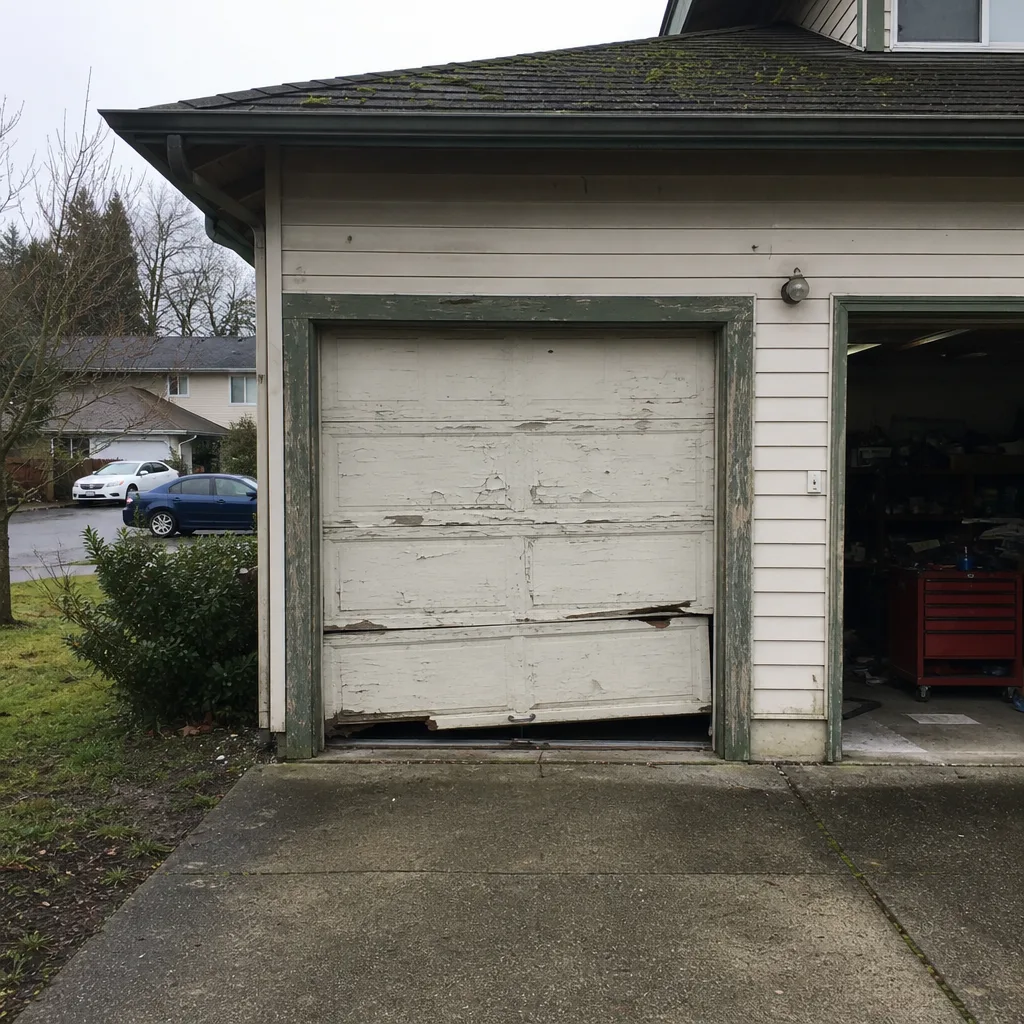 Before
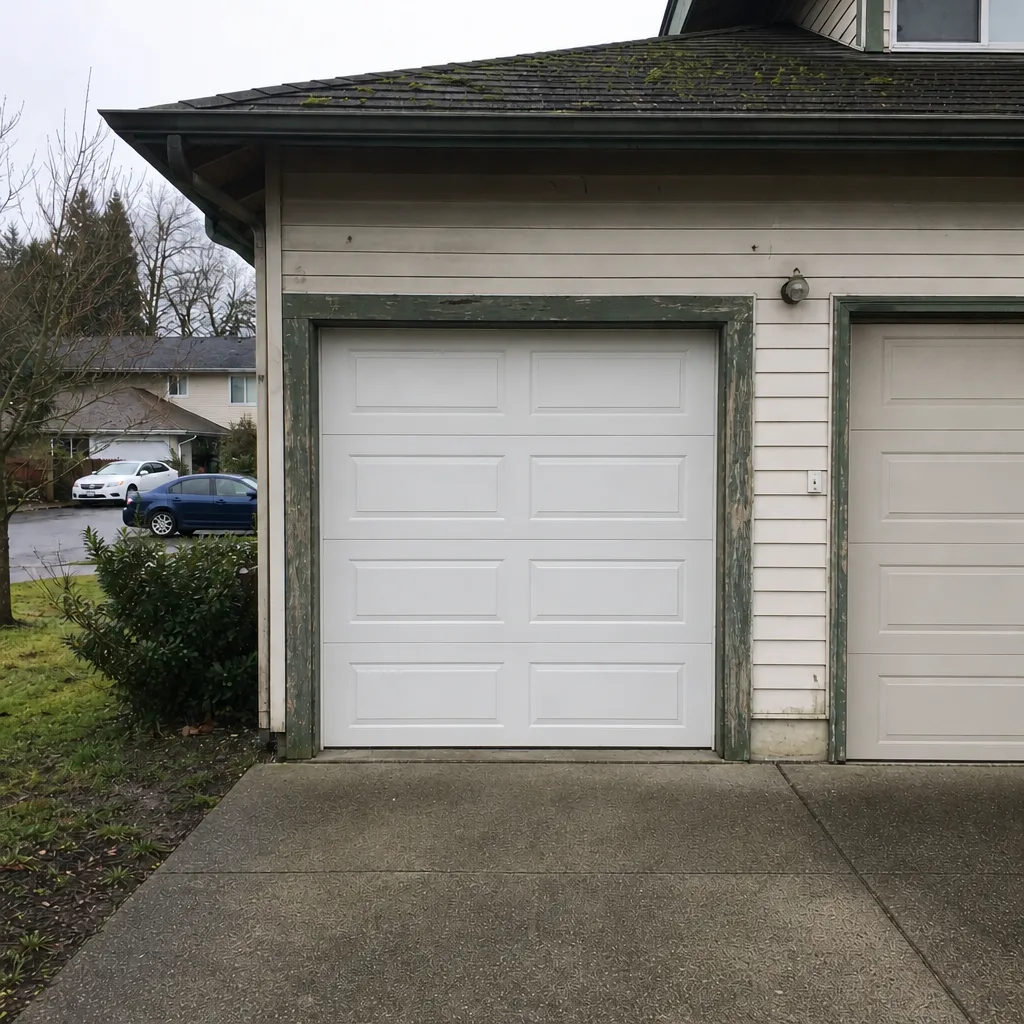 After
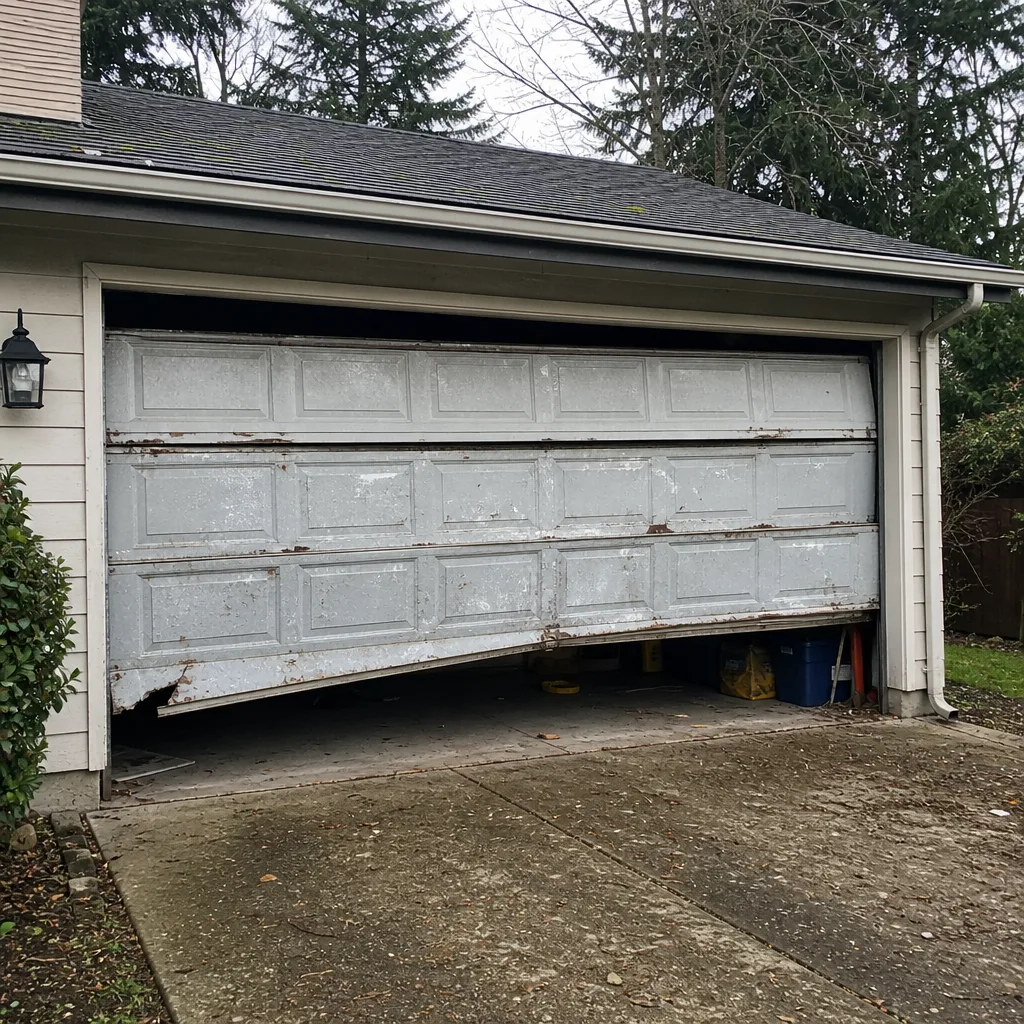 Before
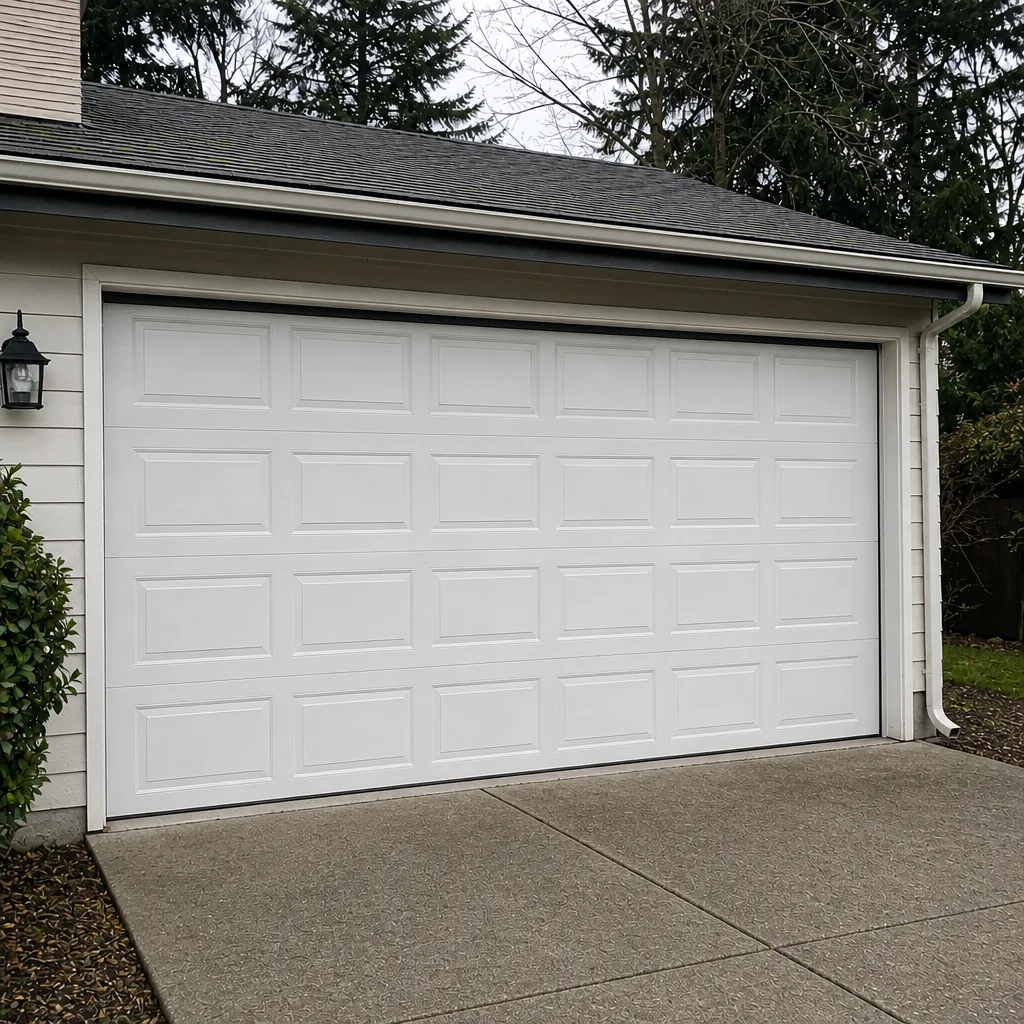 After
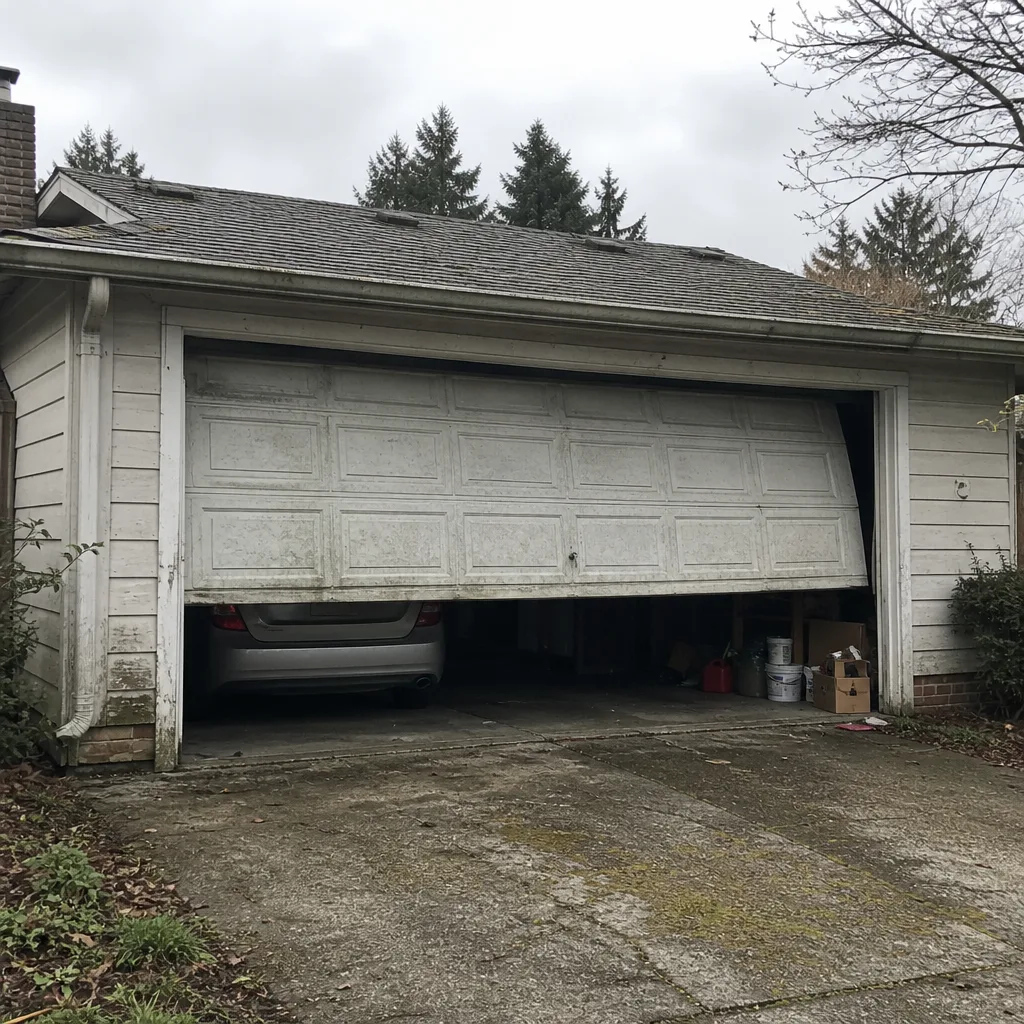 Before
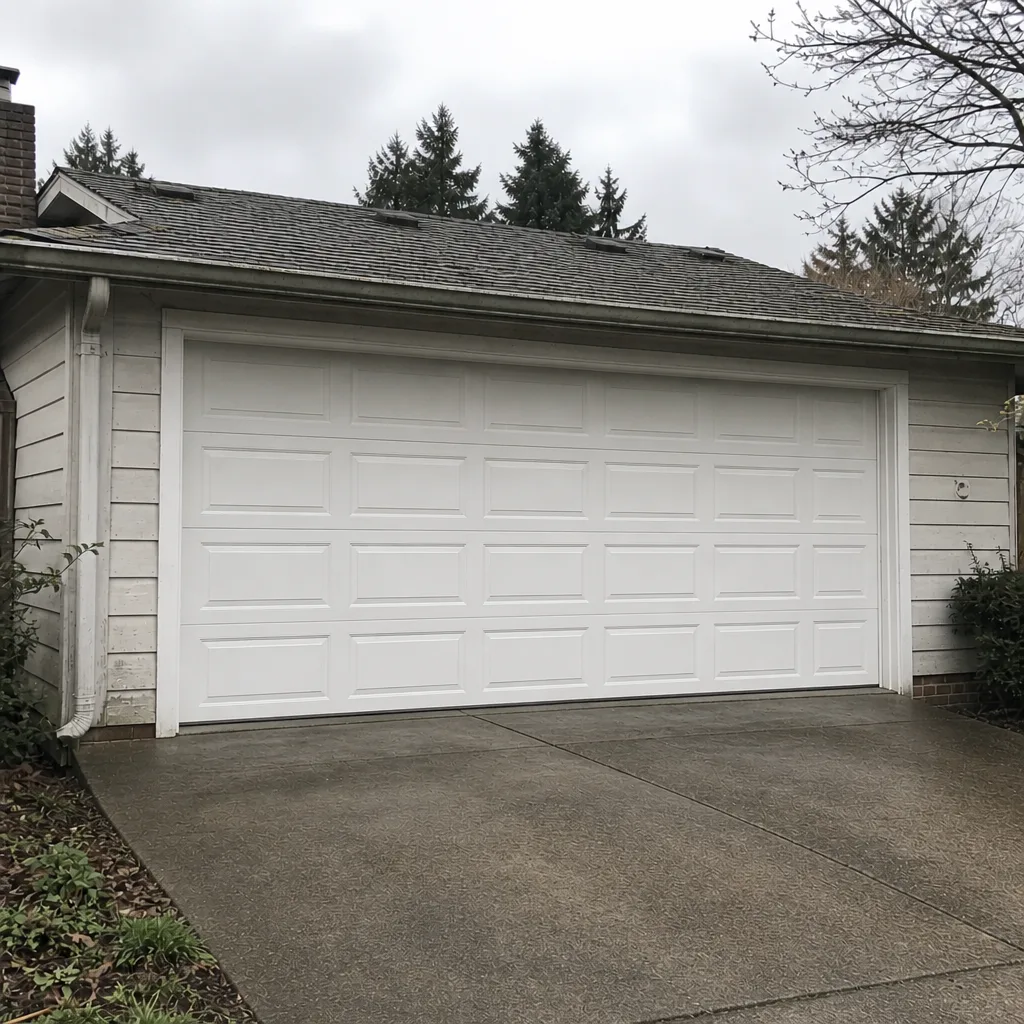 After
When to Call a Professional
Call a specialist when the project touches anything structural, spring-related, or safety-related. If you’re planning a door replacement in Bellevue and can’t confidently say whether your project is like-for-like, that’s the first call. If a spring has failed, if the door isn’t reversing on contact, if the opener is old and the photo eyes never worked right, if the door is binding or off-track, or if the home sale inspection flagged the installation – each of those is a case where the right answer is one trade: garage doors. Garage Door Repair Bellevue Pros offers free estimates in Bellevue. Call (833) 962-9266. We answer 24/7. Fast dispatch from 7am to 7pm, Sunday through Friday.
We work on your brand. Whether the door is Raynor, Clopay, or Amarr, and the opener is LiftMaster, Chamberlain, Genie, or another system, the diagnosis is specific to the equipment, not a generic guess. Our technicians have up to 8 years of experience across the eight major brands and the four core services – Garage Door Repair Bellevue Pros, door repair, opener repair, spring work, and installation.
Frequently Asked Questions
In Bellevue, a true like-for-like replacement (same size, same material, same operation, no framing change) usually does not require a permit, but any change in opening size, header, spring system, or operation typically does. Ask the city’s building department to confirm for your specific project before work starts, and get the answer in writing.
Permit fees in Bellevue are set by the city’s fee schedule and depend on the scope of the project – a door swap and a header modification aren’t priced the same. Call the city’s permit office with your project description to get the fee before you order the door, so it’s part of your total project cost from the start. For the door and installation itself, call (833) 962-9266 for a free written estimate.
For an attached garage on the conditioned side of the home, the door is part of the building’s thermal envelope, and Washington State Energy Code (WAC 51-11C) requirements apply to the assembly’s R-value. In practice, that means choosing an insulated door whose manufacturer-specified R-value meets the code’s current requirement, not a bare uninsulated door.
Often, yes. Home inspectors and title companies look for permitted work, and an unpermitted or unreviewed installation on a garage door – especially if the header, spring mounting, or opener wiring was changed – typically appears on the report and can stall or reprice a closing. Getting the permit and inspection right the first time is cheaper and faster than fixing it later.
We can work through the inspection requirements with you and make sure the installation we perform is inspection-ready, but the permit is pulled by the homeowner or the licensed contractor responsible for the work, and structural or electrical changes are reviewed by the appropriate licensed trade. Call (833) 962-9266 to talk through your Bellevue project and what it does and doesn’t require.
A Bellevue building inspection on a permitted garage door project typically focuses on three things: the structural header above the opening, the spring mounting at its anchor points, and the opener wiring plus the safety reverse and photo-eye function. It does not test spring tension by hand, and it does not review HOA appearance – those are separate concerns handled by trained technicians and the HOA respectively.
If a spring fails or the door stops operating before or after an inspection, that’s a repair call. Same-day service is often possible when a technician is routed nearby – call (833) 962-9266 for exact availability. Every price is quoted and agreed before any work starts, so nothing changes once the estimate is in hand.
The Bottom Line
The core rule in Bellevue: like-for-like means maintenance, structural change means permit. If your project keeps the same door size, spring type, and opener wiring, most of the code conversation is short. If anything touches the opening, spring anchor, or electrical, ask the city’s building department first, before you order anything. Washington’s energy code quietly raises the bar on insulation for attached garages, and it applies whether or not a permit is pulled. HOA approval handles appearance, the city handles safety, and both can apply to the same door. Get the inspection-ready install right the first time and your paperwork will hold up through a future sale. Call (833) 962-9266 for a free estimate on your Bellevue garage door project – permits, springs, openers, or a full installation, one call covers it.
Written by the team at Garage Door Repair Bellevue Pros.